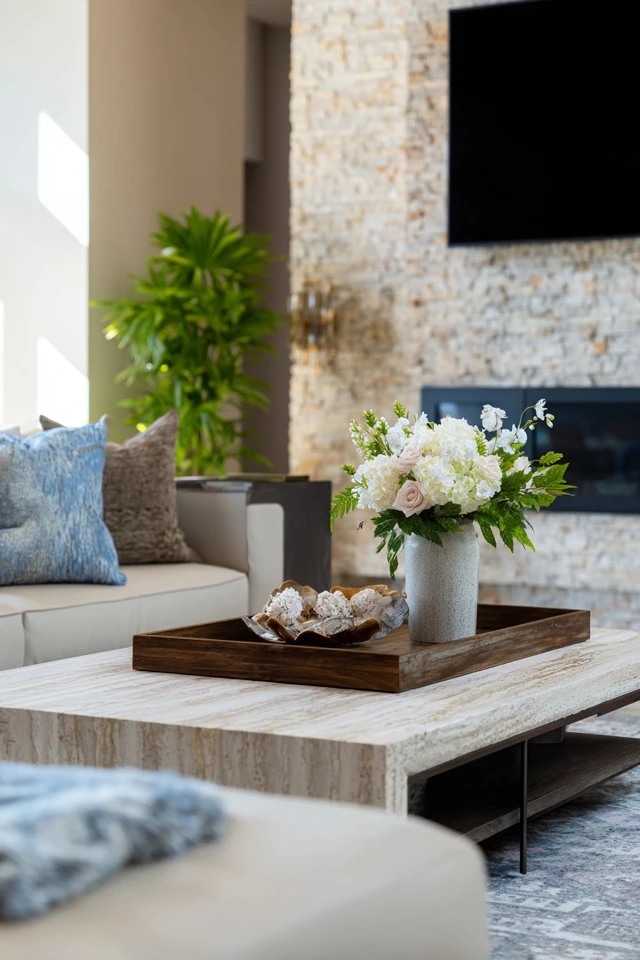
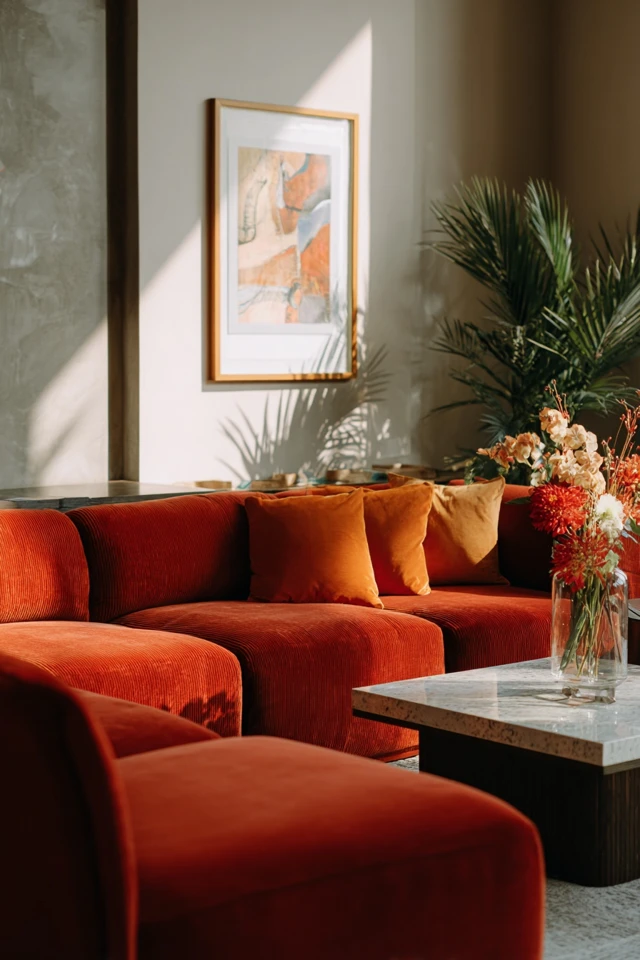
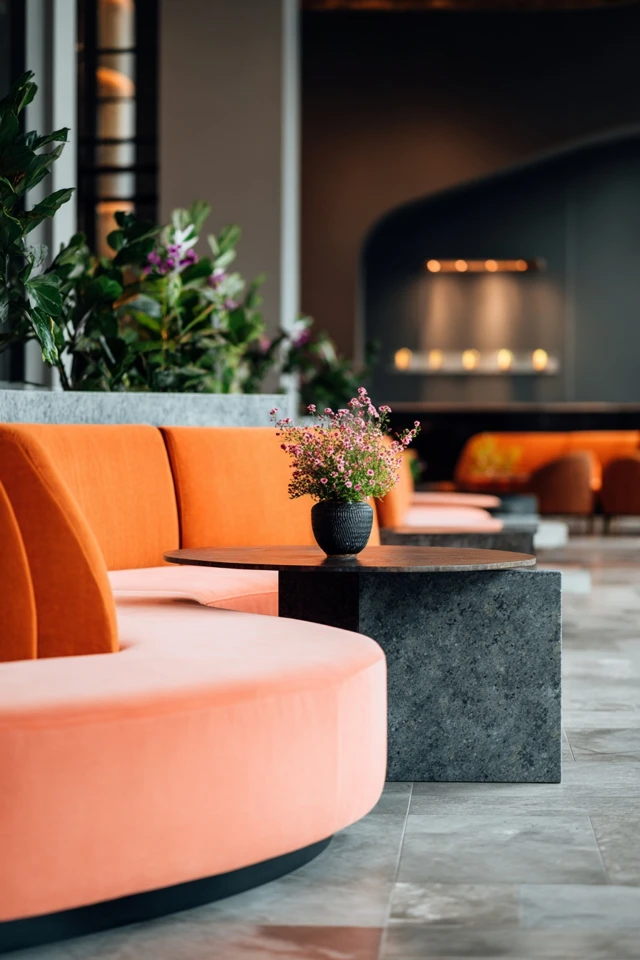
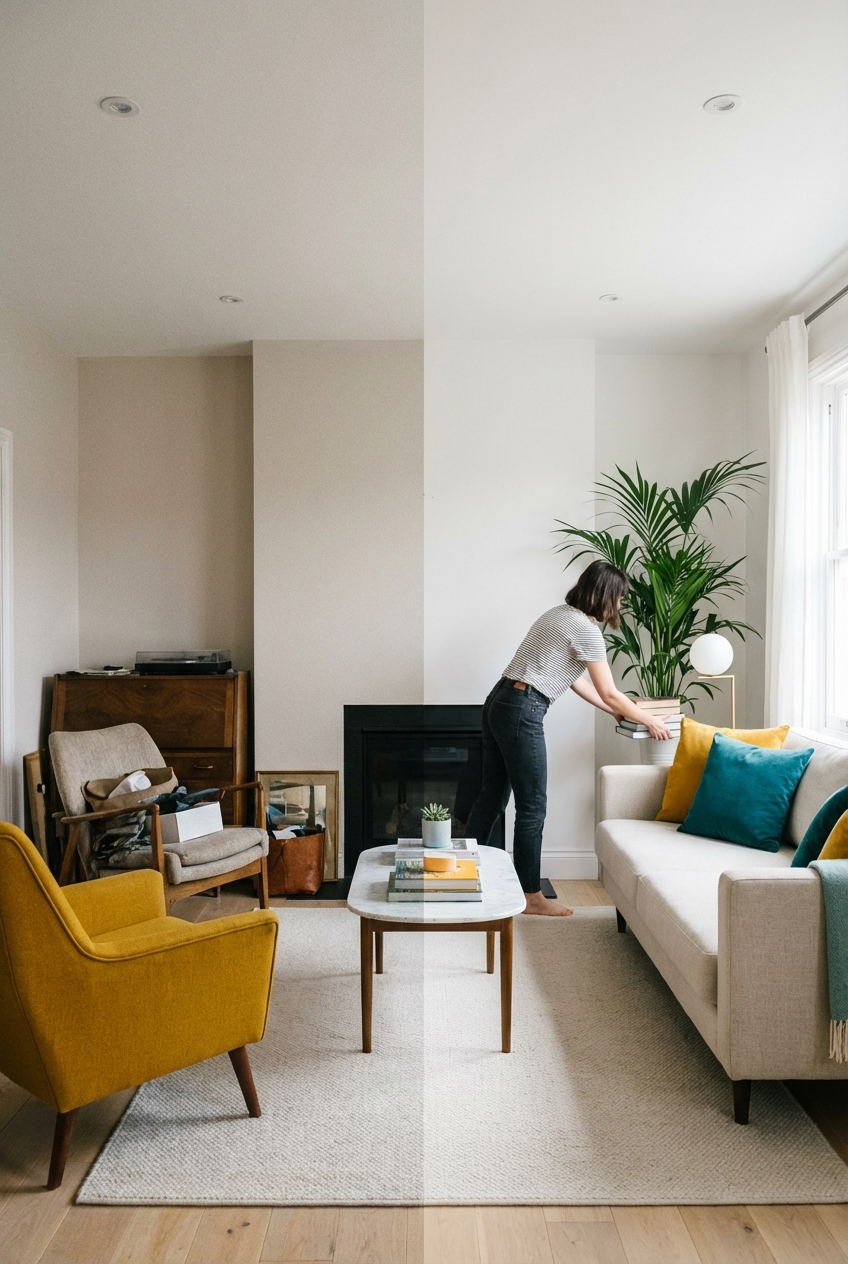
Simple Conversation Pit Ideas to Refresh Your Home
What a conversation pit is, why sunken living rooms faded and came back, and how to design a modern one, with sizes, safety and styling tips.

By Julio Arco
Architect and online interior designer
In this post
- What makes a conversation pit different from a regular seating…
- Where did sunken seating come from?
- Why did people stop using conversation pits?
- How do you design a modern conversation pit?
- How do you make a sunken seating area feel good to be in?
- What are some conversation pit ideas for different rooms?
- Is a sunken living room worth it today?
- Frequently asked questions
A conversation pit is a seating area set lower than the rest of the floor, usually a step or two down, with built-in or low sofas facing each other around a central point. It is also called a sunken living room. The idea is simple: lowering the seats creates a defined, cozy zone where people face one another instead of a TV.
You don't need to cut into a concrete slab to get the effect. Below, you'll find how a pit works, why people stopped building them, and conversation pit ideas for a modern version, including a no-demolition route.
What makes a conversation pit different from a regular seating area?
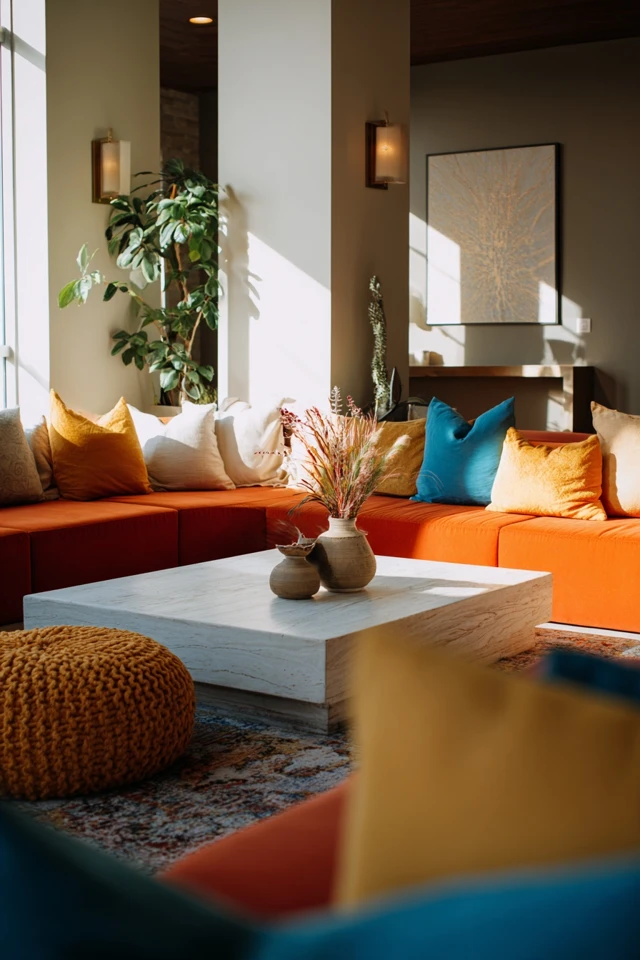
Two things: a change in floor level and seating that wraps around a shared center. The level change does the work that a rug usually does, marking the zone, but it also changes sightlines. Sitting lower makes the ceiling feel higher and the room around you feel further away, which is why pits feel enclosed and intimate.
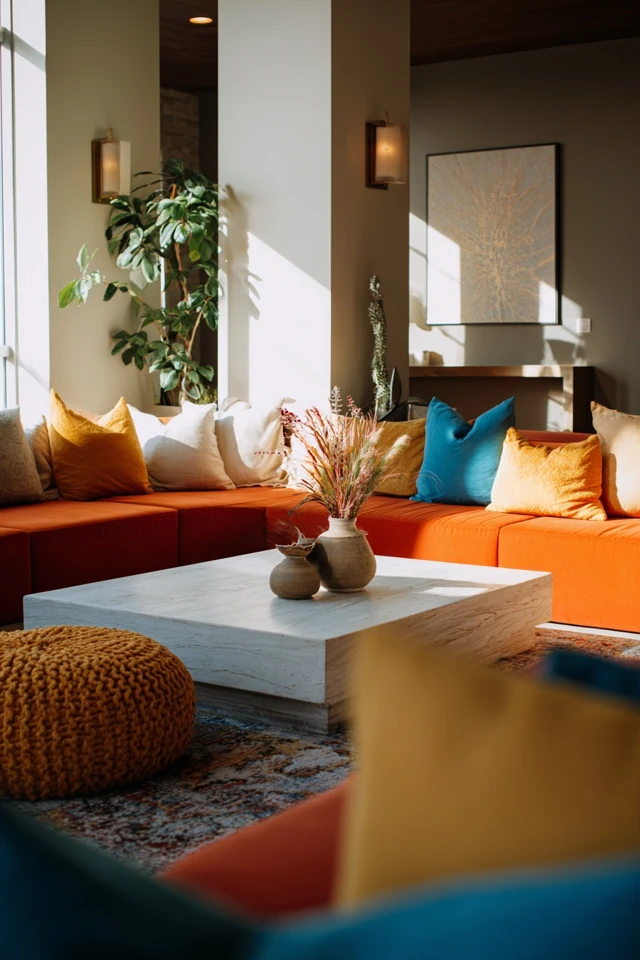
Traditional versions use a continuous built-in bench or sectional along the edges, with a fire feature or low table in the middle. Pillows and cushions fill the rest, so the seating is soft and the structure is simple.
Where did sunken seating come from?
Sunken and recessed seating shows up in many building traditions, so no single date or inventor owns it. In American homes it became a living room feature in the mid-20th century, when open plans and casual entertaining were popular. Earlier American houses were organized differently: the Greek Revival style of the 1830s to 1860s favored boxy, rectangular buildings, and the Italianate style that followed was inspired by informal Italian farmhouses and villas. Both were built around separate rooms, which is the layout open-plan living later loosened.
Why did people stop using conversation pits?
Mostly practical reasons. A sunken living room has a few real drawbacks:
- Step-downs are a trip hazard, especially at night, for kids, older adults and guests who have had a drink.
- Cleaning is awkward. Crumbs and dust collect in corners, and vacuuming around deep built-in seating is tedious.
- Accessibility is poor. A level change blocks wheelchairs and walkers and is hard to retrofit.
- Fixed layouts are inflexible. You can't easily move a built-in sofa or turn the room into something else.
- Floors and drainage can be a problem in basements or damp climates.
Tastes also moved on. Large TVs pushed seating to face a wall, and a pit built for facing each other became a poor fit.
How do you design a modern conversation pit?
A modern conversation pit keeps the idea and fixes the problems. Here is what I'd prioritize, in order.
Choose the depth and size
For conversation pit dimensions, a drop of about 7-14 inches (one or two steps) is easier to live with than a deep well. Steps of about 7 inches are comfortable underfoot. Keep the pit large enough for the seating plus a center table: a footprint of roughly 9 by 9 feet or more works for four to six people. Leave about 30-36 inches of walkway around the outside edge of the room so the pit doesn't block circulation. Structural changes to a floor need a licensed professional, because joists, slabs and plumbing may be in the way.
Consider a no-dig version
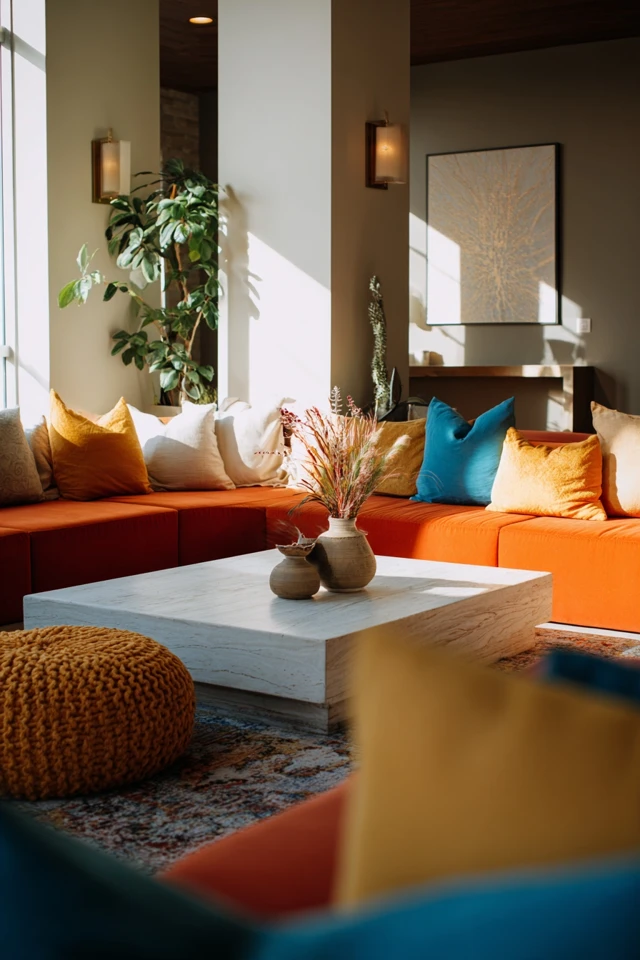
If you can't lower the floor, raise the surroundings instead. A low platform around three sides, about one step high, gives the same enclosed feeling with no excavation. A low sectional on a large rug with a slightly lowered seat height gets you most of the way for renters.
Make the seating work
Pick deep, low seating with removable, washable covers. As an architect, I recommend performance fabrics or tightly woven textiles for any conversation pit couch a dog is allowed on, since fur and paws will reach every cushion. Modular sectional pieces are easier to rearrange than a fully built-in bench, and they let you change the shape later.
How do you make a sunken seating area feel good to be in?
Light it in layers
A pit sits below most windows and ceiling fixtures, so it can feel dim. Combine a dimmable overhead light, a floor or wall lamp at seated height and a small accent light. Warm bulbs make the space feel relaxed in the evening.
Use texture to soften hard edges
Glossy surfaces bounce light and create sharp shadows, while matte and textured ones absorb it and soften the room. In a small enclosed pit, matte walls, wool or linen textiles and a rug underfoot will feel calmer than polished stone everywhere.
Protect the edges
Mark the step edge with a contrasting trim or a thin strip of low-level light. With pets, a drop can be a problem for puppies, seniors and small dogs. Ask your vet if your dog has joint or mobility issues. A gentle ramp or a single step is easier on them than a deep drop.
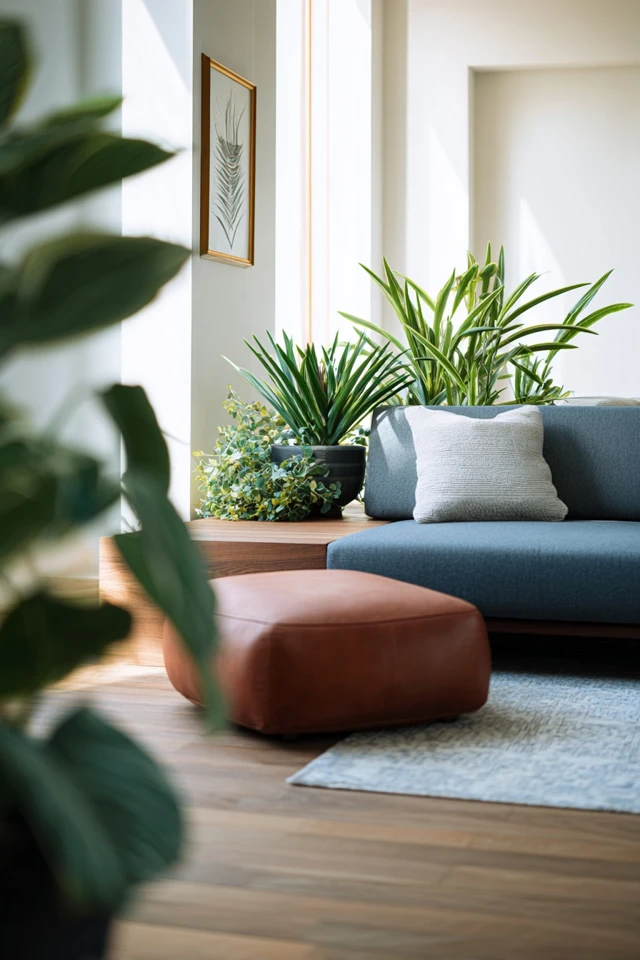
What are some conversation pit ideas for different rooms?
- Small living room: a single-step platform with a compact sectional and nesting tables.
- Open plan: use the pit to separate the lounge from the dining area without a wall.
- Fireplace room: face the seating toward the fireplace and keep the center table low so you can see across.
- Outdoor patio: a sunken seat area with a fire table is easier to build outdoors, where drainage and flooring are simpler.
For more on specific looks, see timeless conversation pit living room decor, conversation pit couch trends and modern conversation pit decor ideas.
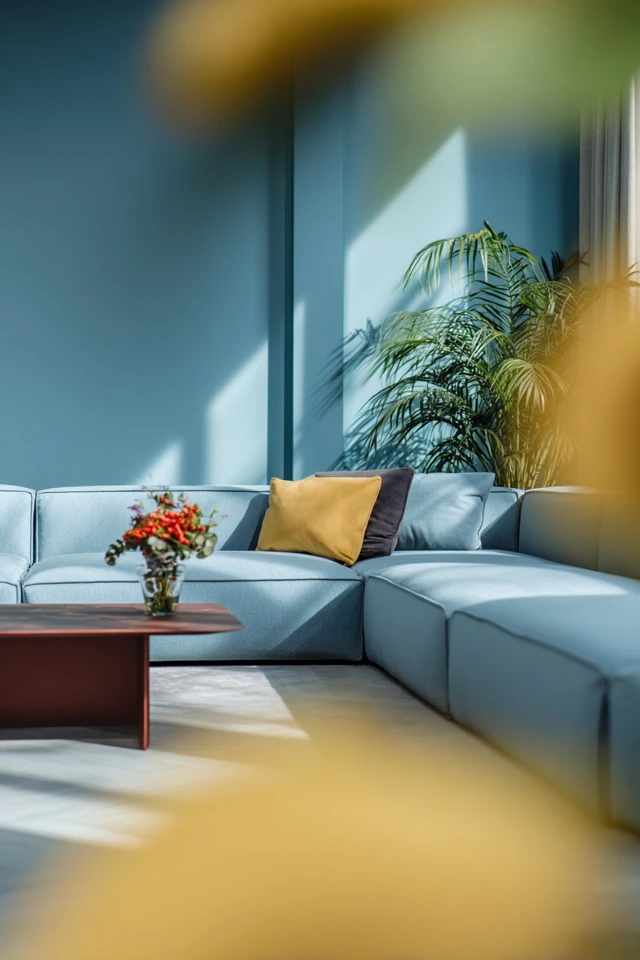
Is a sunken living room worth it today?
It depends on your house and household. If you have a stable floor structure, no mobility concerns and you like hosting, a shallow pit can make a living room feel special. If you have toddlers, an elderly relative or a dog with joint problems, a raised-platform or rug-defined version gives you the intimacy without the drop. I'd choose that route for most homes.
Frequently asked questions
Why did people stop using conversation pits?
Safety, cleaning and flexibility were the main reasons. Step-downs cause trips, corners trap dust, and built-in seating can't be rearranged, while TV-facing layouts made inward-facing seating less useful.
What are the disadvantages of having a sunken living room?
The level change is a trip hazard and blocks wheelchair access. It's also harder to clean, harder to change later and can run into drainage or structural limits.
What is the 2/3 rule for sofas?
It's a common rule of thumb that a sofa should take up about two-thirds of the wall length it sits against. It's a guideline, not a fixed standard, and it matters less in a pit where seating wraps around.
How deep should a conversation pit be?
A drop of about 7-14 inches, one or two steps, is easiest to live with. Anything deeper makes entry and exit harder and needs more structural work.
Filed under
ArticlesMeet the author
Written by an architect.
Julio Arco is a passionate architect with years of experience in architecture, interior design, urban design, and housing. He studied at prestigious universities across North America and Europe.

- Name
- Julio Arco
- Job
- Architect and online interior designer
- Studied
- Architecture, ITESM · Urban Design and Housing, McGill
- Partner
- Thor, Australian Shepherd
- Thor’s title
- Head of quality control