Accent Chair Ideas for Every Living Room
Accent chair ideas for living rooms, small spaces and reading corners, with advice on color, materials, matching your sofa and pet-friendly fabrics.

By Julio Arco
Architect and online interior designer
In this post
The best accent chair ideas start with a job for the chair: a reading spot, an extra seat for conversation, or something to fill a bare corner. Pick the job first, then choose a color, shape and fabric that suit it. A chair bought only because it looked good in a photo tends to end up as a coat rack.
Below you'll find ideas for living rooms, small spaces and corners, plus practical sizes and fabric advice for homes with pets.
Which accent chair ideas work best in a living room?
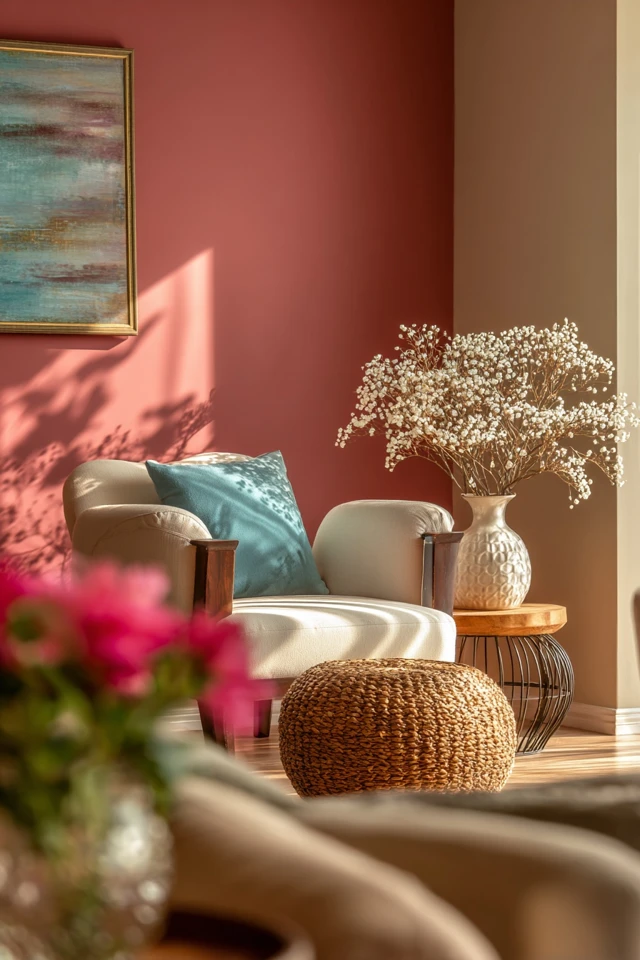
For accent chair ideas in a living room, three approaches cover most homes.
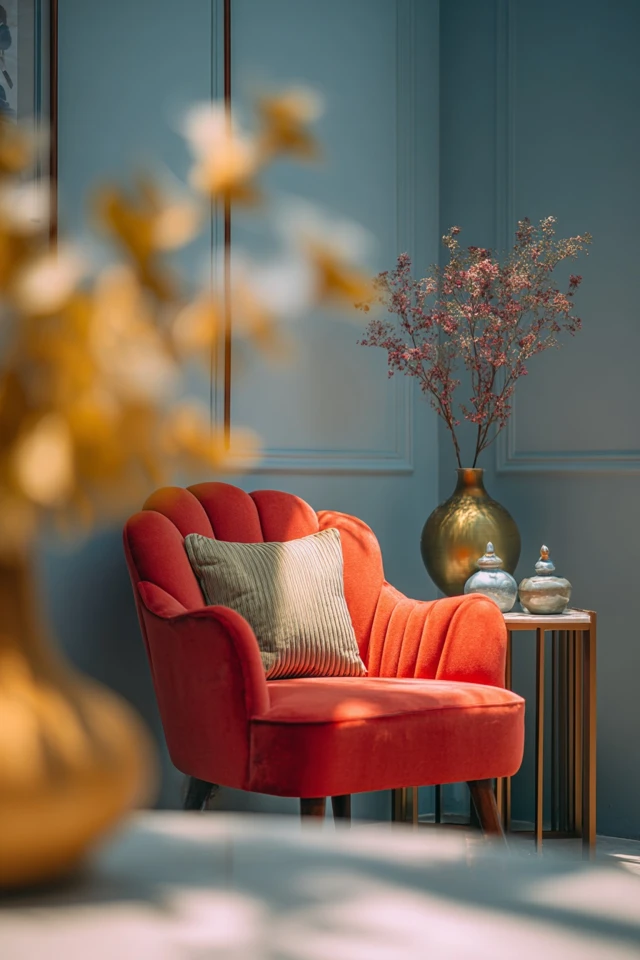
- A bold color against neutral walls and a quiet sofa. The chair becomes the focal point, so keep everything near it calm.
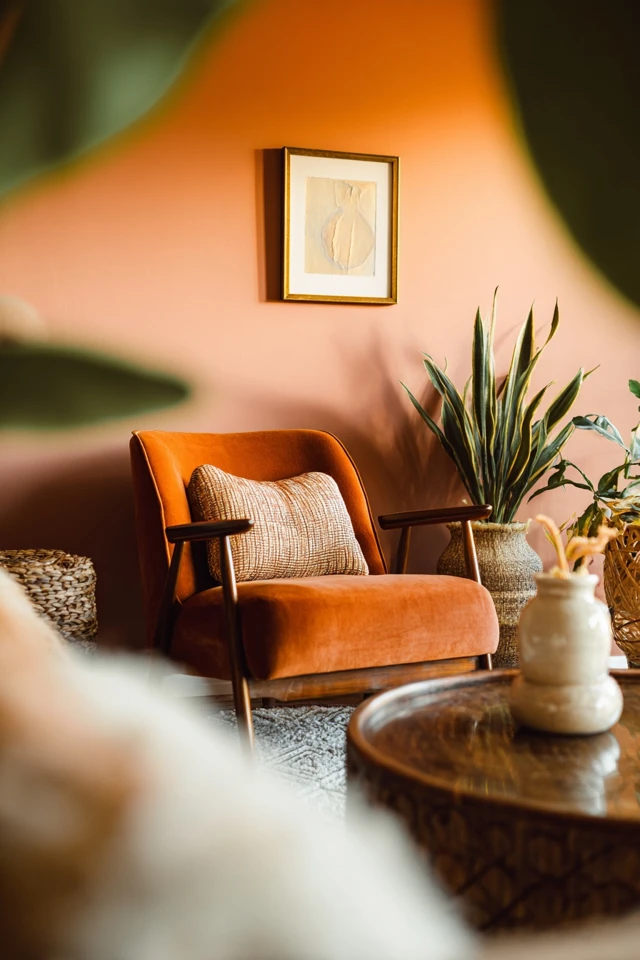
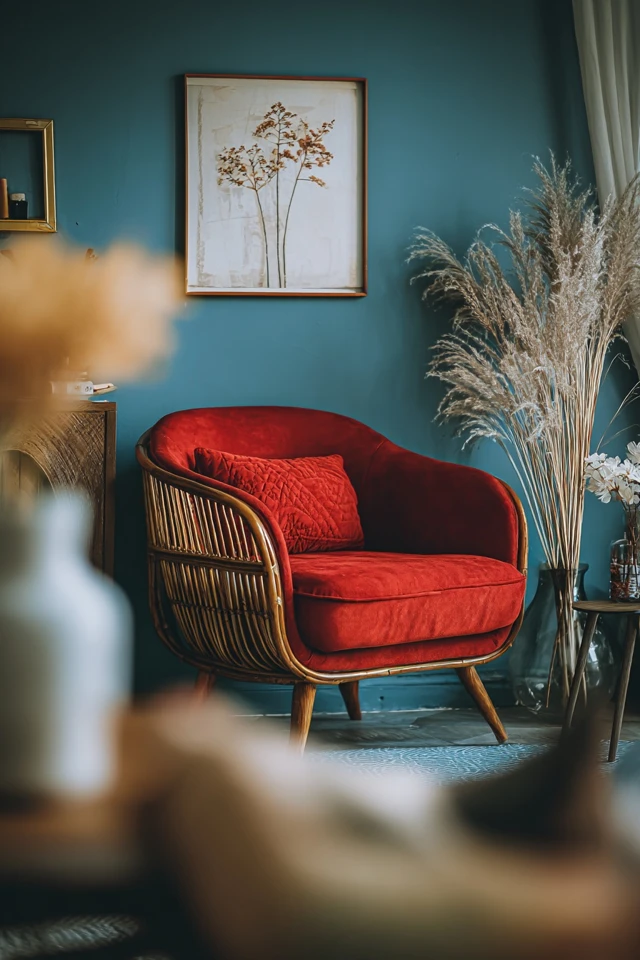
- A muted version of a color already in the room, such as a dusty green chair in a room with sage curtains. This reads as cohesive and relaxed.
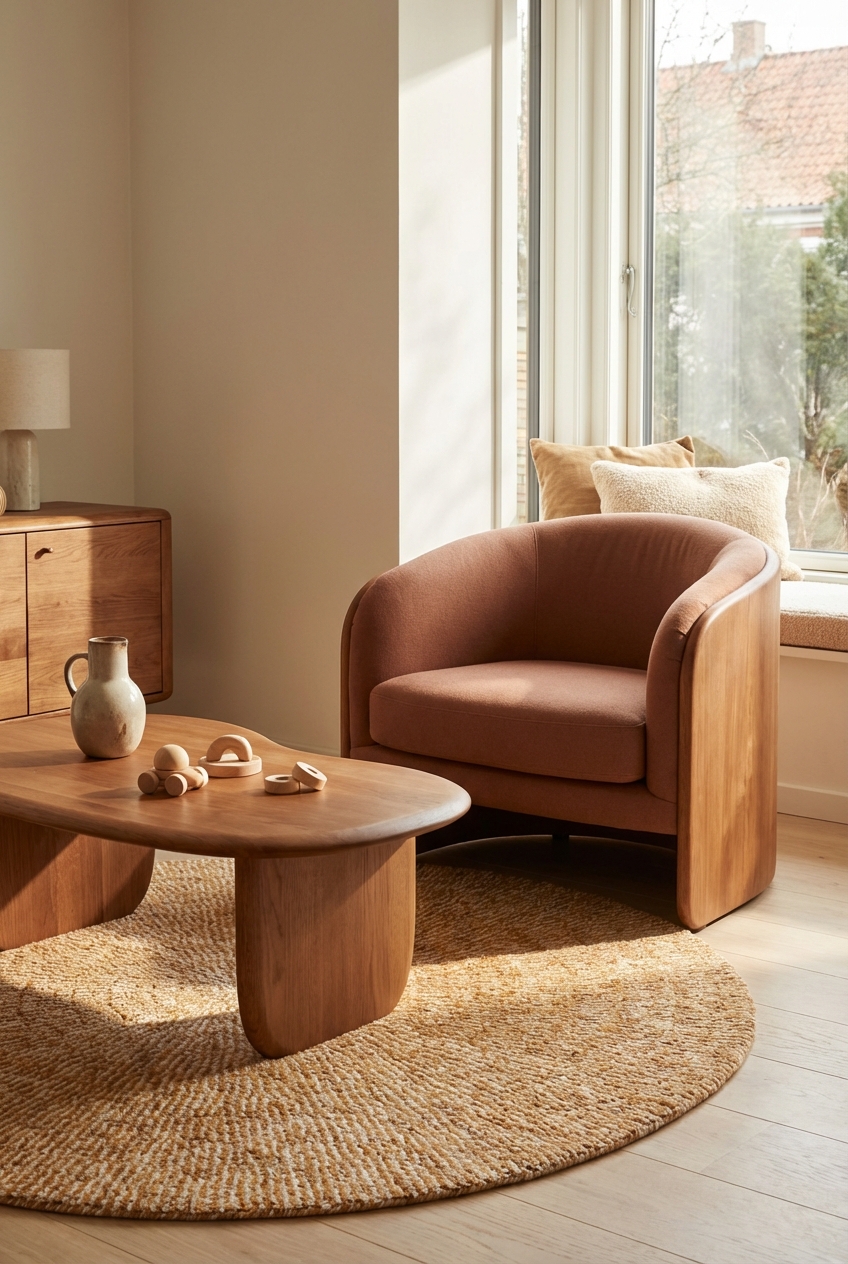
- A sculptural shape in a plain fabric. A curved or barrel silhouette adds interest without any pattern at all.
If you want more color-forward options, see these bold accent chair ideas.
Do accent chairs have to match your sofa?
No. Accent chairs should relate to the sofa, not copy it. Share one thing: a color family, a wood tone, a similar level of formality, or a repeated shape. Then let the rest differ.
Mismatched accent chairs in a living room work well when they sit at a similar height and scale. If the sofa is solid, the chair can carry a pattern. If the sofa is patterned, choose a solid chair. For a step-by-step method, read how to match accent chairs and sofas.
Should the chair be darker or lighter than the sofa?
Either works. A darker chair anchors a pale sofa and gives the eye a place to land. A lighter chair keeps a dark sofa from feeling heavy. I recommend going one or two shades apart, not a stark opposite, unless you want the chair to be the loudest thing in the room.
Accent chair ideas for a small living room
In a small room, visual weight matters more than the chair's actual footprint.
- Choose exposed legs so you can see the floor underneath.
- Go for a compact slipper chair or an armless design to keep paths open.
- Pick a lighter or low-contrast fabric that blends with the walls.
- Place it near a window so it reads as part of the view, not an obstacle.
Leave about 30-36 inches for a main walkway, and don't let a chair back into that path.
How to style an accent chair
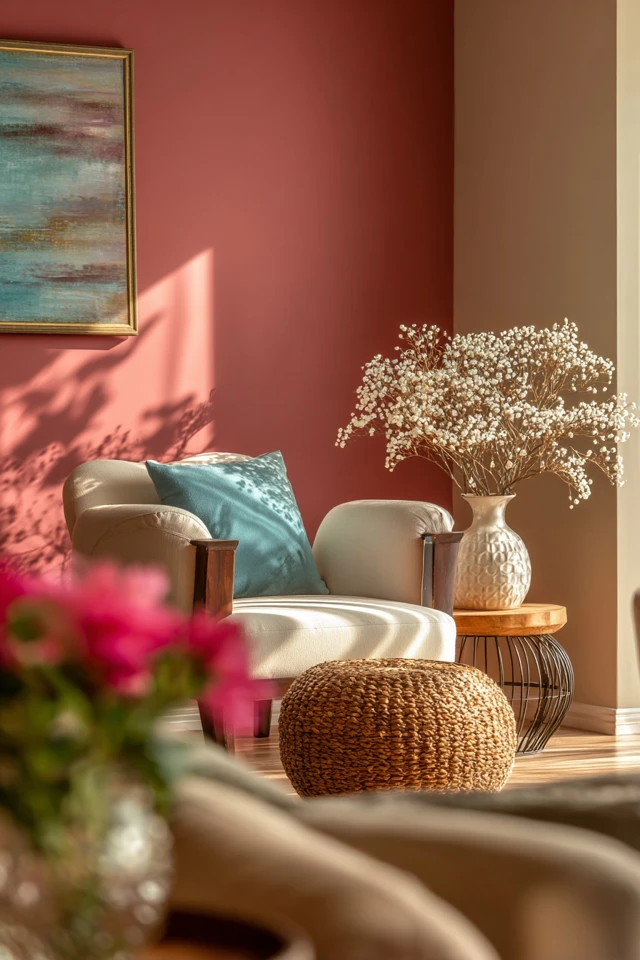
Styling is mostly about anchoring. A chair floating alone on bare floor looks accidental, so give it company.
- Set it on or partly on a rug, which creates a defined spot within an open plan.
- Add a small side table within easy reach, about 18-24 inches away.
- Include a lamp. A floor lamp with an adjustable arm suits a reading corner.
- Repeat the chair's color once or twice elsewhere, in a pillow, a vase or a rug stripe.
- Keep one patterned element per grouping and let the rest be solid.
For conversation, place the chair roughly 6-10 feet from the sofa and angle it slightly toward the group so people don't have to crane their necks.
Reading corners and empty spots
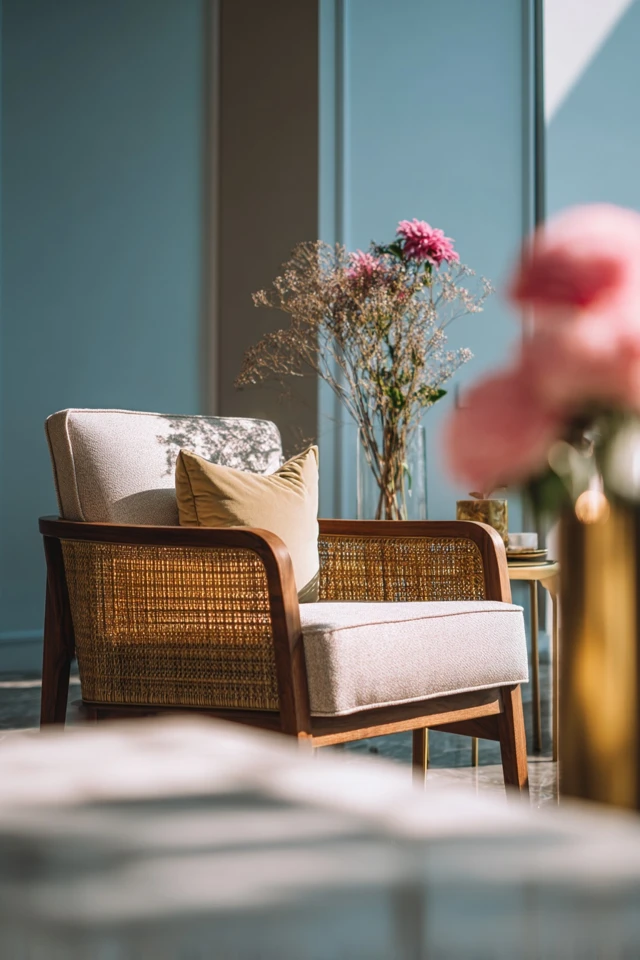
A corner with nothing in it is the easiest place to add a chair. Angle the chair across the corner, add a lamp behind it and a small table beside it. Natural light from the side is ideal for reading.
The same trick works at the end of a hallway, beside a bookcase or under a window. If the chair is far from the main seating, give it a purpose, such as a basket for a throw and a book, so it gets used.
Materials and colors that suit accent chairs
Texture does as much as color. Wood arms or legs with velvet or bouclé feel warm. Metal frames with leather read more modern. Linen, cotton and jute feel airy in bright rooms.
Color also changes with light. A north-facing room gives cooler, softer light that can mute warm tones, while south- and west-facing rooms intensify them. Hold a fabric swatch in the spot at different times of day before you commit.
Finishes matter too. Matte surfaces absorb light and look calmer, while glossy ones bounce it around and show every fingerprint.
Pet-friendly fabric choices
If a dog or cat will use the chair, choose tightly woven fabrics, leather, or performance upholstery, and look for removable, washable cushion covers. Darker or patterned weaves hide hair and wear better than pale solids. Avoid loose, looped weaves like some bouclé, since claws catch in them. Check the care tag, and test any protective spray on a hidden spot first.
Choosing a chair by style
Minimal rooms suit a sculptural chair in one calm color. Traditional rooms handle a wingback or a classic pattern. Eclectic rooms can take a vintage shape in an unexpected fabric. Trends such as curved silhouettes, bouclé and earthy tones are easy to try in a single chair, which is simpler to swap later than a sofa.
If you're also planning a larger seating area, conversation pit ideas may help you think about how chairs and sofas face each other.
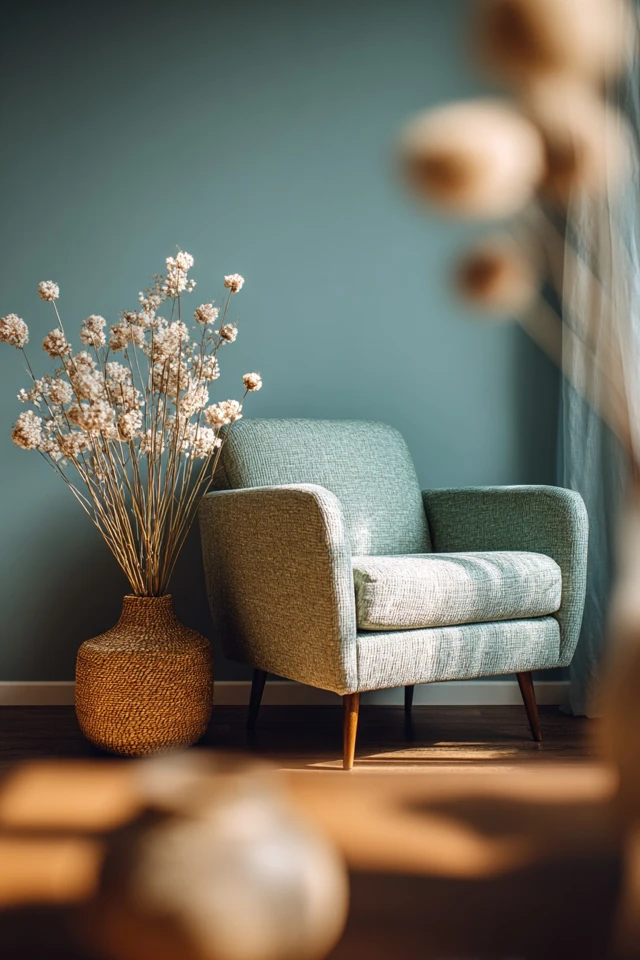
Before buying, measure the space, tape the chair's footprint on the floor, and sit in it if you can. As an architect, I'd always check comfort and scale before color, because a chair people avoid is wasted floor space.
Frequently asked questions
What are some good decor ideas for an accent chair?
Pair it with a rug, a small side table and a lamp, then repeat its color in a pillow or vase. A throw draped over one arm adds texture and invites use.
Should accent chairs be darker or lighter than sofas?
Either can work. Go one or two shades darker to anchor a pale sofa, or lighter to relieve a dark one, and keep the scale similar.
Can I mix a patterned chair with a patterned sofa?
Yes, if one pattern is large and the other small, and they share a color or two. Solid pillows and rugs nearby give the eye a rest.
What accent chair fabric is best with pets?
Tight weaves, leather and performance fabrics resist claws and are easy to clean. Removable covers help, and your vet or the fabric maker can advise on specific concerns.
Filed under
ArticlesMeet the author
Written by an architect.
Julio Arco is a passionate architect with years of experience in architecture, interior design, urban design, and housing. He studied at prestigious universities across North America and Europe.

- Name
- Julio Arco
- Job
- Architect and online interior designer
- Studied
- Architecture, ITESM · Urban Design and Housing, McGill
- Partner
- Thor, Australian Shepherd
- Thor’s title
- Head of quality control