DIY Pendant Light Ideas: 8 Ways to Make Your Own
DIY pendant light ideas you can build at home: rope, paper, basket and fabric shades, a safe wiring kit, and bulb tips for living room lighting.

By Julio Arco
Architect and online interior designer
In this post
Yes, you can make your own pendant light, and the easiest route is a plug-in or pre-wired cord set with a shade you build yourself. The wiring comes in a box, and the creative part (the shade) is just paper, rope, a basket or fabric.
Below are simple DIY pendant light ideas, what you need to start, and how to choose a bulb so the finished light looks good in the room.
What do you need to make a pendant light?
Start with a DIY pendant light kit: a cord, a socket, and a ceiling hook or canopy. Buy one that carries a safety listing mark for your country (such as UL in the US). Then add a shade frame or a base to build on, plus scissors, a tape measure and glue suited to your material.
- A pre-wired cord set with a socket
- A shade frame, basket, lamp shade or other base
- Your covering: paper, rope, fabric or cane
- A ceiling hook if you plan a plug-in version
Is it safe to wire a pendant light yourself?
Plug-in pendants are the low-risk option: you hang the cord from a hook and plug it in, with no work inside the ceiling. If you want a hardwired fixture on a ceiling junction box, I recommend hiring a licensed electrician. Whatever you build, keep the shade material well away from the bulb. Paper, fabric and rope should never touch it, and an LED bulb runs cooler than an old incandescent, which helps.
Simple DIY pendant light ideas to start with
Rope or hemp wrapped shade
Glue rope in tight spirals around a round frame or an upside-down basket with the bottom cut out. It's forgiving, since small gaps look intentional. Skip it in rooms where a dog sheds heavily and dust clings to fiber, or plan to vacuum it with a brush attachment.
Paper lantern or folded paper
If you're wondering how to make a hanging lamp with paper, buy a plain round paper lantern on a wire frame and add layers: paper cut into petals, pleated strips, or a second lantern of a different size. Use an LED bulb, and keep the paper a few inches clear of it.
Basket pendant
A woven basket with the base removed makes a ready-made shade. Cut a hole large enough for the socket, thread the cord through, and hang. Rattan and seagrass give a warm, relaxed feel.
Fabric or lamp shade makeover
Strip an old drum shade and re-cover it in linen or a washable cotton. Fabric is a good DIY pendant light shade for softening glare, and it's easy to change when you tire of the pattern.
Designer-dupe cluster
Hang three identical shades at staggered heights from one canopy for a gallery look. Staggering the drops by 6-12 inches keeps the group from looking flat.
Which ideas suit a living room?
For DIY pendant light ideas for a living room, think about where the light lands. Over a coffee table, hang the bottom of the shade roughly 30-36 inches above the surface so nobody bumps it. In a corner reading nook, a plug-in pendant on a ceiling hook can stand in for a floor lamp and free up floor space. If you want more ideas for fixtures that suit older-style rooms, see these mid-century modern lighting ideas.
Low ceilings need smaller, lighter shades. In a room with a lot of height, go bigger, because a small pendant gets lost.
How do you choose the bulb?
LEDs suit handmade shades well. The U.S. Department of Energy says good-quality white LED lighting products are expected to have a useful life of 30,000 to 50,000 hours or even longer, so you won't be climbing up to swap bulbs often.
Color temperature matters as much as brightness. The Energy.gov page on color and spectrum describes correlated color temperature (CCT) as one of the primary metrics for the visual appearance of light. In practice, look for a warm white, around 2700-3000K, for living rooms and bedrooms. Add a dimmer-compatible bulb and a dimmer if the circuit allows it.
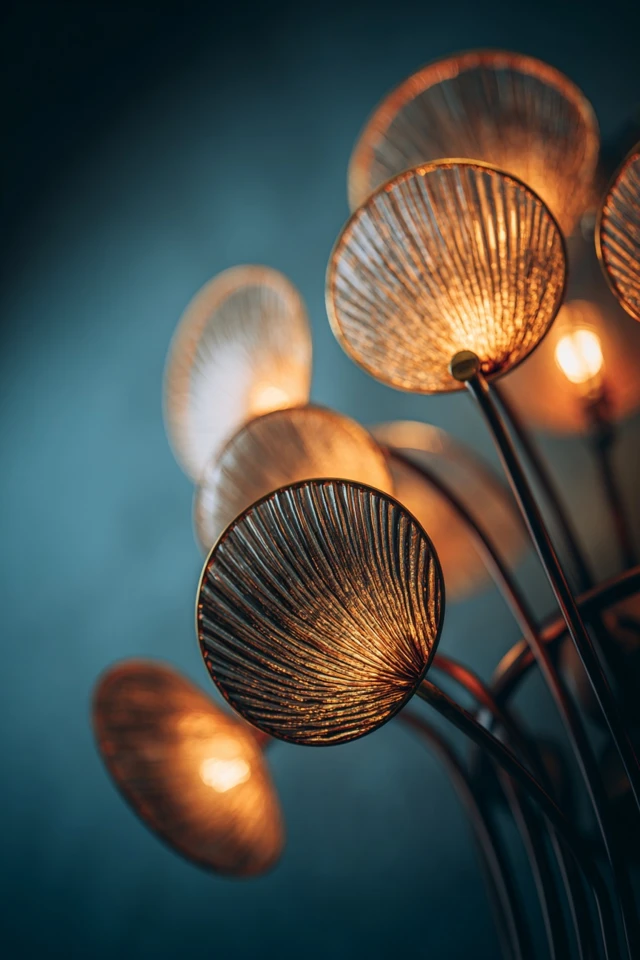
How do you build one, step by step?
- Choose your base (frame, basket or shade) and decide where it will hang.
- Cut an opening for the socket, if needed, and test that the bulb sits well inside the shade.
- Cover the base with your material, working in small sections and letting glue set.
- Fit the socket from the pre-wired kit, following its instructions.
- Hang from a ceiling hook, set the cord length, and plug in with an LED bulb.
Do a dry run with the bulb on for a few minutes before you commit, and check nothing is warm to the touch.
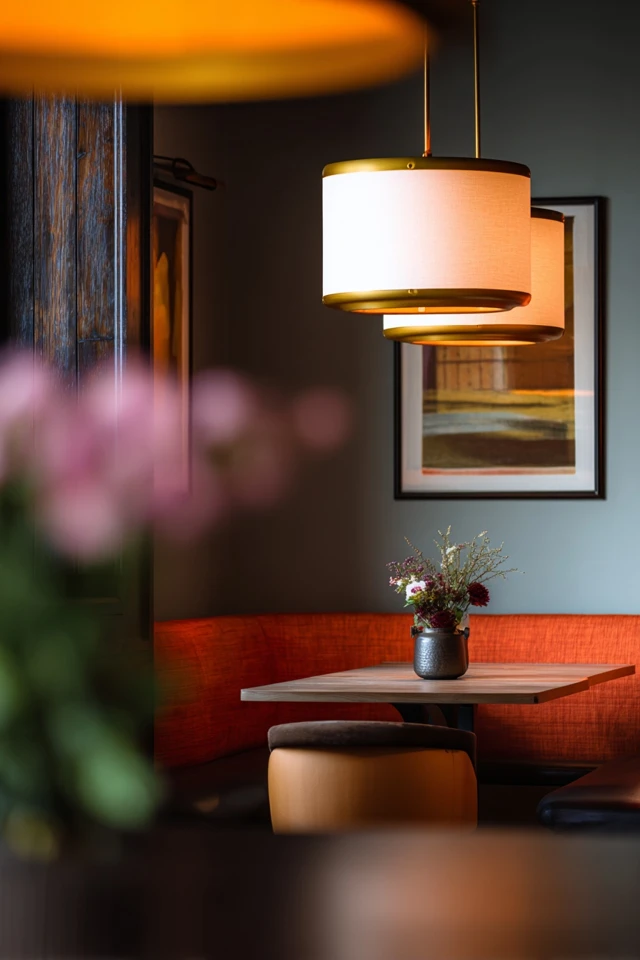
What can you use instead of a pendant light?
If a ceiling fixture isn't an option, use a wall sconce, an arc floor lamp, or a plug-in swag lamp. A well-chosen recessed ceiling layout can also handle general light while a small pendant adds character. For more about the ceiling itself, see these ceiling design ideas.
Frequently asked questions
Can you DIY pendant lights?
Yes. The simplest version uses a pre-wired cord kit and a handmade shade, hung from a ceiling hook and plugged in. For anything wired into the ceiling, use a licensed electrician.
What to use instead of pendant lights?
Wall sconces, arc floor lamps, table lamps and recessed fixtures all work. Pick the one that puts light where you actually sit or work.
What is the latest trend in pendant lighting?
Natural materials like rattan, rope and paper are popular, along with oversized shades and clusters. Handmade versions fit these looks easily.
Are pendant lights out of style?
Pendants are a long-standing way to light a room, and styles change more than the fixture type. Neutral shapes and natural materials tend to age well.
Filed under
ArticlesMeet the author
Written by an architect.
Julio Arco is a passionate architect with years of experience in architecture, interior design, urban design, and housing. He studied at prestigious universities across North America and Europe.

- Name
- Julio Arco
- Job
- Architect and online interior designer
- Studied
- Architecture, ITESM · Urban Design and Housing, McGill
- Partner
- Thor, Australian Shepherd
- Thor’s title
- Head of quality control