Vaulted Ceiling Beam Ideas for Every Room

By Julio Arco
Architect and online interior designer
In this post
- What is a ceiling with exposed beams called?
- Exposed beams or faux wood beams?
- How far apart should ceiling beams be?
- Vaulted ceiling with beams in a living room
- Vaulted ceiling with beams in a bedroom
- Small and half vaulted ceilings
- Color, wood tone and finish choices
- Lighting, windows and skylights
- DIY vaulted ceiling beam ideas
- Frequently asked questions
The simplest way to make a high ceiling feel designed is to add beams that follow its slope, space them evenly, and pick a finish that either matches or deliberately contrasts with the ceiling. Everything below is a variation on that rule, sorted by room and by the decisions you'll face.
A note on the old title of this page: recessed and tray ceilings are a different treatment, where the ceiling steps up into a shallow recess. If that's what you're after, see inset ceilings. Here we're talking about vaulted ceilings and the beams that dress them.
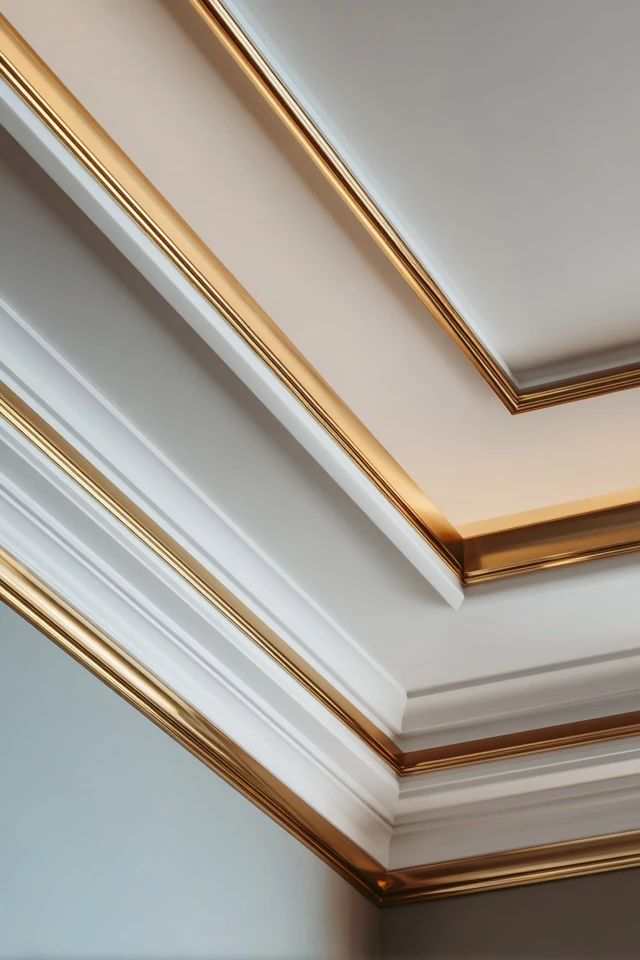
What is a ceiling with exposed beams called?
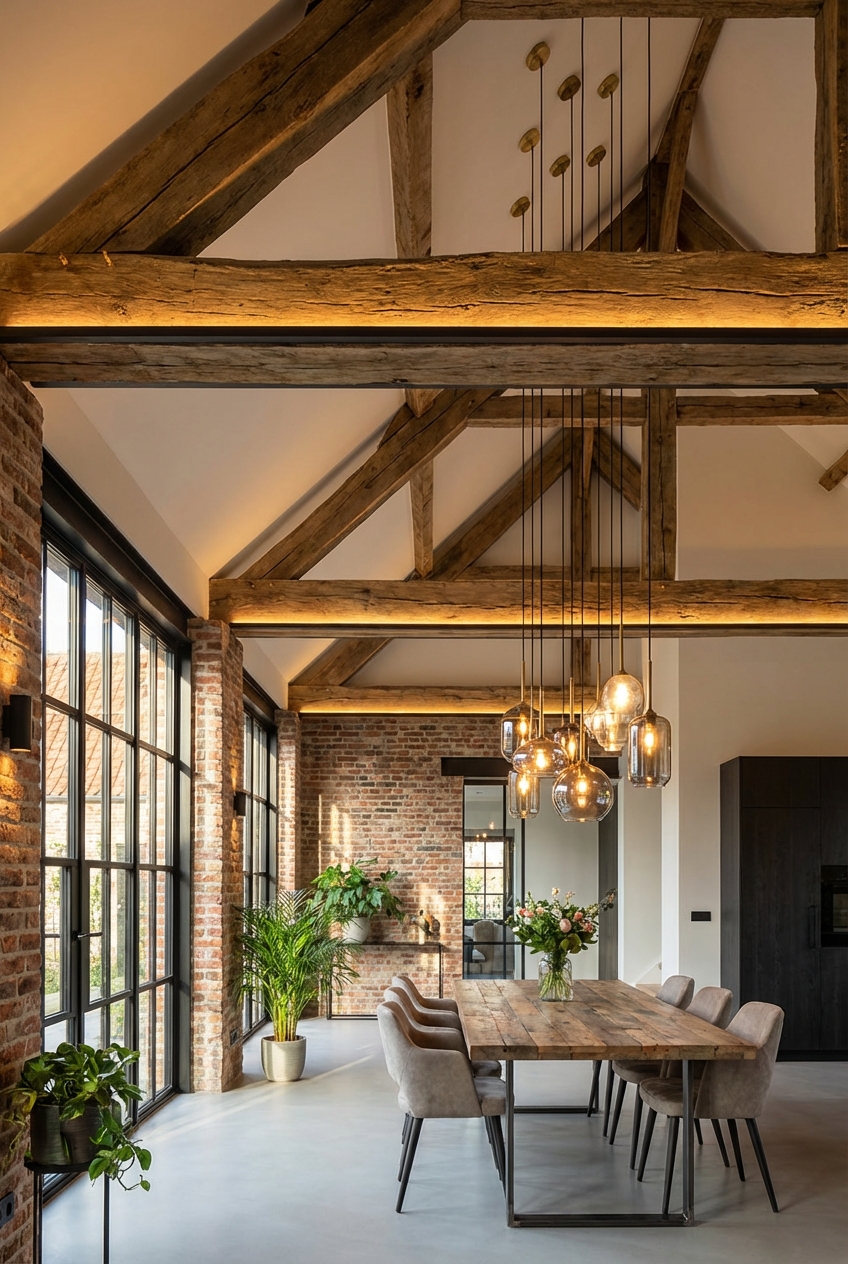
A ceiling with visible structural or decorative beams is usually called a beamed ceiling. On a sloped ceiling, you'll hear exposed beams on a cathedral ceiling, or simply a vaulted ceiling with beams. The words overlap in everyday use: a cathedral ceiling is the classic symmetrical version, with two slopes meeting at a central ridge, while vaulted is the broader term for any ceiling that rises above the standard flat plane.
Beams can be structural (they carry the roof load), or purely decorative. Decorative ones are often hollow boxes or lightweight foam and wood-look products. Either way, they read the same from the floor, so the choice comes down to budget, structure and how much weight you need to hang from them.
Exposed beams or faux wood beams?
If your home already has structural timbers hidden behind drywall, exposing them is the most authentic route, but it can involve insulation, wiring and fire-rating questions. Have a licensed contractor or structural engineer check before you open anything up.
Faux wood beams on a vaulted ceiling are the practical option for most homes. They're lighter, cheaper to install and let you choose the exact width and color. A few things to check:
- Fasten them to framing, not just drywall, especially if a ceiling fan or pendant will hang nearby.
- Look at the end and underside up close. Real grain and visible seams matter more than the face.
- Ask whether the product is meant for a sloped ceiling. Beams on a slope need angled cuts at the wall and ridge.
As for the cost question, vaulting a ceiling in an existing house is generally a structural project, not a cosmetic one, so it's rarely the cheap route. Adding faux beams to a ceiling that's already vaulted is the far less expensive upgrade.
How far apart should ceiling beams be?
There's no single code number for decorative beams, but a common range is about 2 to 4 feet between beam centers. Closer spacing reads as a grid or coffered feel, wider spacing feels like a rustic frame. Structural beams are spaced by an engineer according to span and load, so don't copy a decorative rule onto real framing.
Three habits help the layout look intentional:
- Measure the ceiling run and divide it into equal bays, so you don't end with one skinny gap at the wall.
- Center a beam, or the middle of a bay, on the room's focal point, such as the fireplace or the bed.
- Keep beam size in proportion to the room. A 4-inch-wide beam can look spindly in a big great room, while an 8-inch one can swallow a small space.
Vaulted ceiling with beams in a living room
A living room is where beams earn their keep, because the ceiling is often the largest uninterrupted surface you look at. Run the beams in the direction that points toward the main view or fireplace, so they pull the eye there. Perpendicular beams across the room instead make it feel wider and a little lower.
High ceilings also bounce sound. Rugs, upholstered sofas and lined curtains calm the echo, and a washable rug is a smart choice if a dog is going to use that sofa as a launch pad.
Vaulted ceiling with beams in a bedroom
In a bedroom, you want the ceiling to feel sheltering, not cavernous. Darker beams or a warm wood tone pull the ceiling down visually and make the room cozier. Center the bed under the ridge or a prominent beam, and keep the light layered: a pendant is fine, but bedside lamps do the real work at night.
Avoid hanging heavy fixtures directly over the bed unless they're anchored to proper framing. As an architect, I'd choose a fixture that sits well above head height and is rated for the ceiling it's mounted to.
Small and half vaulted ceilings
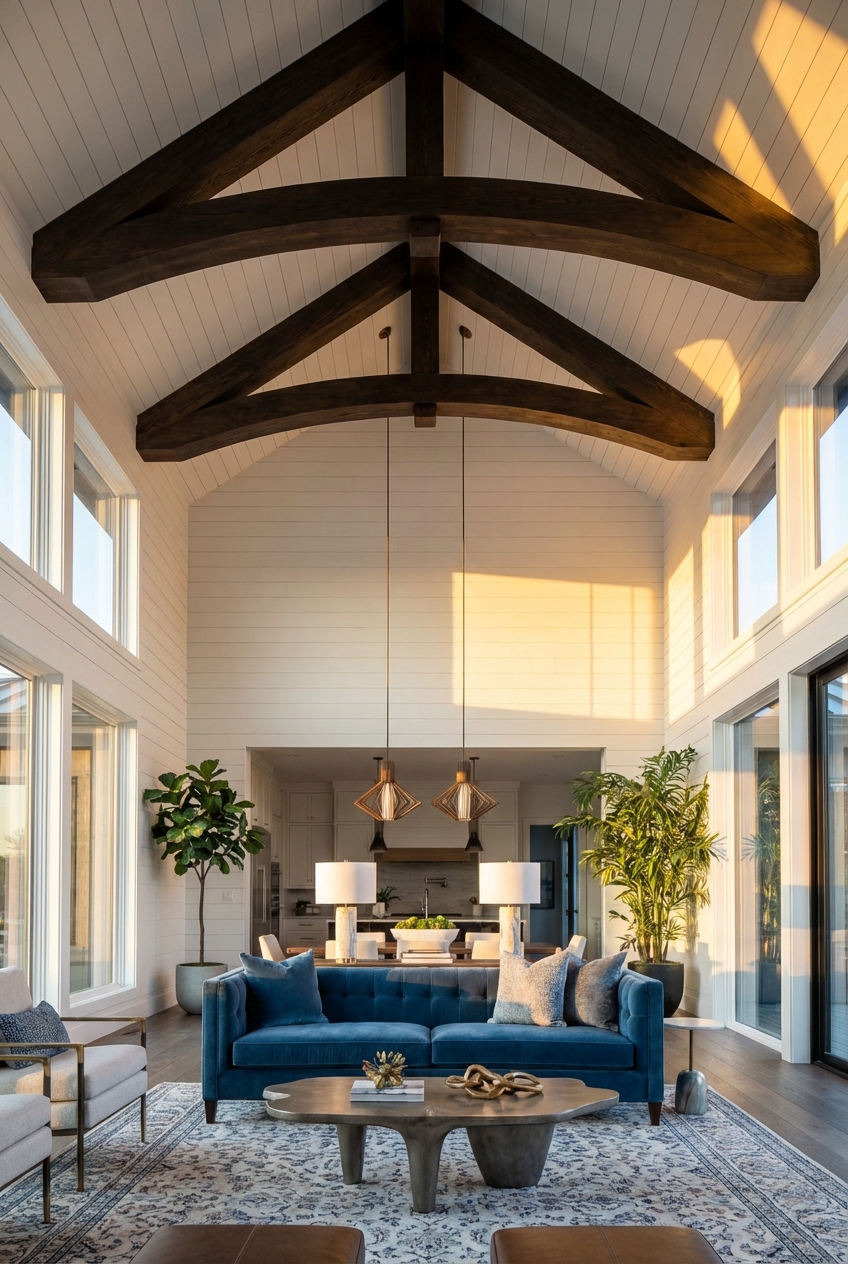
A small vaulted ceiling with beams works best with fewer, slimmer beams in a color close to the ceiling. White or pale beams on a white ceiling add shadow lines and structure without shrinking the room. The same goes for a half vaulted ceiling, where only one side slopes: run the beams with the slope and keep the finish consistent, so the two halves feel related.
Use beams to lower visual height when a tall ceiling feels cold. A darker finish, closer spacing or one cross beam at the low edge each make the room feel more human-scaled.
Color, wood tone and finish choices
Contrast is the dramatic option: dark beams on a white ceiling are crisp and graphic, and they show off the shape of the roof. Matching is the quiet option: beams painted the ceiling color add texture without a visual fight. Mixing woods works if you repeat the beam tone somewhere at eye level, such as a mantel, table or shelf.
Modern versions favor straight, slim beams in black, walnut tones or plain white, with clean-lined lighting. Traditional rooms suit thicker timbers, visible grain and a matte or oil-style finish. Keep gloss low: a shiny beam catches glare from skylights and windows.

Lighting, windows and skylights
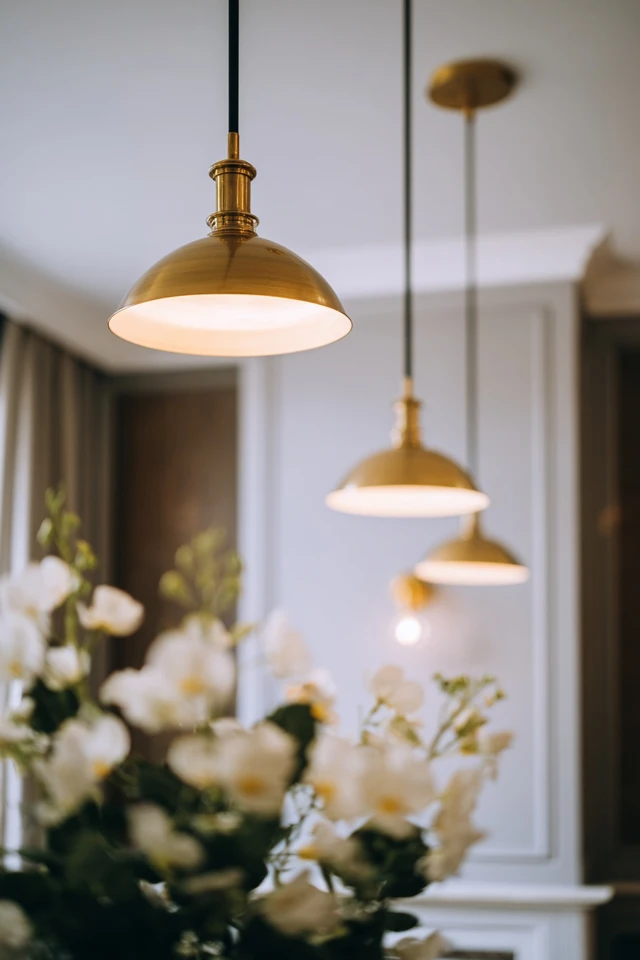
Tall ceilings need light at more than one height. A statement pendant or chandelier hung to clear the beams fills the volume, while wall sconces and lamps keep the lower part of the room comfortable. Uplights tucked on top of beams wash the ceiling softly, though they need a bit of dust management.
Clerestory windows and skylights bring daylight into the peak, which is the area that otherwise stays dim. Use a warm white bulb, around 2700K to 3000K, so the wood looks like wood.
DIY vaulted ceiling beam ideas
Hollow faux beams are among the more DIY-friendly projects, if you're comfortable on a ladder and with a stud finder. Plan the layout with painter's tape on the ceiling first, then live with it for a day. Pre-stain or paint the beams on the ground, and have a second person to hold the other end. For anything involving wiring or structural cuts, bring in a licensed professional.
If you like the look of old houses, it helps to know where certain ceiling details come from. The National Park Service describes Italianate houses as having a low, overhanging roof with decorative eave brackets, and that kind of roofline detailing is a good reference if you want beams that feel like part of the house's character.

For more ceiling ideas, browse ceiling design ideas, or see how a ceiling treatment pairs with a chic bedroom and a fireplace wall.
Frequently asked questions
What are the trends in ceiling design for 2026?
Expect slim beams, natural and darker wood tones, and ceilings painted to match the walls. Look for trends only as a starting point and pick finishes that suit your house.
Is it cheaper to vault a ceiling?
Usually not. Vaulting an existing flat ceiling is a structural change that involves framing, insulation and often an engineer, so adding faux beams to an already vaulted ceiling costs far less.
How far apart should ceiling beams be on a vaulted ceiling?
For decorative beams, about 2 to 4 feet between centers is a common range, adjusted so the bays come out equal. Structural beams must be spaced by an engineer.
Can faux beams hold a ceiling fan or chandelier?
Only if the fixture is anchored to proper framing behind the beam, not the beam shell alone. Check the fixture's weight rating and ask a licensed electrician or contractor.
Filed under
ArticlesMeet the author
Written by an architect.
Julio Arco is a passionate architect with years of experience in architecture, interior design, urban design, and housing. He studied at prestigious universities across North America and Europe.

- Name
- Julio Arco
- Job
- Architect and online interior designer
- Studied
- Architecture, ITESM · Urban Design and Housing, McGill
- Partner
- Thor, Australian Shepherd
- Thor’s title
- Head of quality control