Built In Bookshelves Around Doorway: Ideas and DIY Steps
Plan and build built in bookshelves around a doorway: layout ideas, depth and sizing, DIY steps, paint and lighting tips for beginners.

By Julio Arco
Architect and online interior designer
In this post
- Which doorway built-in layout suits your room?
- What about french doors and pocket doors?
- How deep and how tall should the shelves be?
- How do you build built-in bookshelves around a door?
- Is it cheaper to buy or build?
- Which paint colors and finishes work best?
- Are built-ins still in style?
- How do you style and light the shelves?
- Frequently asked questions
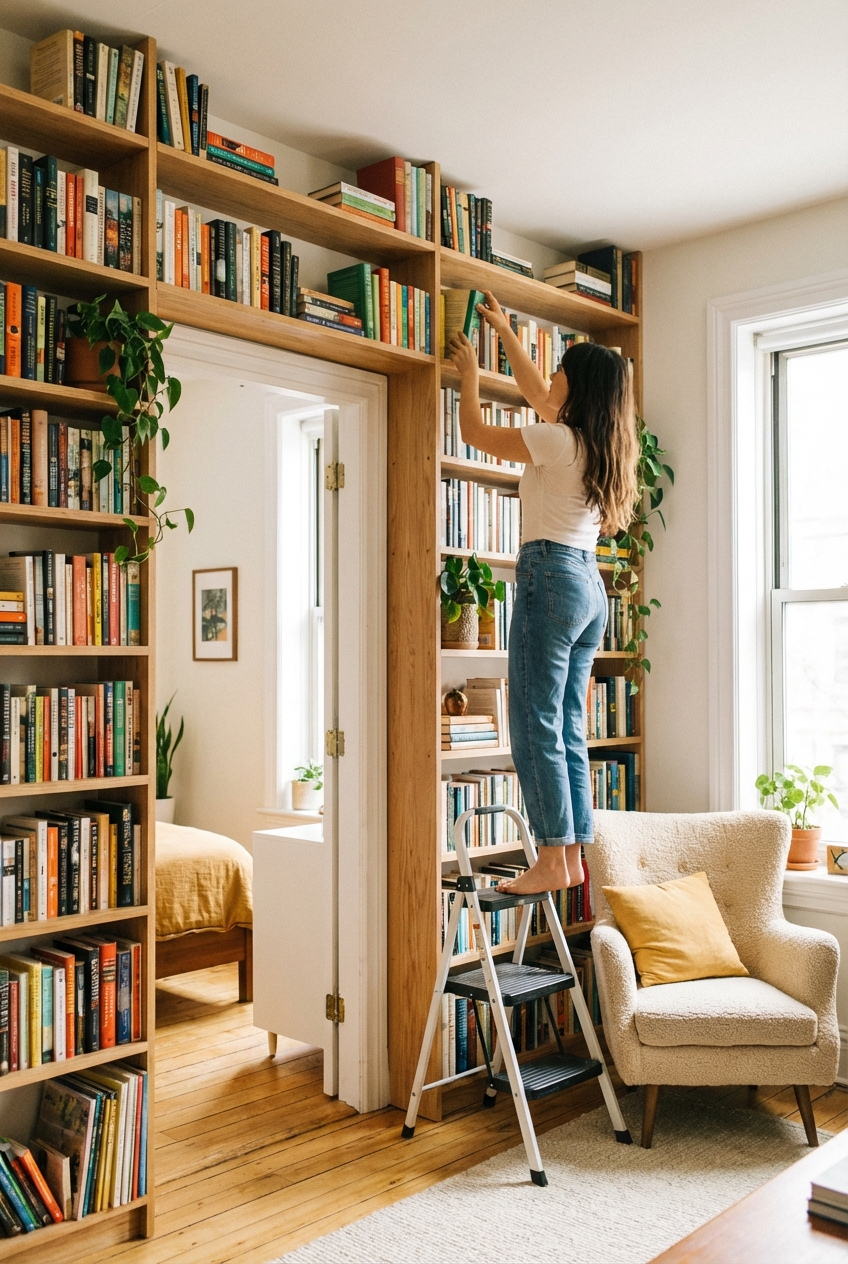
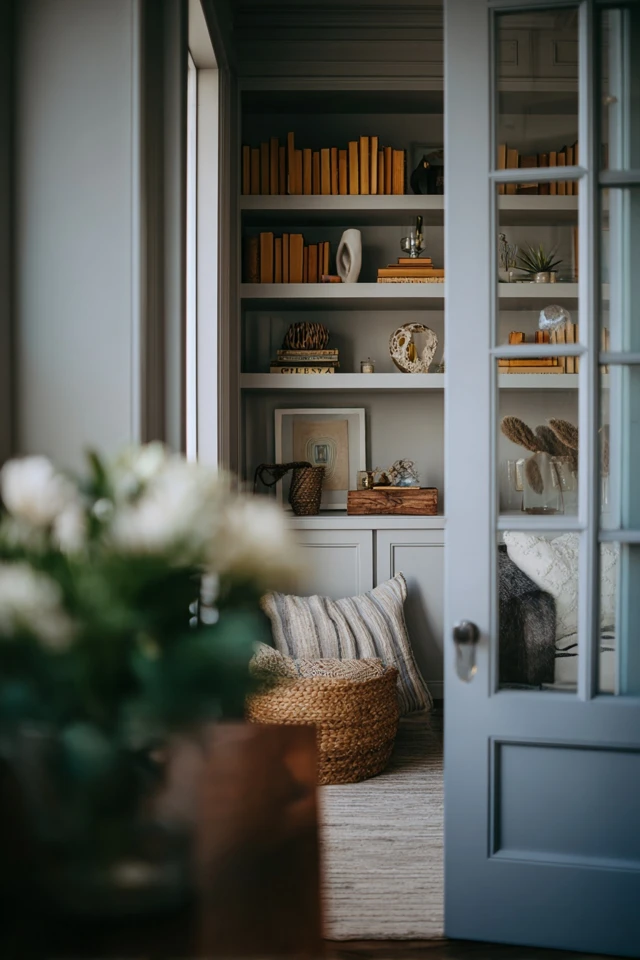
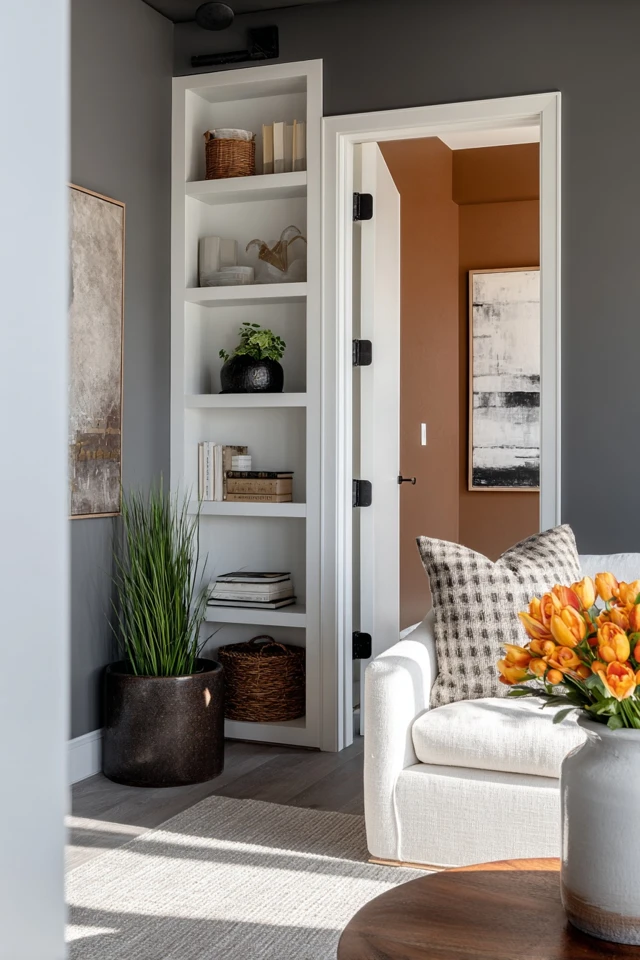
Built-in bookshelves around a doorway turn the dead wall beside an opening into storage and display. The simplest version is a pair of tall, shallow bookcases on either side of the door, tied together with trim and one coat of paint so they read as part of the wall.
It's a very doable project for a beginner, as long as you measure carefully and keep the shelves from blocking the door. Here are the ideas, the proportions and the steps.
Which doorway built-in layout suits your room?
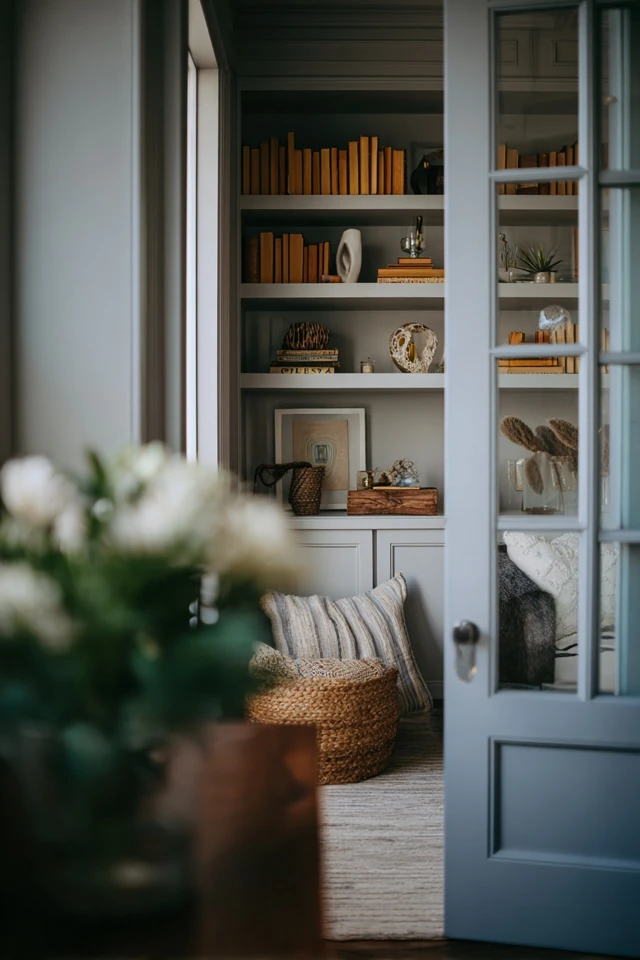
Start with how you'll use the shelves. Books and display need less depth than a landing spot for keys, baskets or a dog leash. These are the main layouts, and each one works with the built in bookshelves around doorway ideas you'll see online.
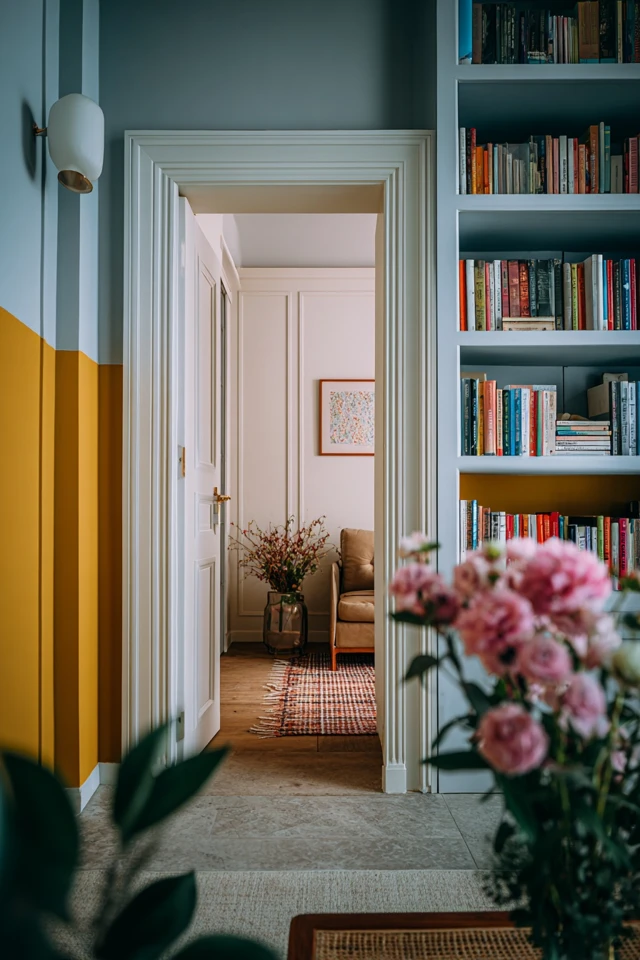
- Matching bookcases on both sides: formal, calm and the easiest to plan.
- Shelves on one side only: good when the other side has a window, a radiator or a switch panel you can't move.
- A bookcase over the doorway: a shelf or cabinet bridging the top of the opening, which connects the two sides into one frame.
- Open shelves above, closed cabinets below: the lower doors hide toys, pet supplies and cables.
Symmetry reads as stable and quiet. Mixed shelf heights or open shelves on one side and cabinets on the other feel more casual. As an architect, I'd choose symmetry for a hallway or passage you walk through all day, and save the asymmetry for a living room.
What about french doors and pocket doors?
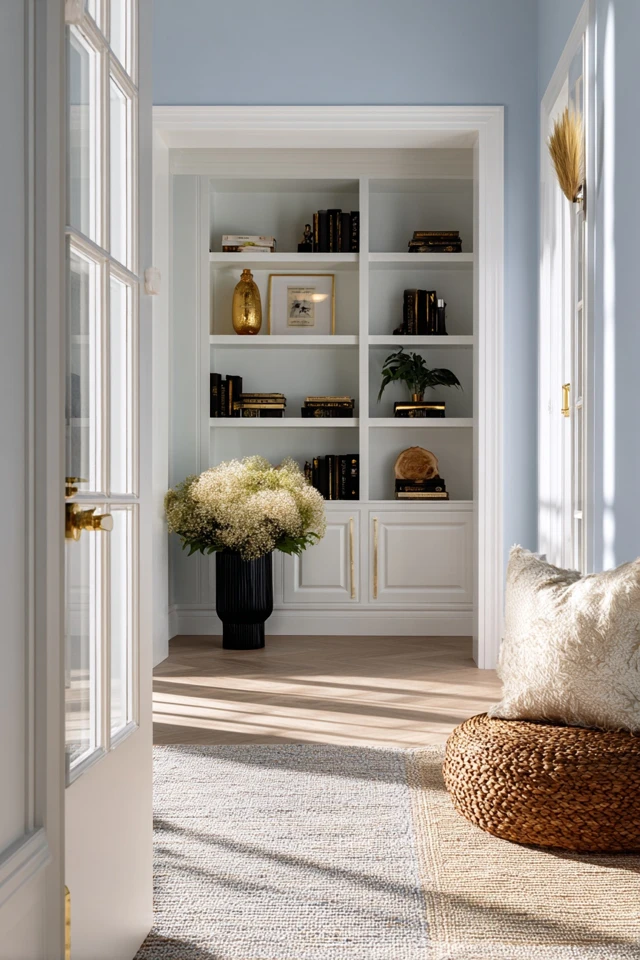
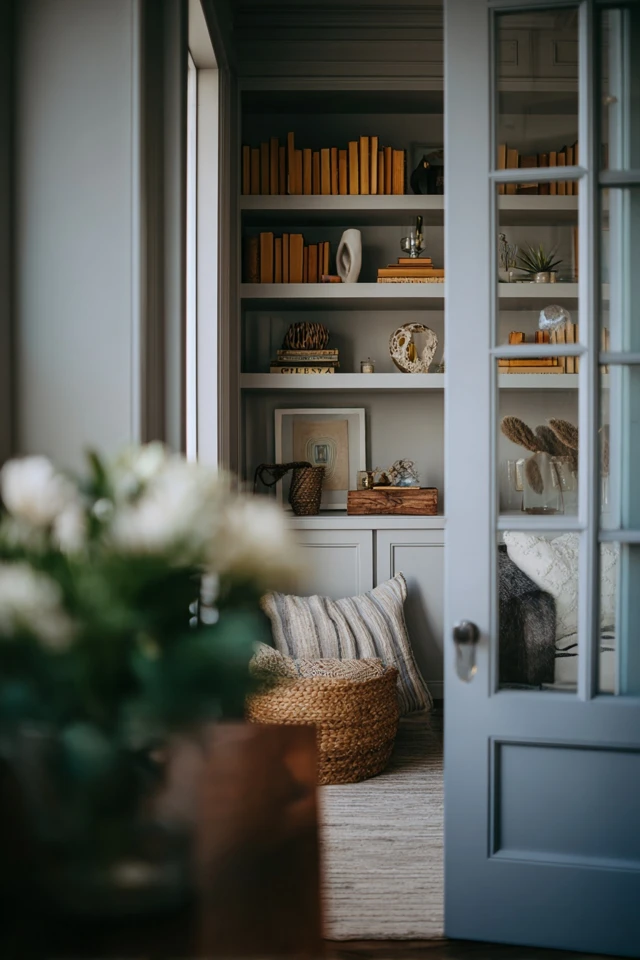
Built in bookshelves around french doors work well because the glass already looks light. Keep the shelves a bit shallower than you would beside a solid door so the frame doesn't feel heavy, and check that the door swings fully open without hitting a shelf edge.
Pocket doors are trickier. The door slides into the wall, so you can't fix shelves or run screws into that stretch. Build the units beside the pocket cavity, not over it, and find out exactly where the cavity sits before you drill anything.
How deep and how tall should the shelves be?
Books need about 8-10 inches of depth. In a narrow hallway, stay at that shallow end so you keep a comfortable walking width. In a wide opening between rooms you can go deeper, about 12 inches, and add base cabinets that run 14-16 inches deep if you want closed storage.
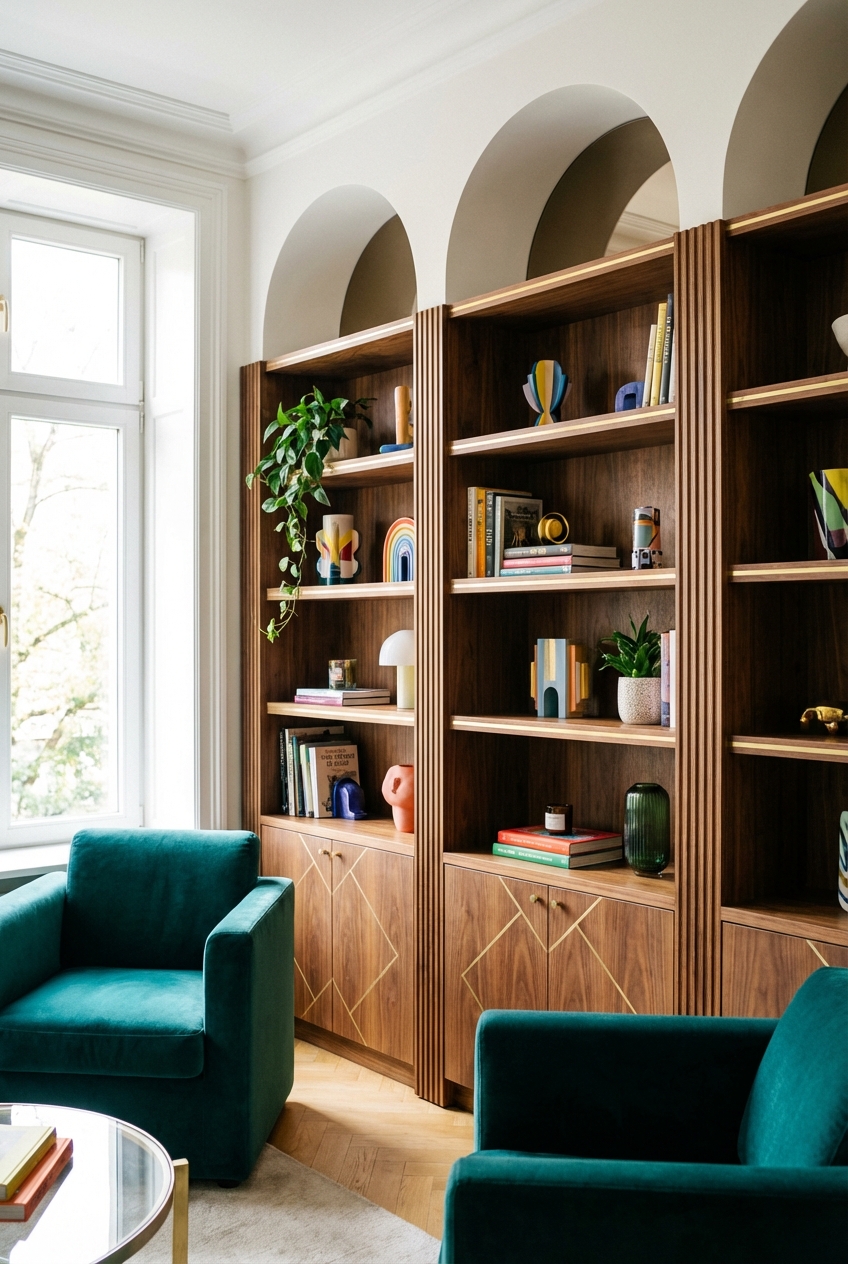
For height, you have two options. Stopping at a comfortable reach reads as furniture. Running to the ceiling, with crown molding on top, reads as architecture and makes the ceiling feel taller. Match the scale of the opening: heavy, chunky shelving overwhelms a delicate arch, and tiny shelves vanish around a wide opening.
How do you build built-in bookshelves around a door?
This is the usual sequence for a basic built in bookshelves around doorway diy project. It assumes simple carpentry skills and ready-made boxes or plywood cut to size.
- Measure the wall, the door opening and the trim, and draw the plan to scale. Mark where the studs are.
- Check door swing, outlets, switches and vents. Decide which ones you'll work around.
- Build or buy the base units first. Set them level, shimming against the floor and wall, and screw them into studs.
- Add the side units or tall uprights on top of the bases.
- Install the shelf across the top of the doorway if you want one. Support it with cleats screwed into studs, and don't rely on the door trim alone.
- Cover raw plywood edges with face frames or trim, then add crown molding if you like.
- Fill nail holes, caulk the seams against the wall and ceiling, then sand.
- Prime and paint, with the door open so you don't paint it shut.
Anything that touches wiring, a load-bearing wall or a header over the doorway is a job for a licensed professional. A bookcase over a doorway is mostly the weight of books, and books are heavier than they look.
Is it cheaper to buy or build?
Stock bookcases dressed up with trim and paint are usually the cheapest route and the fastest for a beginner. Building from plywood and lumber gives you exact fit and custom depth, and it costs more in time and tools. I'd go with stock cases if your walls and floors are fairly square, and build only when you need to fit an awkward gap.
Which paint colors and finishes work best?
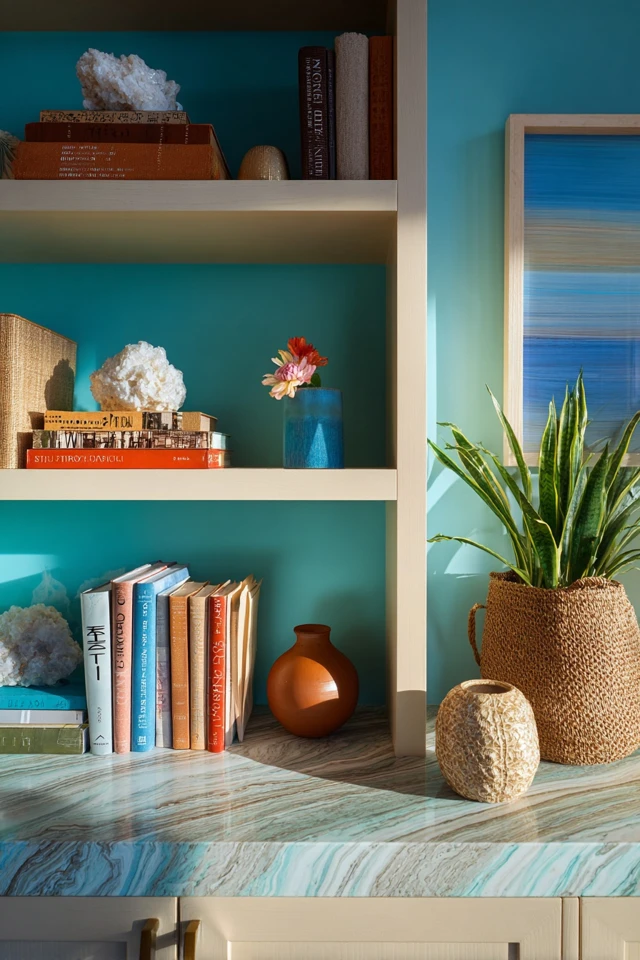
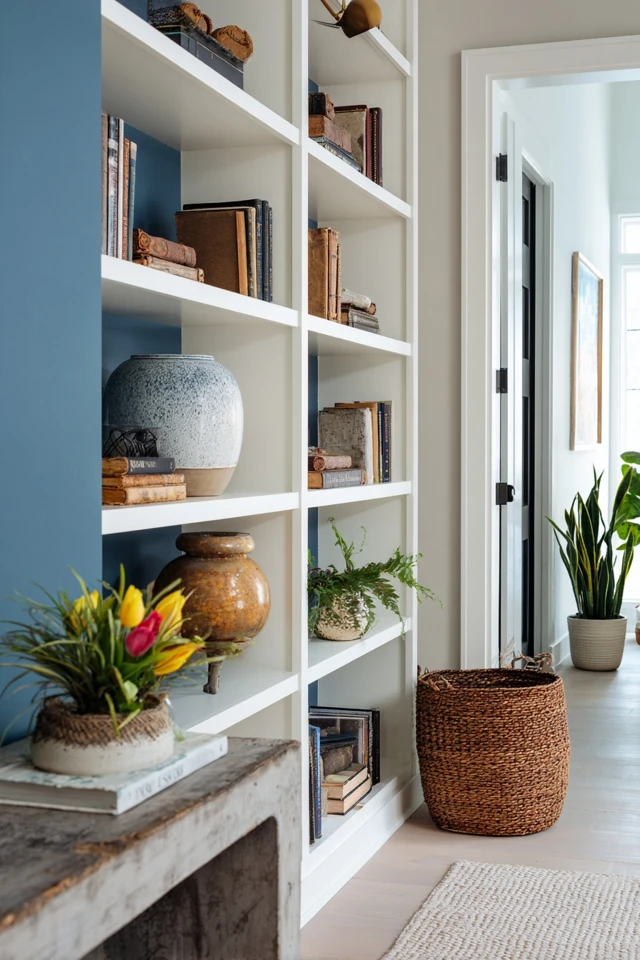
Warm colors such as terracotta, ochre and warm whites feel cozy. Cooler ones such as muted blues, soft grays and sage feel calmer. A saturated color on the back panels of the shelves, with neutral walls around them, gives you personality that's easy to repaint.
Light changes paint more than people expect. Tape up samples on the shelves and look at them in morning and evening light before you commit.
Finish matters too. Matte hides flaws and cuts glare, while semi-gloss wipes clean, which suits the lower cabinets where paws, bags and kids' hands land. Brass or black hardware gives you one small accent.
Are built-ins still in style?
Yes. Built-ins are tied to proportion and function more than to a trend, so they age well when the lines are simple and the finish is quiet. Deep jewel tones on the shelf backs are popular now, and they're also the easiest part to change with a can of paint. If you want the frame to last, keep the structure classic and let the objects change.
How do you style and light the shelves?
- Mix books vertical and horizontal, and leave some shelves partly empty.
- Group objects in odd numbers, such as three or five, for a relaxed look.
- Put the heaviest items low and the lightest high, and keep anything breakable out of tail range if you have a dog.
- Add a small plant or a basket for texture.
- Light the shelves with battery or plug-in LED strips or puck lights. Hardwired lighting needs an electrician.
For more shelf ideas, see these built-in bookcase ideas around a doorway and these timeless doorway bookshelf looks. If the opening leads from an entry, this foyer guide helps you plan the space around it.
Frequently asked questions
How do I build built-in bookshelves around my doorway?
Measure the opening and plan the layout, then install base units, side uprights and a top shelf anchored into studs. Finish with trim, caulk and paint.
Is it cheaper to buy or build bookshelves?
Dressing up stock bookcases with trim is usually cheaper and quicker. Building from scratch costs more but fits odd gaps exactly.
Are built-ins still in style?
Yes, especially when the design is simple and well proportioned. Paint color and styling can be updated without rebuilding.
How can I make a small room feel larger with shelves around a doorway?
Use shallow shelves of about 8-10 inches and a light paint color. Keep the shelves uncluttered so the eye moves up the wall.
Filed under
ArticlesMeet the author
Written by an architect.
Julio Arco is a passionate architect with years of experience in architecture, interior design, urban design, and housing. He studied at prestigious universities across North America and Europe.

- Name
- Julio Arco
- Job
- Architect and online interior designer
- Studied
- Architecture, ITESM · Urban Design and Housing, McGill
- Partner
- Thor, Australian Shepherd
- Thor’s title
- Head of quality control