Built-In Bookshelves Around a Doorway: Ideas and Steps
Plan built in bookshelves around a doorway: layout, shelf depths, a simple DIY build sequence, paint choices and styling tips to use that dead wall space.

By Julio Arco
Architect and online interior designer
In this post
- What do built-in bookshelves around a doorway need to get right?
- How deep should the shelves be?
- What layout and style ideas work around a doorway?
- How do you build built-in bookshelves around a door?
- Which paint colors and trim make it look finished?
- How do you style the shelves?
- Are built-ins still in style?
- Frequently asked questions
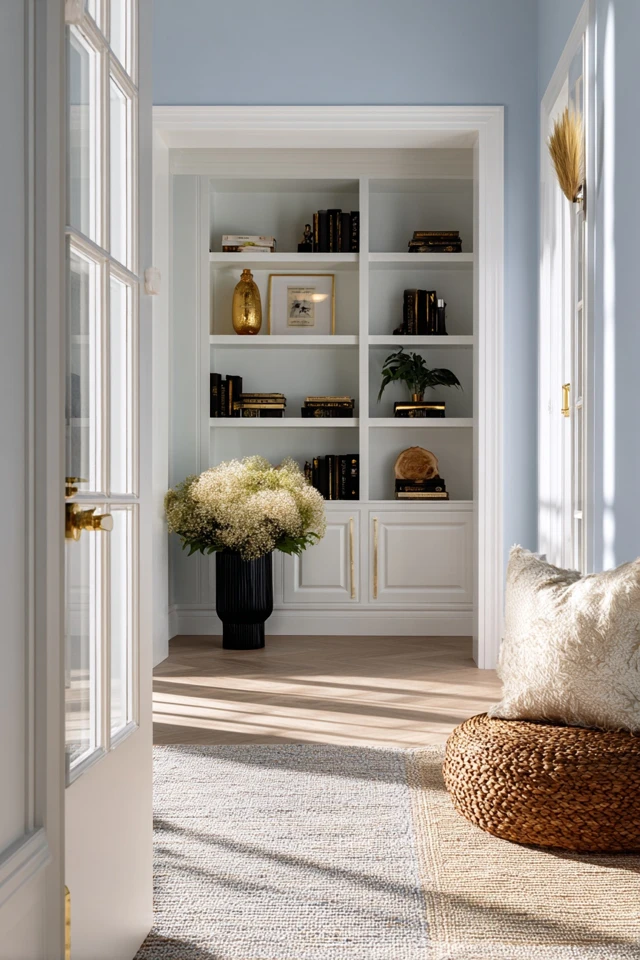
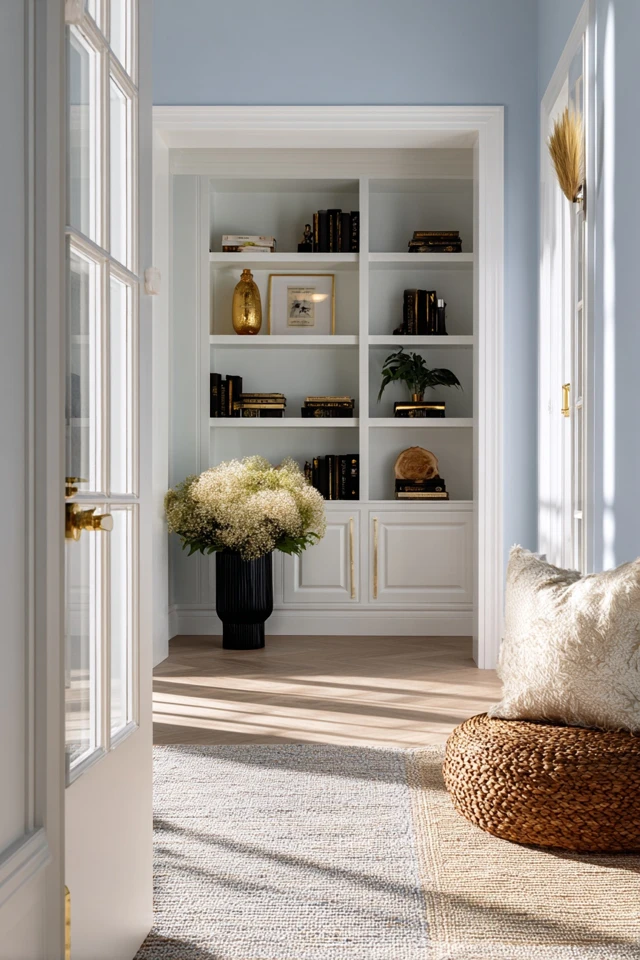
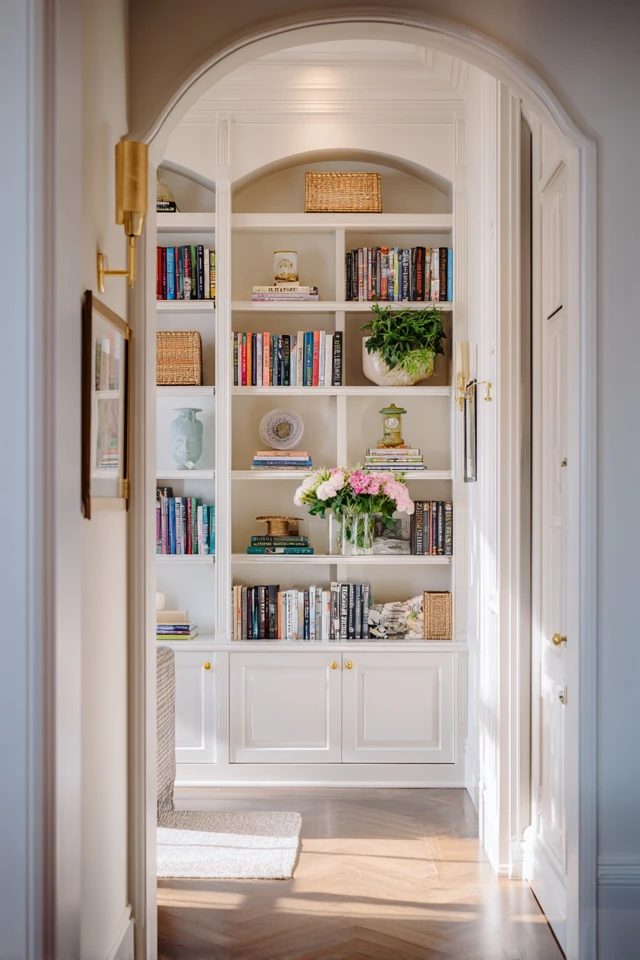
A doorway is usually surrounded by wall you can't hang much on. Built-in shelves on both sides, with a shelf or cabinet run across the top, turn that wall into storage and make the opening look like it was designed on purpose. It works in a hallway, a living room or an office.
The short version: keep the opening and door swing clear, make the shelves shallow near the door, build the frame first and add the bridge over the top last, then caulk and paint everything as one piece.
What do built-in bookshelves around a doorway need to get right?
Three things decide whether the result looks custom or cramped: circulation, proportion and symmetry.
- Circulation: keep a walking path of about 30-36 inches clear, and make sure the door can still swing fully open without hitting a shelf.
- Proportion: the shelving should line up with the door casing and, ideally, the room's trim heights, so it reads as part of the architecture.
- Symmetry: matching units on both sides feel calm and formal. If your door isn't centered on the wall, don't worry. Make the units different widths and keep the shelf heights aligned, so the lines still match.
As an architect, I'd start with a tape measure and a sketch before looking at any finishes. Measure the wall corner to corner, the door opening, and the distance from casing to each corner.
How deep should the shelves be?
Shallow shelves of about 8-10 inches hold most books and keep the area near the door slim. Deeper shelves of about 12-15 inches suit baskets, speakers or a lower cabinet, and they are better placed farther from the doorway. Using two depths looks intentional if the faces line up and only the sides step in.
Put heavy items low and lighter, seasonal things high. A closed cabinet or drawer base at waist height hides the clutter, and open shelves above show off the good stuff. If you have a dog or a cat that jumps, keep breakable objects off the lowest open shelf or move them higher.
What layout and style ideas work around a doorway?
Shelves on both sides with a bridge over the top
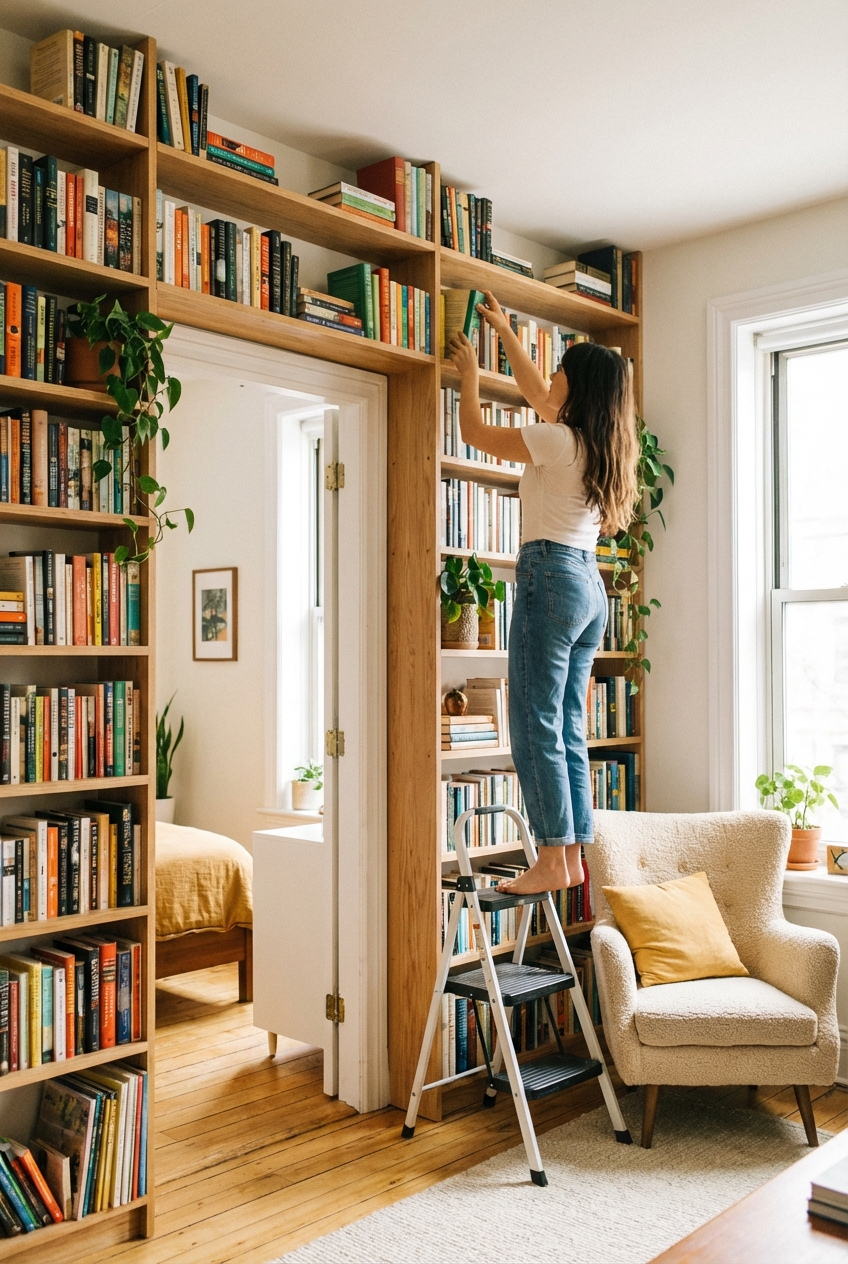
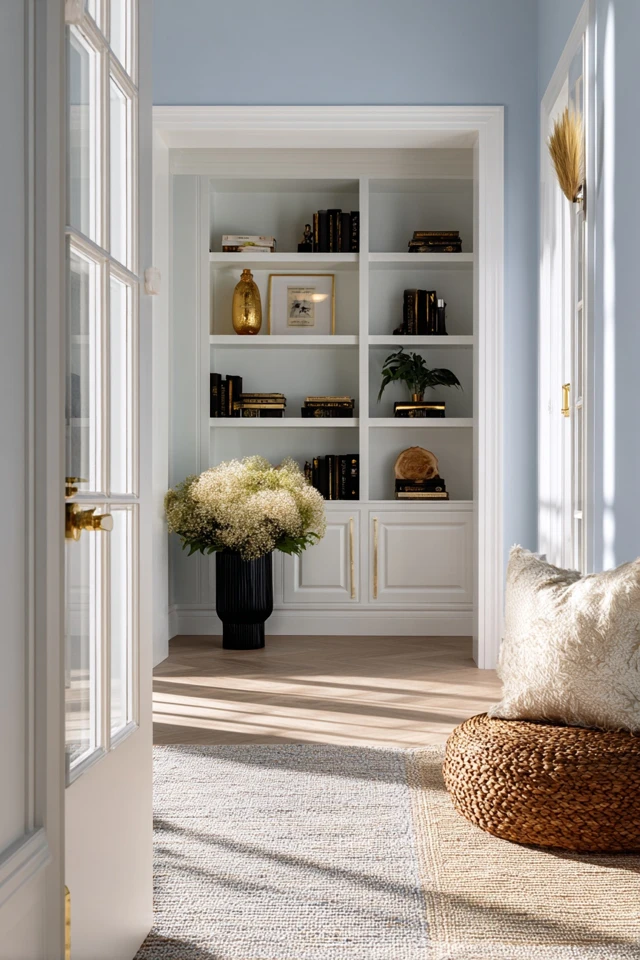
A bookcase over a doorway is the classic version: the side units are joined by a shelf or a row of cabinets that crosses above the opening. It adds the most storage and frames the door like a picture. Keep the span shallow so the doorway doesn't feel like a tunnel.
Shelves on one side only
When the wall is short, a single tall unit with a clean casing on the other side still works. Add a mirror or art on the open side to balance it.
Around French doors and pocket doors
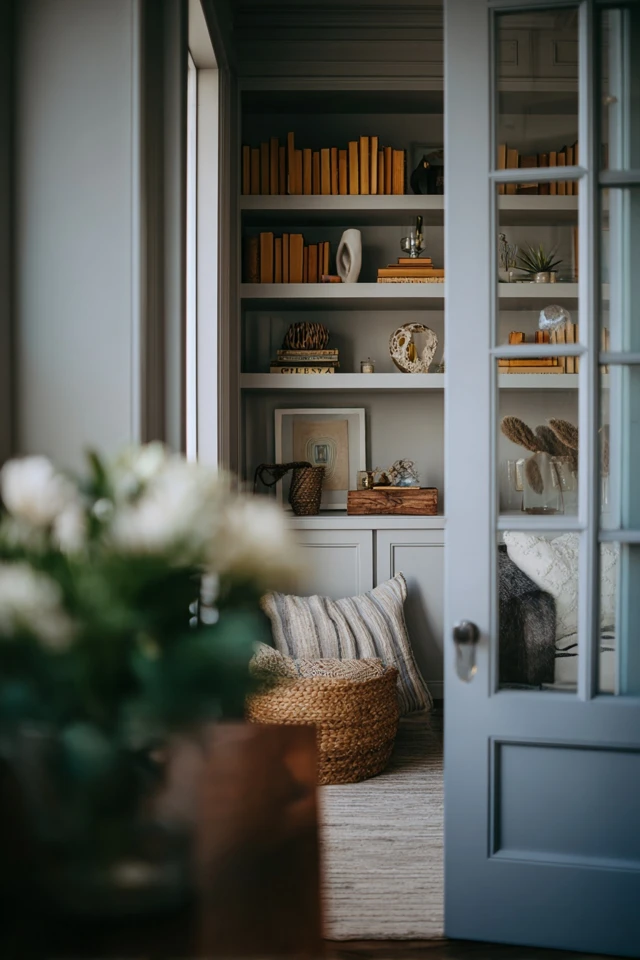
Built in bookshelves around french doors should leave the glass and the swing completely free, so keep the units flush with the casing and avoid deep shelves on the hinge side. With pocket doors, the wall cavity must stay empty, so shelving goes on the sides beyond the pocket or is built against the face of the wall. Check the pocket's location before you plan anything.
Small rooms
Paint the shelving the wall color, use slim profiles, or choose floating shelves if floor-to-ceiling units feel heavy. If the room is part of a media area, see these small TV room ideas.
How do you build built-in bookshelves around a door?
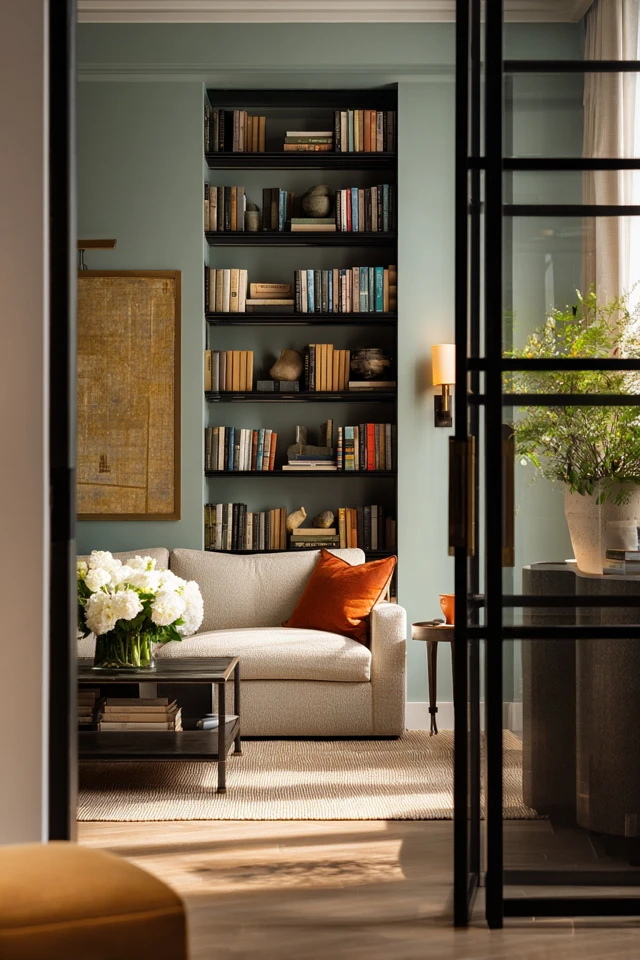
Here is how to build built-in bookshelves around a door, in the order that tends to go smoothly. It's a solid DIY project if you're comfortable with a saw and a level. Anything involving wiring for lights, or a wall that might be load-bearing, is a good moment to call a licensed professional.
- Gather tools and materials: tape measure, level, stud finder, drill, saw, nail gun or hammer, caulk, sanding block, plywood or boards for the boxes, face frame lumber, trim and paint.
- Plan the design: mark the shelf heights on the wall with painter's tape, including the line of the top bridge, and check it against the door casing.
- Build the bases: make a sturdy base for each side, level it, and anchor it to the wall studs and floor.
- Add the side units: build the boxes, fix the shelves (adjustable pins are handy), and secure the sides to studs.
- Add the shelf across the doorway: install a header support above the opening, then the shelf or cabinet run on top, and tie it into both side units.
- Face the front: add a face frame to hide plywood edges and to give the shelves a finished look.
- Finish: fill nail holes, caulk the seams between the unit and the wall, sand, prime and paint.
The caulk step matters more than it seems. It is what makes the units look built into the wall instead of placed against it.
Is it cheaper to buy or build?
Building is usually cheaper than custom cabinetry, especially if you do the painting yourself. Hacking stock bookcases with trim is a middle path, but you'll need to scribe them to the wall and fill gaps. I don't have a reliable price for any of these, since lumber and labor vary a lot by region, so get a local quote before you decide.
Which paint colors and trim make it look finished?
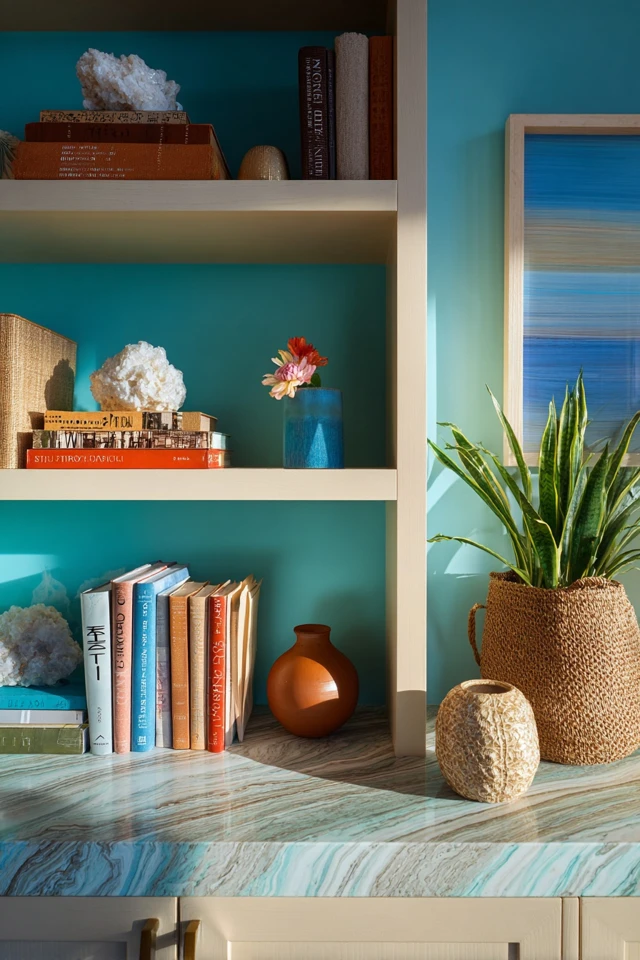
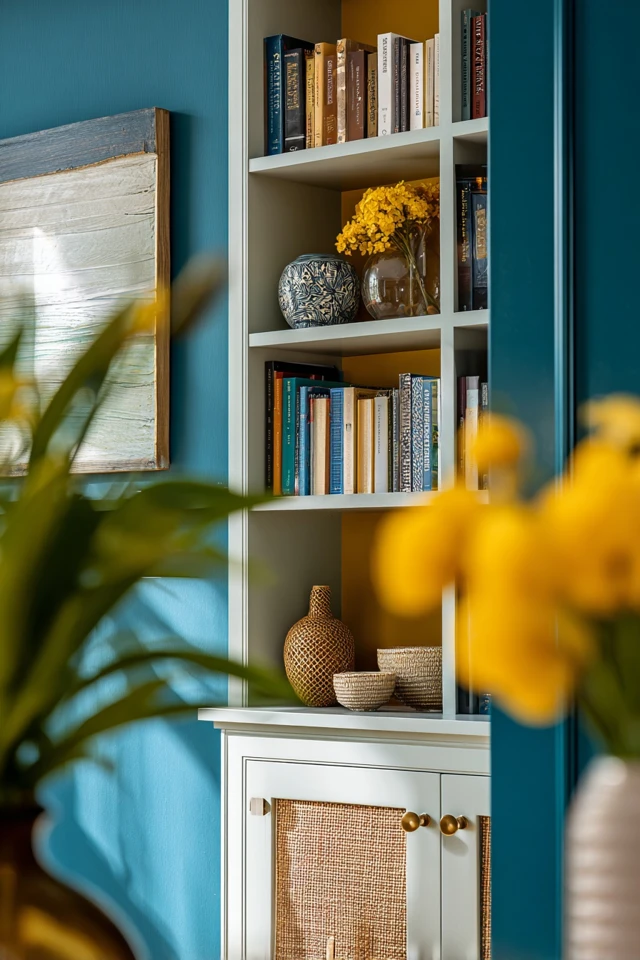
Paint the unit the same color as the door trim if you want it to read as architecture. Choose a contrasting color if you want it to read as a display piece. A deeper tone on the back panel makes objects stand out, and a lighter one makes the shelves feel shallower.
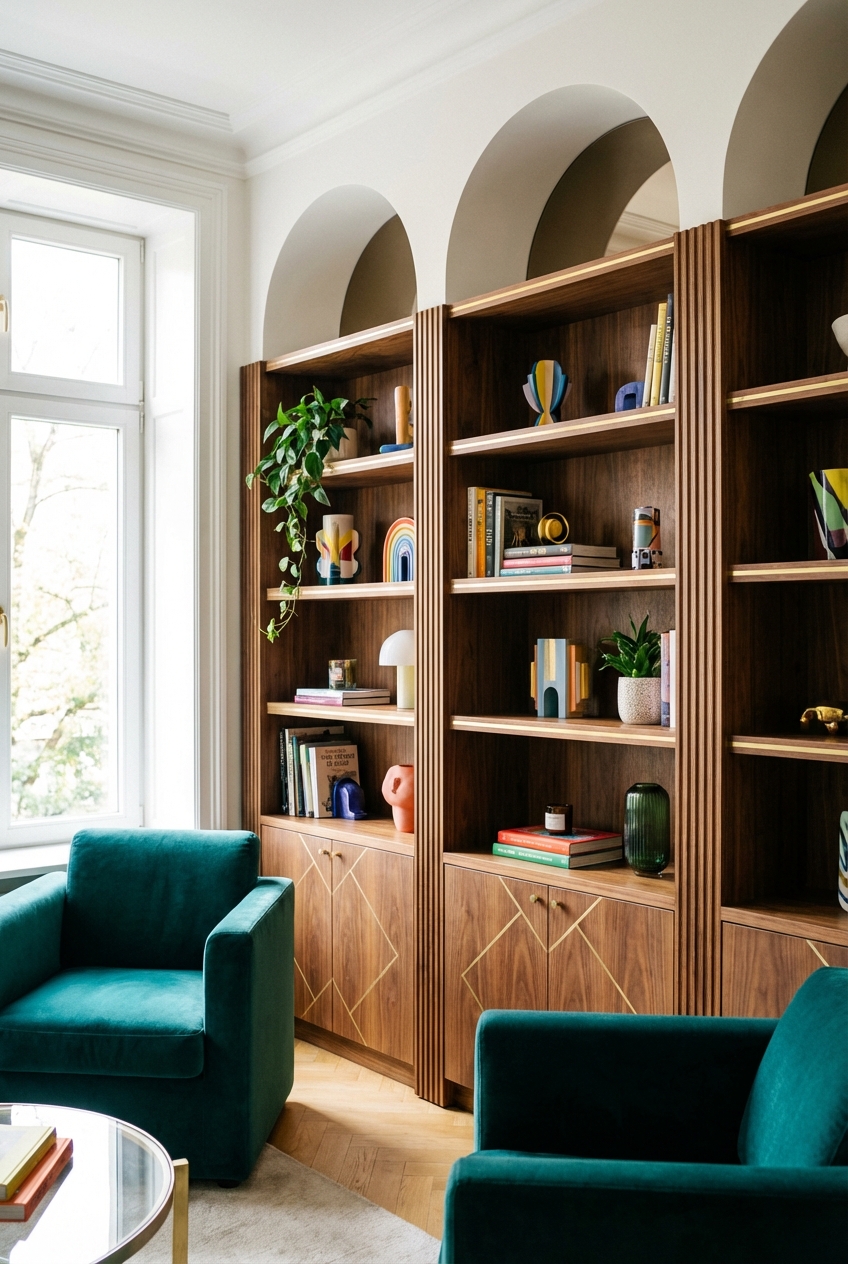
Glossy finishes bounce light and highlight edges, while matte ones absorb it and look softer, which is kinder in a bright hallway. Wipeable semi-gloss is practical near a door where hands, leashes and muddy paws pass by. Crown molding along the top helps tie the unit to the ceiling; for ideas, look at these molding ideas. If you're leaning toward warm wood tones, colors that go with brown can help you choose a wall color.
For lighting, a thin LED strip under a shelf or a few puck lights add depth. Have an electrician handle any hardwired circuit.
How do you style the shelves?
- Mix vertical books with horizontal stacks, then add a few objects or framed photos.
- Leave some shelves partly empty so the eye has somewhere to rest.
- Group by color or theme instead of scattering things evenly.
- Place larger, heavier pieces on the bottom and delicate ones higher.
- Add a plant or two. If you have pets, check with your vet about whether a plant is safe before you bring it home.
- In an entry, set aside a drawer or tray for keys and leashes.
Are built-ins still in style?
Yes, and they tend to age well because they're tied to the room's architecture instead of a color trend. Moody paint on the back panels and mixed materials are popular right now, but you can handle that by repainting the backs or swapping hardware later. Keep the structure simple and the proportions classic. For other ways to use built-ins in living spaces, see this timeless doorway shelving post or these beginner-friendly makeover ideas.
Frequently asked questions
How do I build built-in bookshelves around my doorway?
Plan the shelf heights with tape, build and level the side bases, add the side units, then install the shelf across the top with a support above the opening. Finish with a face frame, caulk and paint.
What is the bookshelf rule?
There's no single official rule. A useful guideline is to keep shelves shallow near the doorway, put heavy items low, and leave some empty space so the shelves don't look crowded.
Is it cheaper to buy or build bookshelves?
Building custom-looking built-ins yourself is usually cheaper than hiring cabinetmaking, but prices depend on your materials and region. Get local quotes to compare.
Are built-ins still in style?
Yes. Simple, well-proportioned built-ins fit most home styles, and you can update the look with paint or hardware.
Filed under
ArticlesMeet the author
Written by an architect.
Julio Arco is a passionate architect with years of experience in architecture, interior design, urban design, and housing. He studied at prestigious universities across North America and Europe.

- Name
- Julio Arco
- Job
- Architect and online interior designer
- Studied
- Architecture, ITESM · Urban Design and Housing, McGill
- Partner
- Thor, Australian Shepherd
- Thor’s title
- Head of quality control