Built In Bookshelves Around Doorway: Ideas and Steps
Plan built in bookshelves around a doorway: layout rules, depth, paint, lighting and a simple build sequence for turning dead wall space into storage.

By Julio Arco
Architect and online interior designer
In this post
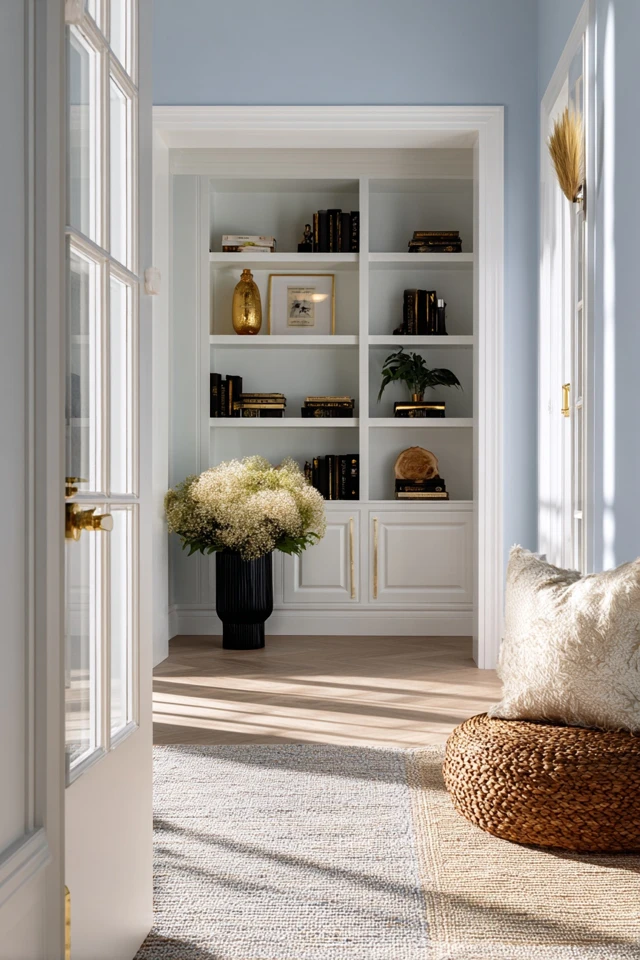
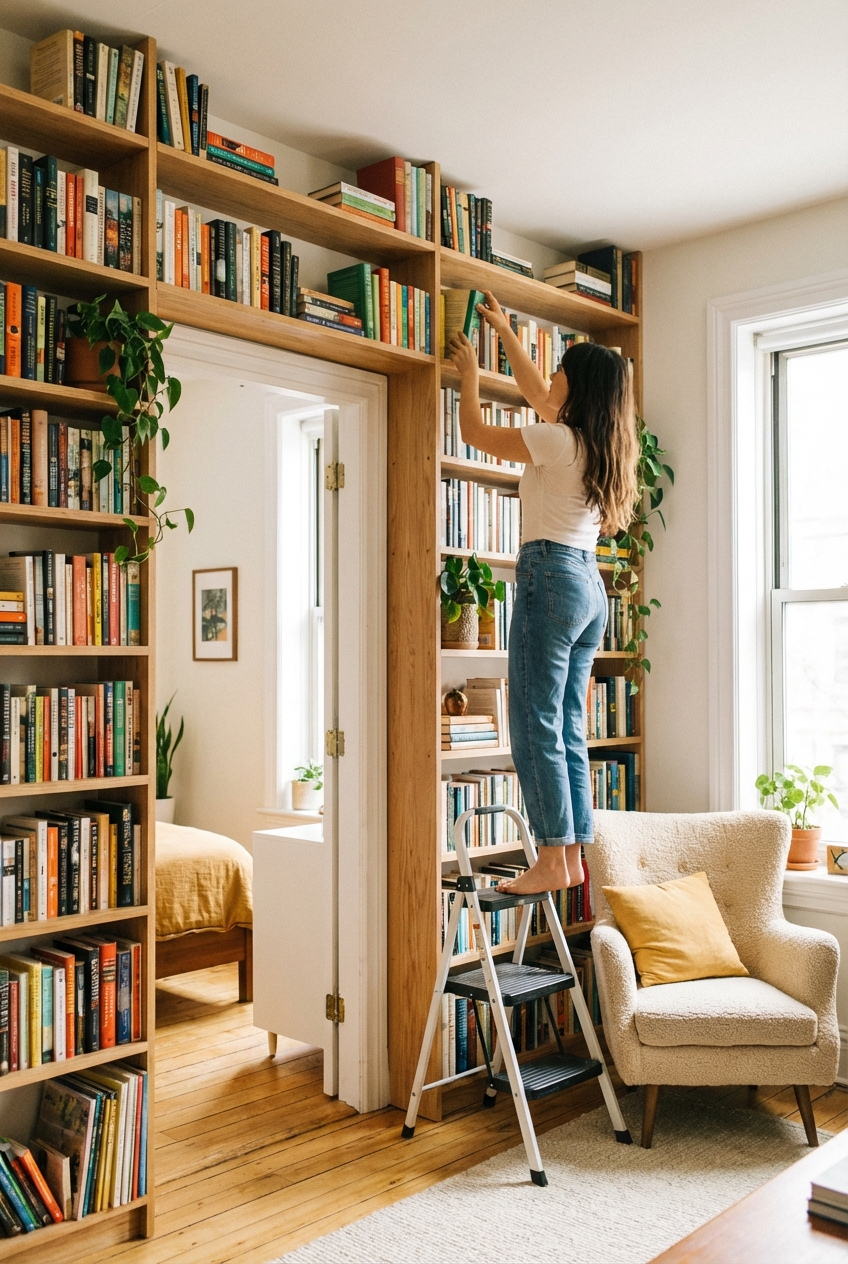
Built in bookshelves around a doorway turn the dead wall on either side of an opening into storage and display. The simplest version is two tall units flanking the door, joined by a shallow shelf or cabinet run over the top. It works in a hallway, a living room or an office, as long as the shelves don't steal clearance from the door.
If your doorway sits awkwardly in the wall, don't worry. Most do. The shelves are what make the opening look intentional.
How do you plan built in bookshelves around a doorway?
Start with a tape measure, not a Pinterest board. Measure the wall from corner to corner, the door opening, the casing width and the ceiling height at both ends, since ceilings and floors are rarely level. Write the numbers on a sketch before you decide anything else.
Then check three things:
- Which way the door swings, and whether open shelves or a nearby unit will block it.
- Where outlets, switches and vents sit on that wall. Moving electrical work is a job for a licensed electrician.
- How much floor you can spare. A main walkway needs roughly 30-36 inches clear, so keep the units shallow in a narrow hall.
As an architect, I'd keep depth to about 10-12 inches in a hallway or entry. Deeper units, around 12-16 inches, suit a living room or office where people stand and browse. Shallow shelves also invite you to actually use them instead of burying things at the back.
Which doorway layouts work best?
Two columns and a header shelf
This is the classic. Tall cabinets or open shelves on each side, with a bridging shelf above the door. It reads as a frame and gives you a place for a row of books or a few low objects. Keep the header shelf shallower than the side units so the opening doesn't feel heavy.
Symmetrical or asymmetrical
Matching sides feel formal and calm. If the door isn't centered on the wall, mirror the shelf layout around the door itself and let the outer edges absorb the difference, or make one side a bit wider. More bookcase around door ideas show how different walls handle this.
Doors that change the plan
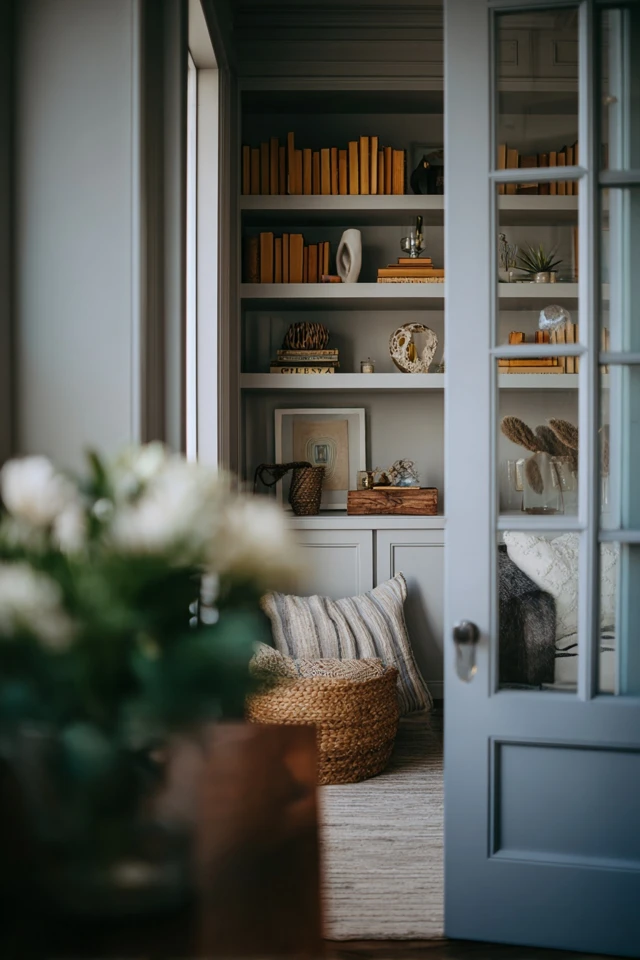
French doors need shelves set back from the swing and trim, so the glass still has some breathing room. Pocket doors need the wall cavity left alone, so the shelving should sit outside the pocket's width. Plan a bookcase over a doorway only if the header can carry nothing but light decor, and keep the shelf above the top casing, not inside the opening.
How to build built-in bookshelves around a door
Most DIY versions follow the same sequence. If you're a beginner, this beginner-friendly makeover guide pairs well with the steps below.
- Gather tools and materials: tape measure, level, stud finder, saw, drill, nail gun or hammer, plywood or cabinet-grade boards, trim, wood filler, caulk and paint.
- Build the bases first. A simple toe-kick box sets the units off the floor and lets you level them on uneven flooring.
- Build the side cabinets as boxes with fixed or adjustable shelves, then set them on the bases and fasten them to wall studs.
- Add the shelf or cabinet across the top of the doorway, supported by the side units and the wall, not by the door frame.
- Attach face frames and trim so the units look like part of the wall.
- Fill nail holes, caulk every seam against the wall and ceiling, sand, prime and paint.
Caulk is what makes a built-in look built in. Gaps between the unit and the wall are the quickest giveaway of a rushed job. If the wall is load-bearing or you need to alter framing, bring in a licensed contractor.
Which colors and finishes suit a doorway bookcase?
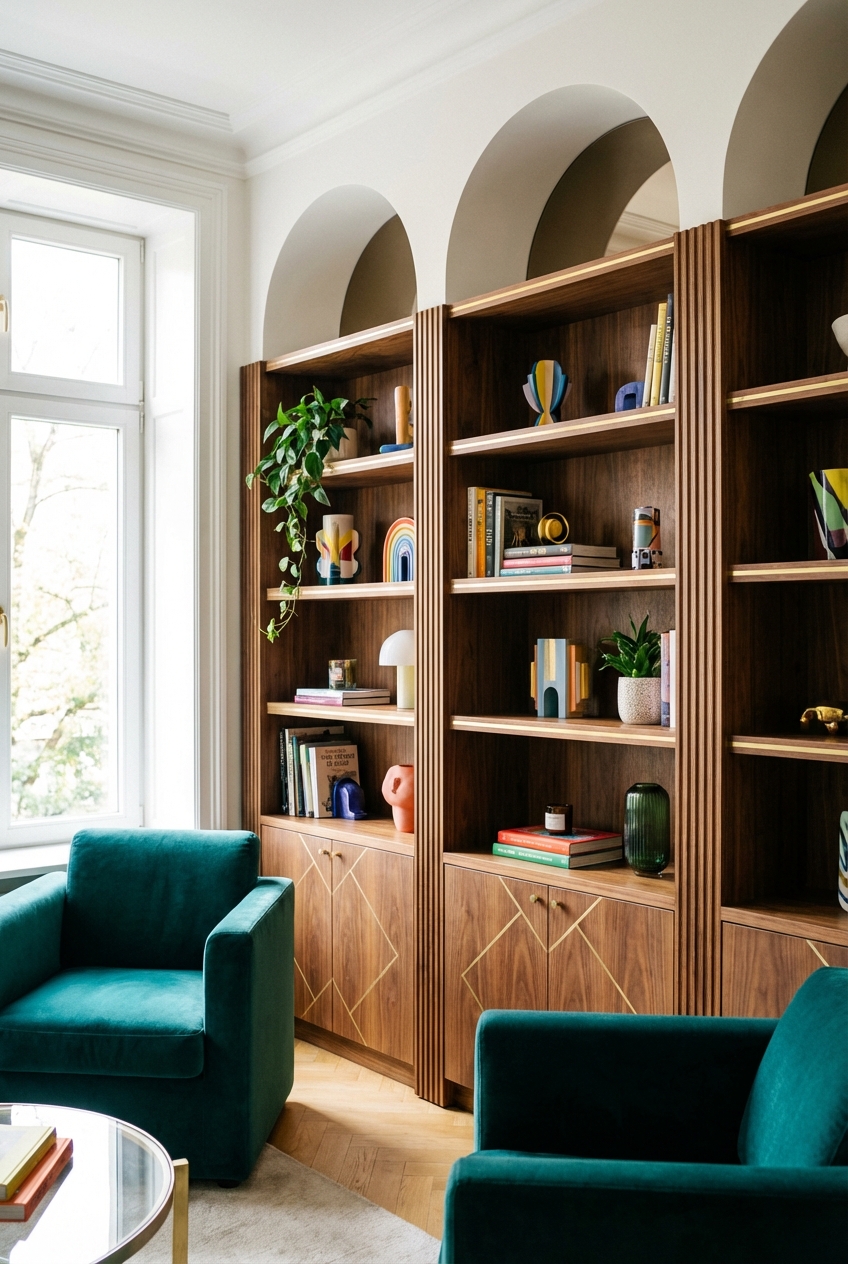
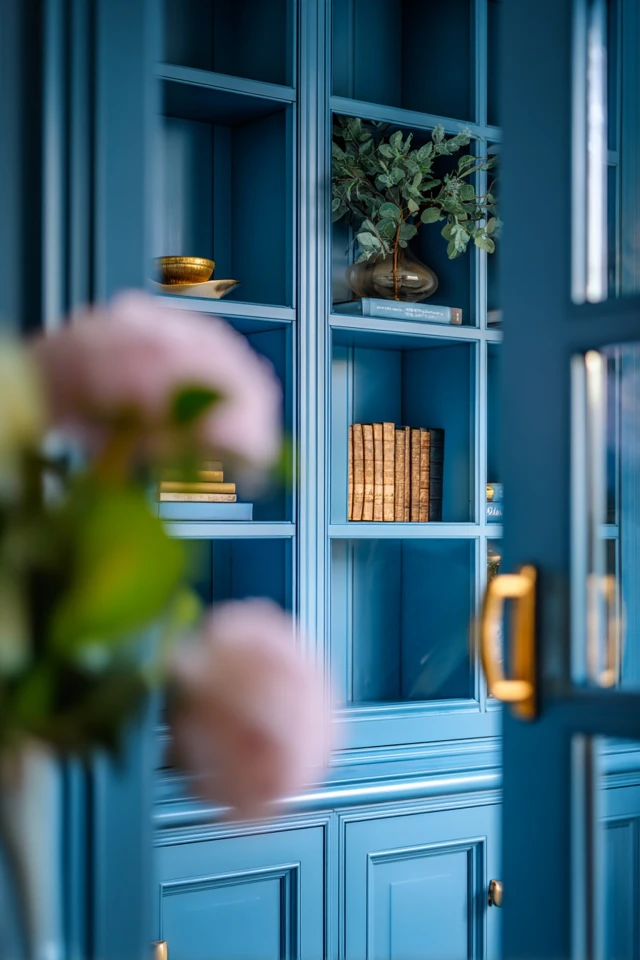
Paint the unit the same color as the wall and it fades into the architecture. Paint the shelf interiors a deeper shade and the objects pop like a framed display. Matte finishes absorb light and soften shadows, while glossy ones bounce it around and show every fingerprint. Semi-gloss on trim is easier to wipe, which helps in a house with a dog who leans on everything.
Dark colors work best in rooms with good daylight. In a dim hallway, lighter tones keep it open. Test samples on the wall and look at them morning and night before you commit.
How do you style the shelves?
Fill about two-thirds of the space and leave the rest empty. Mix vertical and horizontal stacks of books, put taller pieces toward the back, and group objects in odd numbers where it feels natural, not as a rule. Baskets hide cords, toys and the things that don't look good in public.
- Keep what you use daily between hip and eye level.
- Put rarely touched or breakable items up high, and heavier books low, where the shelf is strongest.
- Use warm LED strip lights (2700-3000K) if you want evening glow. Low-heat LEDs are the sensible choice inside wood shelves.
If a pet shares the room, keep anything fragile off low shelves and secure tall units to the wall so they can't tip.
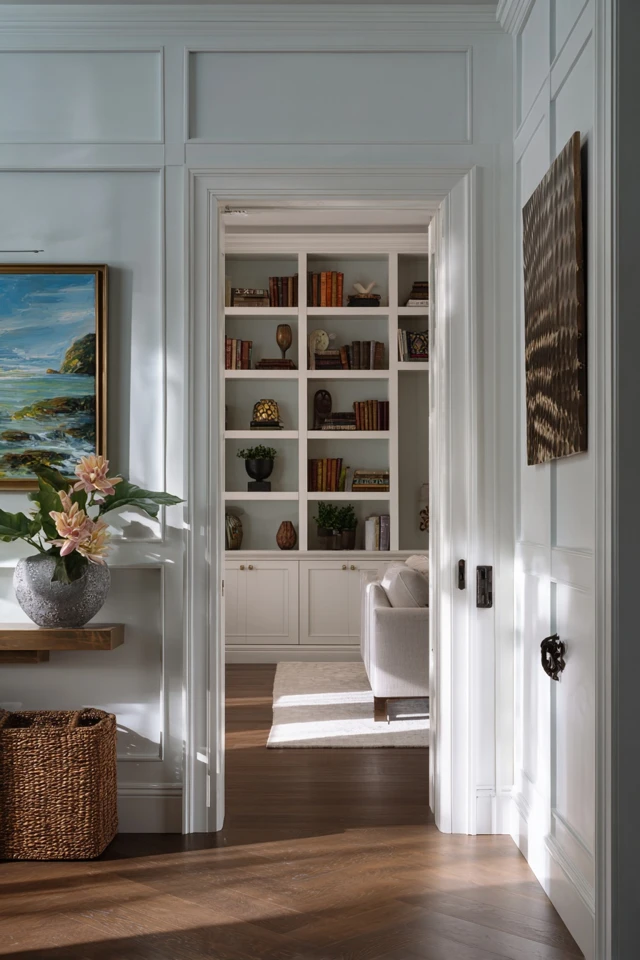
Are built-ins still in style?
Yes, and they age better than most trends because they add storage and tie into the architecture. I recommend following one current idea, such as dark paint or integrated lighting, on top of plain proportions and neutral trim. That way you can repaint later without rebuilding. The same logic applies to related projects such as a timeless doorway bookcase that mixes classic bones with one modern detail.
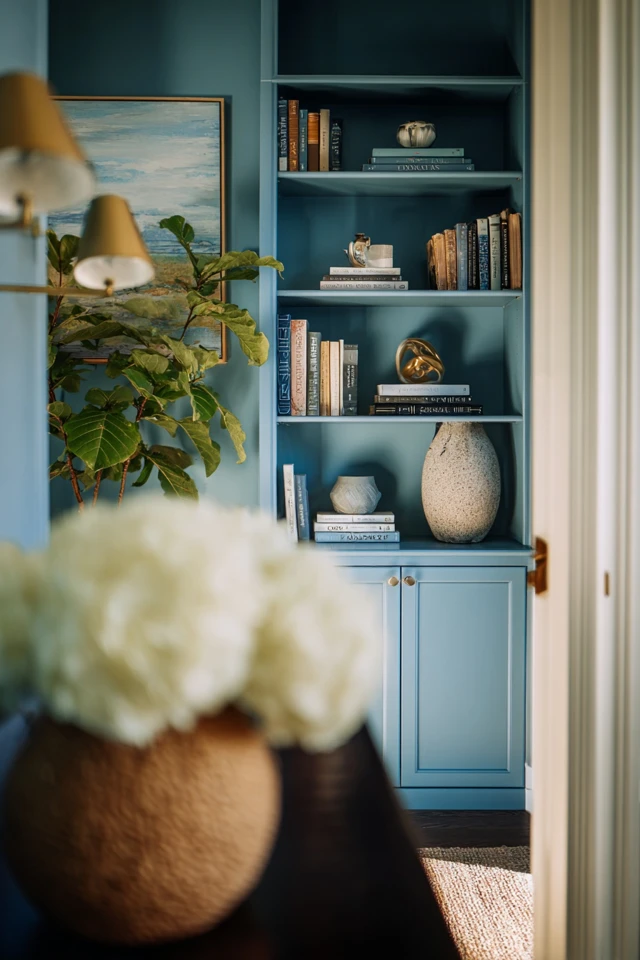
Should you build or buy?
Building from stock plywood and trim is usually less costly than custom millwork, but it costs time and needs decent carpentry skills. Buying freestanding bookcases and adding trim to look built-in sits in the middle. Custom joinery makes sense for older homes with odd walls or when the finish quality matters most.
Frequently asked questions
How do I build built-in bookshelves around my doorway?
Measure the wall, build base boxes, then side cabinets, and fasten them to studs. Add a shelf across the top, then trim, caulk and paint.
What is the bookshelf rule?
A common styling guideline is to fill about two-thirds of a shelf and leave the rest open, grouping objects in odd numbers. It keeps shelves from looking crowded.
Is it cheaper to buy or build bookshelves?
Building with stock plywood and trim usually costs less than custom millwork, though it takes more time. Freestanding units with added trim are a middle option.
Can built-ins around a doorway be added to an older home?
Yes. Match the existing trim profile and baseboard height so the unit looks original, and consult a licensed professional if any framing or wiring must change.
Filed under
ArticlesMeet the author
Written by an architect.
Julio Arco is a passionate architect with years of experience in architecture, interior design, urban design, and housing. He studied at prestigious universities across North America and Europe.

- Name
- Julio Arco
- Job
- Architect and online interior designer
- Studied
- Architecture, ITESM · Urban Design and Housing, McGill
- Partner
- Thor, Australian Shepherd
- Thor’s title
- Head of quality control