Built In Bookshelves Around Doorway: Plan and Style
Plan built in bookshelves around a doorway: sizes, depth, a simple build sequence, paint and styling tips for small and large rooms.

By Julio Arco
Architect and online interior designer
In this post
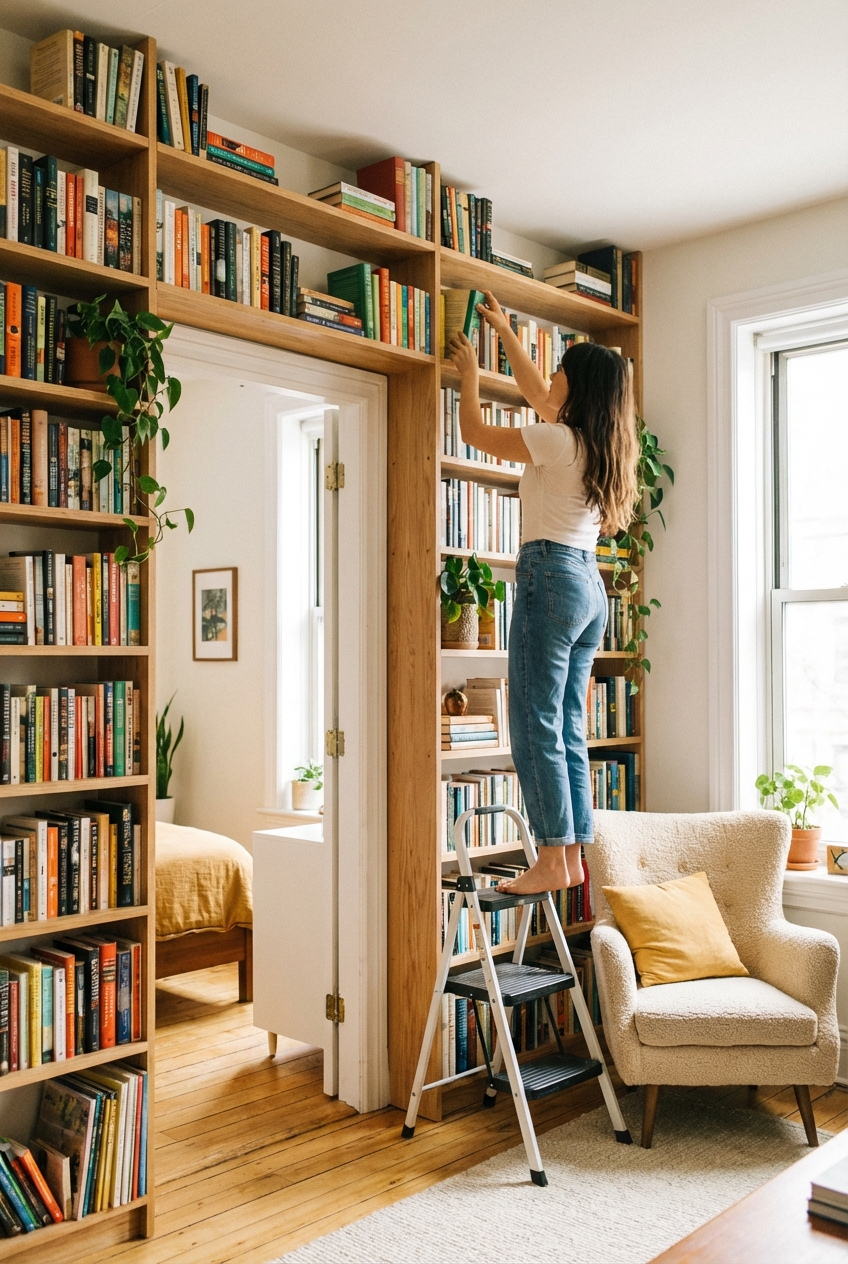
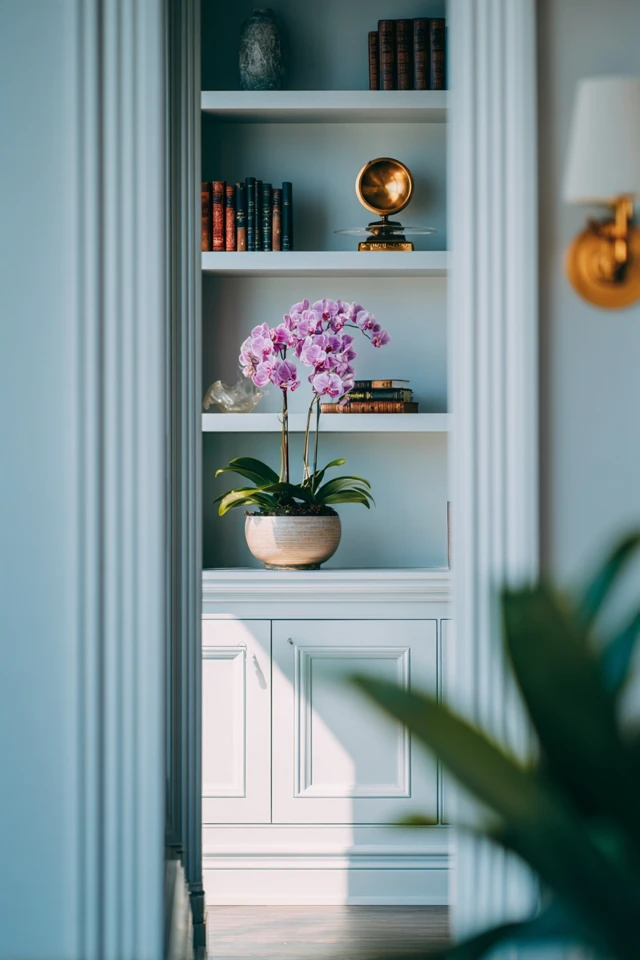
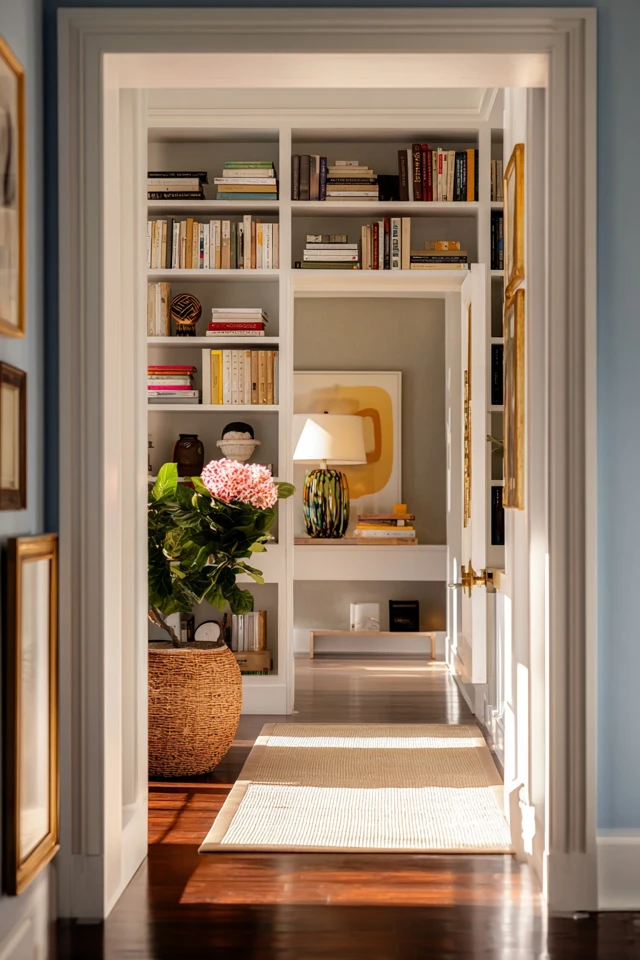
Built in bookshelves around a doorway turn the dead wall on each side of an opening into storage and a frame for the room. The basic recipe: keep the passage clear, make the shelves shallower than a standard bookcase, and tie the whole unit to the ceiling and trim so it looks like part of the house.
It's a good fit for rooms where wall space is scarce, since the doorway is usually the one spot nobody uses. Here's how to plan it, build it and style it.
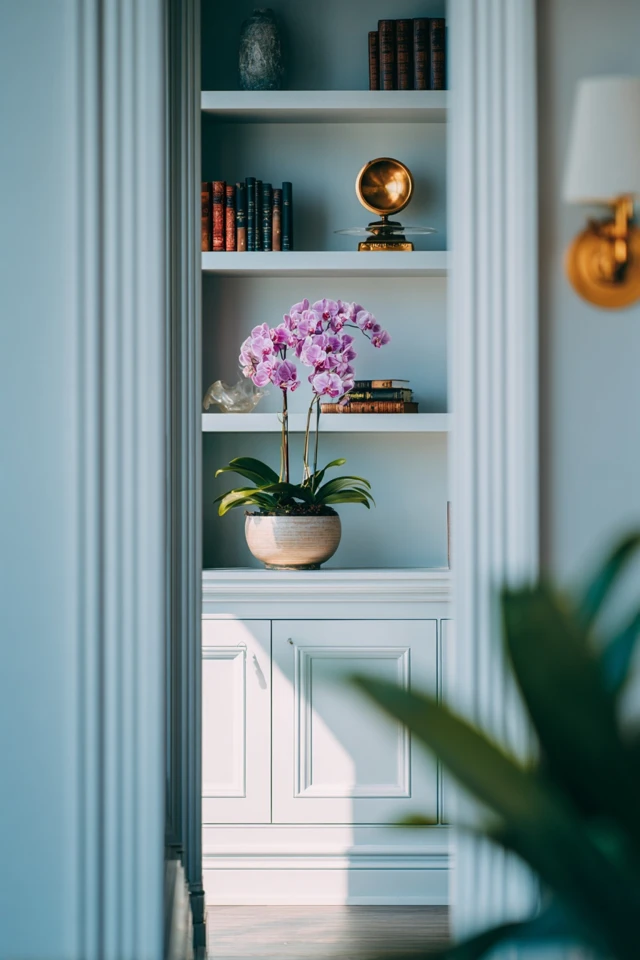
How do you plan shelves around a doorway?
Start with what the shelves are for. Books, display pieces, a spot for keys and mail, or hidden storage for blankets and electronics each call for a different depth and a different mix of open and closed sections.
Then measure. Get the width of the wall on both sides of the opening, the height to the ceiling, and the door casing. Use painter's tape on the wall to mark shelf widths and heights, and live with it for a day or two. Walking through the taped outline tells you more than a drawing does.
Depth and clearance
- A standard bookcase is about 10-12 inches deep. Beside a doorway, 8-10 inches keeps circulation easy.
- Keep at least 32-36 inches of clear opening for walking through. Shelves should never reduce that.
- Mix open shelves for display with closed cabinets below for the things you don't want to look at.
Symmetry or not?
Equal units on both sides feel calm and formal. If the wall is off-center, as many are, I'd keep the shelf heights matching and let the widths differ, then balance the heavier side with lighter objects. Don't feel bad if your doorway isn't centered; it's very common and easy to handle.
How to build built-in bookshelves around a door
Many builders do this with stock bookcases plus trim, which is cheaper and faster than fully custom carpentry. The sequence is the same either way.
- Mark studs and the tape layout, and check that the floor and walls are reasonably level. Baseboards often need to be removed or scribed.
- Build or set the bases on each side, level and fixed to the wall.
- Add the side units on top of the bases and anchor them to studs.
- If you want a shelf or cabinet across the top of the doorway, span it with a solid header supported by the side units. Keep its load modest, and ask a carpenter or contractor if the wall or opening is anything but simple.
- Add face frames, crown molding and filler strips so the unit meets the ceiling and walls without gaps.
- Caulk the seams, fill nail holes, then prime and paint.
Any wiring for shelf lighting should be handled by a licensed electrician. For a shortcut, the idea is explored in these beginner makeover ideas.
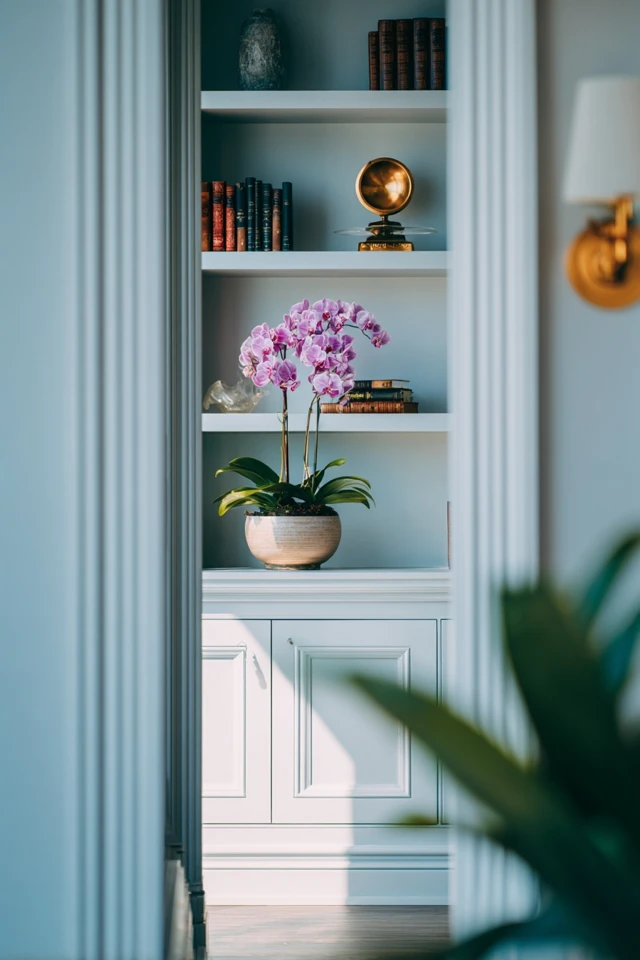
Bookcase around door ideas for different rooms
Low ceilings do better with shorter, horizontal shelving that doesn't crowd the entry. Tall ceilings can take full-height units with crown molding to connect to the architecture.
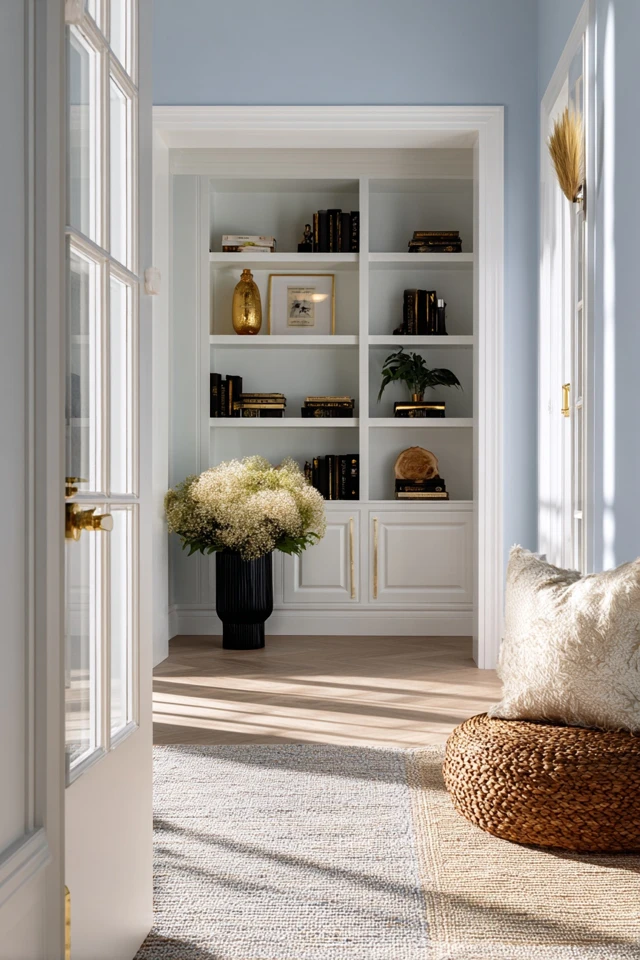
In small rooms, use shallow shelves, paint them close to the wall color, and consider a mirrored or light back panel to add depth. In larger rooms, add lower cabinets for media, adjustable shelves and lighting, or widen one side to include a bench.
Doors change the details. Around French doors, keep the units narrow so glass and light stay unobstructed. Around a pocket door, remember the door slides into the wall, so build the shelves outside the pocket zone. More layouts are in this roundup of bookcase ideas.
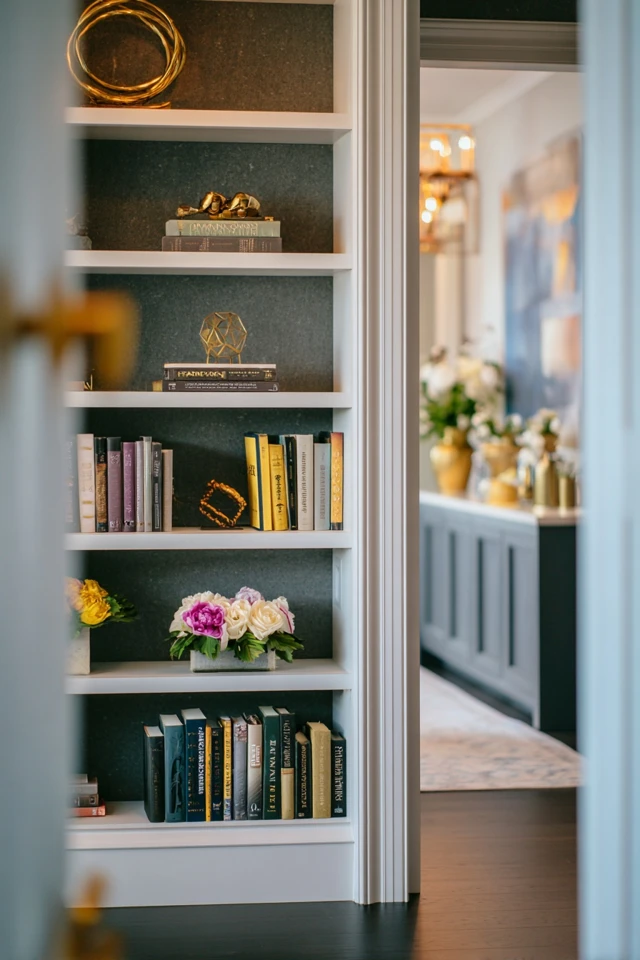
Which paint colors and finishes work best?
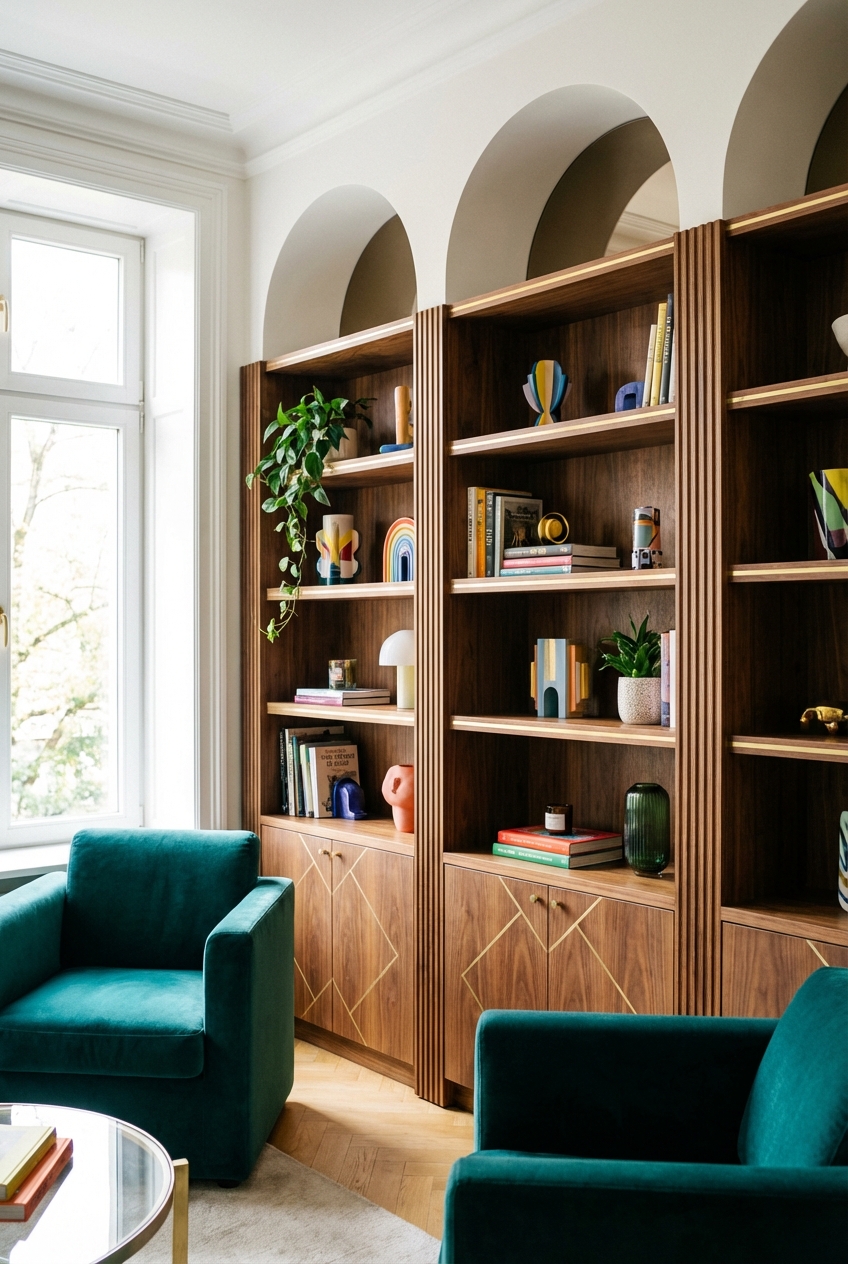
Match the wall color if you want the doorway to recede and the room to feel larger. Choose a darker or contrasting tone, or a deep matte finish, if you want the shelves to be the feature. Glossy finishes bounce light and show every flaw in the carpentry; matte ones hide it and look softer.
Light changes color. North-facing rooms often look better with warmer paints, while south-facing rooms can carry deeper tones. Painted wood is forgiving and cheaper; natural wood veneer adds warmth. Brass or matte black hardware is enough metal, so use it sparingly.
Are built-ins still in style?
Yes, when the proportions are classic. Matte cabinetry, mixed metals and moody colors come and go. As an architect, I recommend choosing one trendy element, such as a bold back panel or black hardware, and anchoring it with timeless ones: crown molding, warm wood, simple profiles. Paint is easy to change later; the structure stays.
How do you style the shelves?
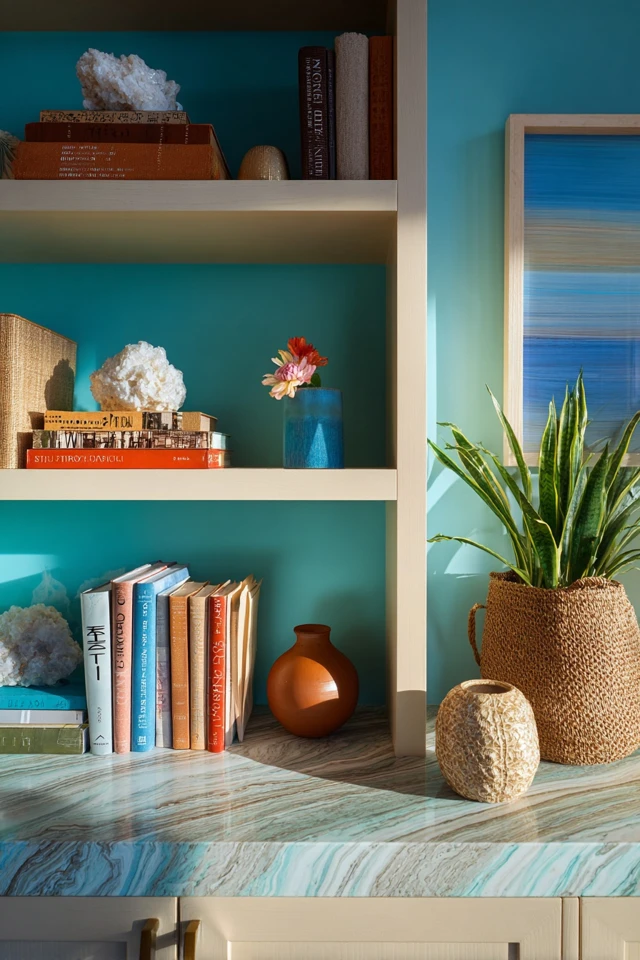
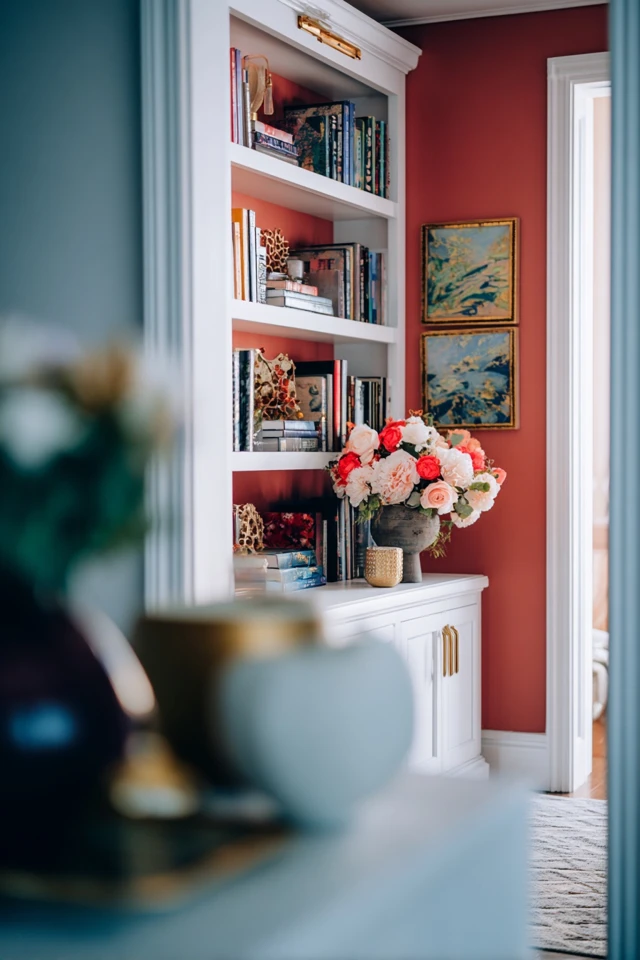
- Mix vertical and stacked books with art, a few objects and a plant or two.
- Group objects in odd numbers and leave empty space on each shelf. Crowding makes everything look like clutter.
- Add LED strips or picture lights in a warm 2700-3000K tone for evening depth.
- Put heavy or breakable items on upper shelves if you have a dog whose tail clears coffee tables, and secure tall units to the wall.
- Use lower cabinets for blankets, leashes and electronics.
Dust the shelves regularly and rotate displays seasonally. For a wider look at the style, see this effortless doorway decor post.
Frequently asked questions
How do I build built-in bookshelves around my doorway?
Measure the wall, tape the layout, then set bases, side units and a header across the top. Finish with trim, caulk and paint. Get a carpenter's advice if the opening is wide or the wall is not simple.
Is it cheaper to buy or build bookshelves?
Stock bookcases with added trim and paint usually cost less than fully custom carpentry. Custom work fits odd walls better, so the right choice depends on your wall and budget.
Are built-ins still in style?
Yes, especially with classic proportions and trim. Keep trendy colors and hardware easy to swap.
How deep should shelves beside a doorway be?
About 8-10 inches works well, and a standard bookcase is 10-12 inches. Keep at least 32-36 inches of clear opening.
Filed under
ArticlesMeet the author
Written by an architect.
Julio Arco is a passionate architect with years of experience in architecture, interior design, urban design, and housing. He studied at prestigious universities across North America and Europe.

- Name
- Julio Arco
- Job
- Architect and online interior designer
- Studied
- Architecture, ITESM · Urban Design and Housing, McGill
- Partner
- Thor, Australian Shepherd
- Thor’s title
- Head of quality control