Home Art Studio Ideas for Small Spaces and Tight Budgets
Home art studio ideas that fit a corner, closet or spare room: layout, lighting, furniture and storage tips to set up a studio on a budget.

By Julio Arco
Architect and online interior designer
In this post
- How do you create an art studio at home?
- Which space can become a studio?
- What should be included in an art studio?
- Art studio design layout
- What lighting works best?
- Home art studio furniture on a budget
- How do you organize an art studio at home?
- Color, texture, and finishing touches
- Frequently asked questions
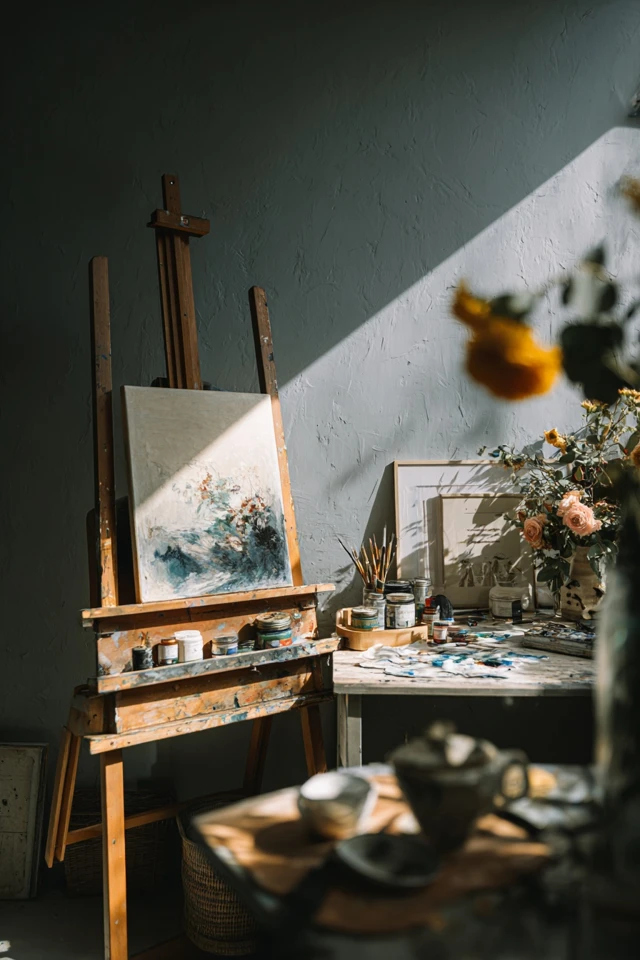
You don't need a spare room to make art at home. A corner, a closet, or one end of a living room can work as a studio if it has a sturdy work surface, good light, and storage within arm's reach. The rest is arrangement, and most of it costs very little.
Below are home art studio ideas for small spaces and tight budgets, from picking the spot to lighting and organizing supplies.
How do you create an art studio at home?
Start with the room, not the furniture. Pick the spot with the best daylight, then measure it. Sketch the wall and floor on paper and mark the window, the door, and the outlets. Those three things decide where a table can go.
Then work in this order: surface, light, storage, seating. A paint-splattered table you love beats a pretty desk you're afraid to ruin. If you share the home with a dog or cat, keep wet work and solvents out of reach and ask your vet about any material your pet might chew or lick.
Which space can become a studio?
Take over a corner
A corner gives you two walls for shelves and pegboard, which means the floor stays free. Put the table perpendicular to the window so your hand doesn't cast a shadow on the page.
Divide a room
A bookcase, a curtain on a ceiling track, or a folding screen can mark off a studio zone in a bedroom or living room. Choose dividers that let light through, or you'll lose the very thing you're trying to gain.
Convert a closet
A closet with the doors removed holds a shallow desk, a shelf above it, and bins below. It suits drawing, small painting, and printmaking. Add a lamp, since closets rarely have a window.
Use a spare bedroom, shed, or garage
A spare room gives you the most freedom, including a floor you can splatter. For a shed or garage, check the temperature first: paints, glues, and many materials dislike extreme heat or cold, so read the labels. If you plan to add power or insulation, hire a licensed electrician.
What should be included in an art studio?
- A work surface at a comfortable height, with space to spread out
- A chair that supports your back, or a stool if you paint standing
- Daylight plus a task lamp
- Storage for materials, with the daily tools closest
- A wall or board for pinning reference and drying work
- A washable floor or a drop cloth, and a bin for waste
Add a sink or a water bucket station if you work in wet media. A small mirror helps with checking proportions in a painting.
Art studio design layout: how to place things
Keep your main walkway clear. About 30-36 inches is comfortable for moving around furniture, and tighter is fine in a closet-sized studio if you only need to reach in. Don't put the main table in line with the door; you'll feel interrupted every time someone walks by.
Group things by use. The table, the tools you reach for constantly, and the wet supplies belong together. Rarely used items (spare canvases, framing materials) can go up high or under a bed. If the room is larger, an easel near the window and a separate table for drawing or cutting keeps messy and clean tasks apart.
What lighting works best?
Daylight is the best light for judging color, so place your work near a window if you can. Add a task lamp for evenings. LEDs are a good budget choice: the U.S. Department of Energy's LED basics page says good-quality white LED products are expected to last 30,000 to 50,000 hours or longer.
Color temperature changes how your colors read. The Department of Energy describes correlated color temperature as one of the main measures of how light looks, so buy bulbs with the same rating across the studio, and compare a painting under both daylight and lamp light before calling it finished. Look for a high color rendering index (CRI) on the box, since it tells you how faithfully a bulb shows color.
If you work at night, think about your sleep. The Department of Energy notes that "Light plays a key role in setting and regulating the body's biological clock." Dimmers and warmer bulbs for late sessions are a cheap fix.
Home art studio furniture on a budget
You can furnish a studio mostly with secondhand and basic pieces:
- A solid-core door or a plywood sheet on trestles makes a large, cheap table.
- A fold-down wall table gives you a surface only when you need it, which suits small apartments.
- Rolling carts hold supplies and tuck under the table.
- Sturdy crates or wall-mounted shelves provide vertical storage without taking floor space.
I recommend spending first on the chair and the lamp. You'll feel both every hour you work, and a cheap table can always be covered with a sheet of hardboard. For more storage ideas, see our budget shelving ideas, or browse Ikea alternatives for lower-cost pieces.
How do you organize an art studio at home?
Sort supplies by medium, then by how often you use them. Pencils and favorite brushes go in jars on the table. Paints, papers, and glues go in labeled bins at shelf height. Seasonal or rarely used items go in the highest or lowest spots.
Clear containers show what's inside, and a pegboard or rail keeps tools visible. Wall-mounted shelves free the table, and a flat file or a portfolio under the bed protects finished paper work.
Store solvents, sharp tools, and any toxic pigments in a closed cabinet, well out of reach of pets and children. Avoid keeping materials in spots that get hot, like next to a heater or in direct sun.
Color, texture, and finishing touches
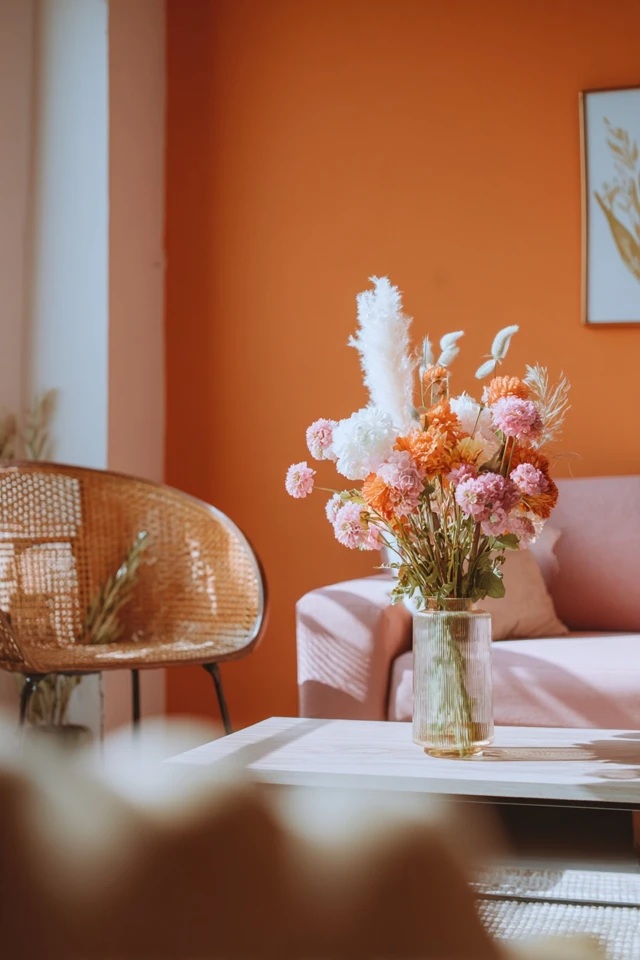
Light, neutral walls bounce daylight and keep the studio from competing with your work. Save strong color for a small zone or for the art itself. A cork board, a washable rug or mat, and a plant on the windowsill make the space easier to stay in. Matte surfaces cut glare on the table, which helps when you're working with glossy paper or a screen.
For more inspiration, see our art studio design inspiration.
Frequently asked questions
How can I create an art studio at home?
Choose the spot with the best daylight, measure it, and add a sturdy table, task lighting, and storage in that order. A corner or closet is enough for many kinds of work.
What should be included in an art studio?
A work surface, a supportive chair, daylight plus a task lamp, storage, a pin-up wall, and a floor you can clean easily. Add water access if you use wet media.
What are some good ideas for a home studio?
Take over a corner, divide a room with a bookcase or curtain, convert a closet, or use a spare bedroom. A fold-down table suits very small spaces.
What is the 70/30 rule in painting?
It's a composition guideline that suggests giving one element, such as a color or area, most of the canvas and another a smaller share, so the picture has a clear focus. It's a rule of thumb, not a requirement.
Filed under
ArticlesMeet the author
Written by an architect.
Julio Arco is a passionate architect with years of experience in architecture, interior design, urban design, and housing. He studied at prestigious universities across North America and Europe.

- Name
- Julio Arco
- Job
- Architect and online interior designer
- Studied
- Architecture, ITESM · Urban Design and Housing, McGill
- Partner
- Thor, Australian Shepherd
- Thor’s title
- Head of quality control