Modular Shelf System Styling Guide for a Warm, Inviting Home
Room-by-room modular shelving ideas: layouts for living rooms, bedrooms and small apartments, plus sizing, materials and styling tips that work.

By Julio Arco
Architect and online interior designer
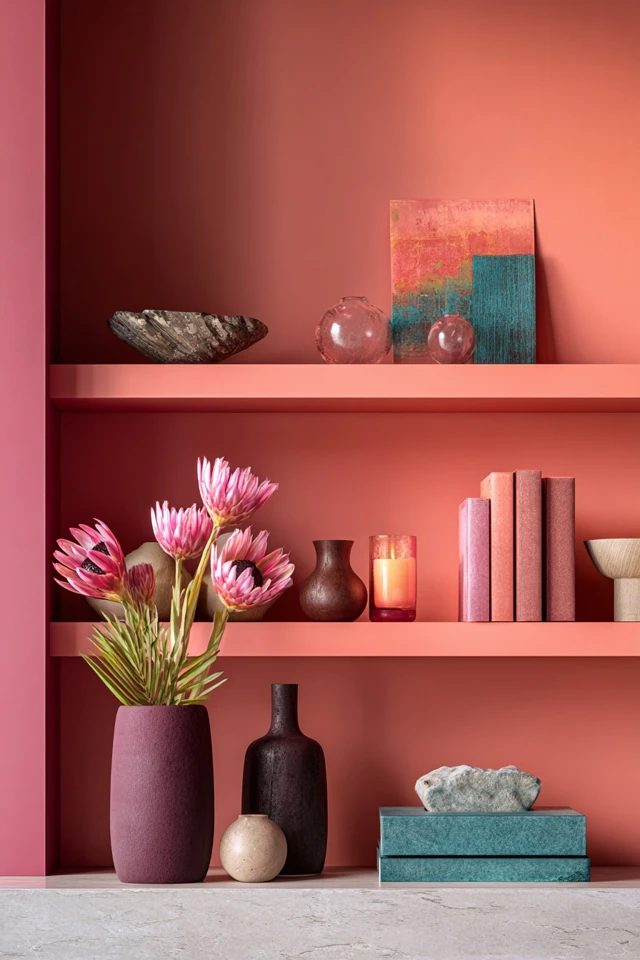
In this post
- What makes shelving modular?
- Modular shelving ideas for the living room
- Modular shelving ideas for the bedroom
- Home office and small-space setups
- How do you size a system for your space?
- Wood, wire or metal?
- Is it cheaper to build or buy?
- Styling and finishing your shelves
- A note on kitchen and pantry shelving
- Frequently asked questions
Modular shelving is a set of units you can stack, rearrange, add to or split up as your needs change. The best setups start with what the shelves must hold, then pick the layout, then the styling. Decor comes last.
Below you'll find ideas by room, sizing rules, material trade-offs and a handful of styling habits that make open shelves look intentional instead of crowded.
What makes shelving modular?
Modular means the system is built from repeatable parts: cubes, boxes, panels, uprights and sometimes drawers or doors. You can start with two units and add more later, or move a unit from the living room to the bedroom. That flexibility is the main reason it suits renters and anyone whose storage needs shift.
A kit usually gives you a matching set of frames and connectors. Buying one is the simplest route if you want a consistent look. Mixing pieces from different lines can work, but check that depths and finishes match before you commit.
Modular shelving ideas for the living room
Use shelves to frame the seating area or the TV wall. Put the things you reach for daily on the lower levels and keep decorative objects higher. Closed boxes or doors at the bottom hide cables, games and dog toys, which is where most living room clutter ends up.
For a divider in an open plan, place the unit perpendicular to the main walking path and choose open backs so light and sightlines pass through. Keep about 30-36 inches clear for a main walkway. If you have a dog that runs laps, leave more.
If you want something with a bit more personality, take a look at current modular shelving trends, such as mixed materials and curved modules.
Modular shelving ideas for the bedroom
A low unit behind or beside the bed works as a headboard extension and a landing spot for a lamp, a book and a glass of water. Keep it low enough that you aren't staring at a wall of objects while you fall asleep. Fabric baskets soften the look and take the edge off the geometry.
Modular shelving ideas with drawers are especially useful here. A few drawer modules hold linens or clothing, so the open shelves can stay light. For more room inspiration, see these bedroom styling ideas and a tropical take on the bedroom.
Home office and small-space setups
In an office, combine closed modules for supplies with open shelves for the books you actually use. A black or dark finish reads sharp and focused; see this black office guide for how to keep it from feeling heavy.
For modular shelving for a small apartment, go vertical. Tall, narrow stacks use wall height and leave the floor free. A unit that doubles as a room divider can separate a sleeping corner from a desk without building anything. As an architect, I'd keep the lowest shelf mostly clear in a small room, because visible floor makes the space read as larger.
How do you size a system for your space?
- Measure the wall, then the ceiling height, and note windows, outlets and door swings.
- Decide what goes on the shelves and measure the tallest item. Standard books need roughly 9-12 inches of height; large albums and binders need more.
- Choose a depth to match. About 10-12 inches suits books, while 14-16 inches suits baskets and media gear.
- Keep the unit in proportion to the room. A very large unit can overwhelm a small space, and a tiny one can look lost on a long wall.
Avoid blocking windows or doorways, and anchor tall stacks to the wall, especially in homes with kids or pets.
Wood, wire or metal?
Wood and wood veneer feel warm and take paint well, but they can scratch and swell if they get damp. Metal frames are slim and sturdy, and they hold up to claws and daily bumping. Wire shelving is the cheapest and airy, though small objects can tip or slip through, so it suits baskets and larger items better than a display of ceramics.
Mixing is fine. A wood shelf with a few metal accents, such as bookends or a lamp base, and one soft layer like a folded throw gives you a balanced look without clutter.
Is it cheaper to build or buy?
Building is often cheaper for simple cube or plank shelves if you already own basic tools and can cut lumber yourself. A DIY approach also lets you size every opening exactly. Buying wins on time, finish quality and the ability to add pieces later. For affordable modular shelving options, a basic cube kit or wire system is the usual entry point, and you can upgrade the finish with paint or new hardware.
Styling and finishing your shelves
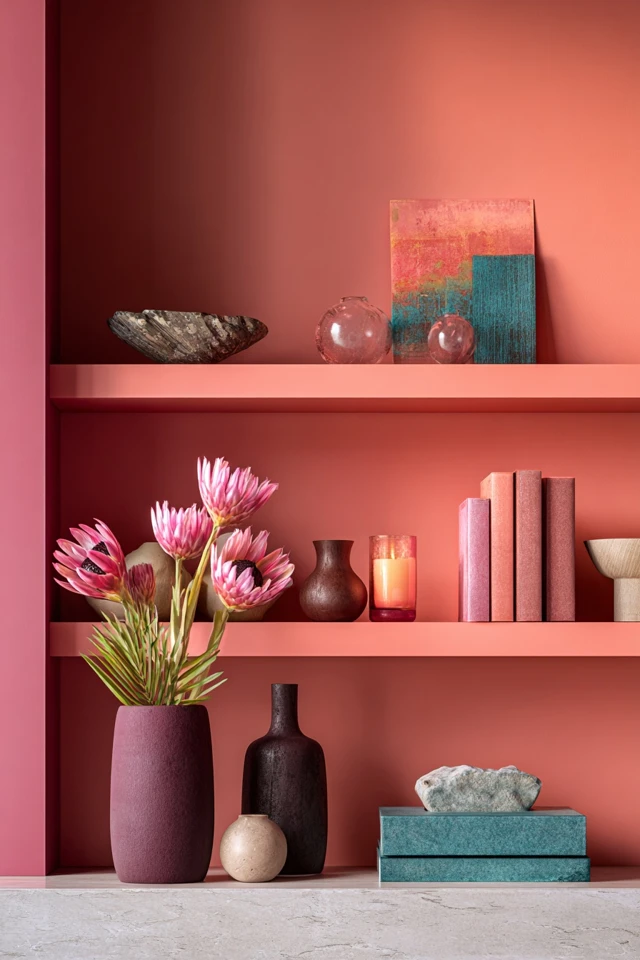
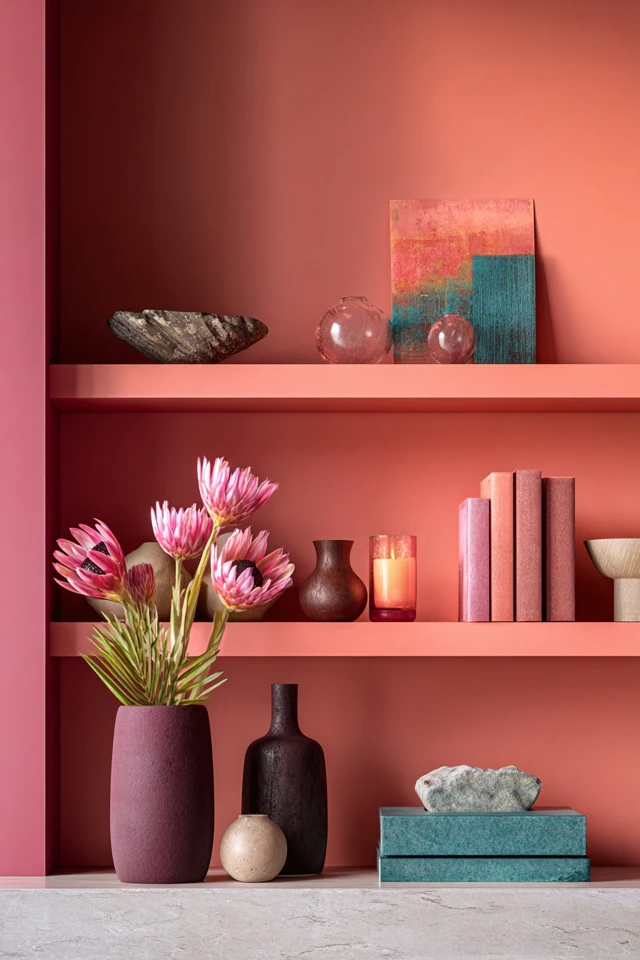
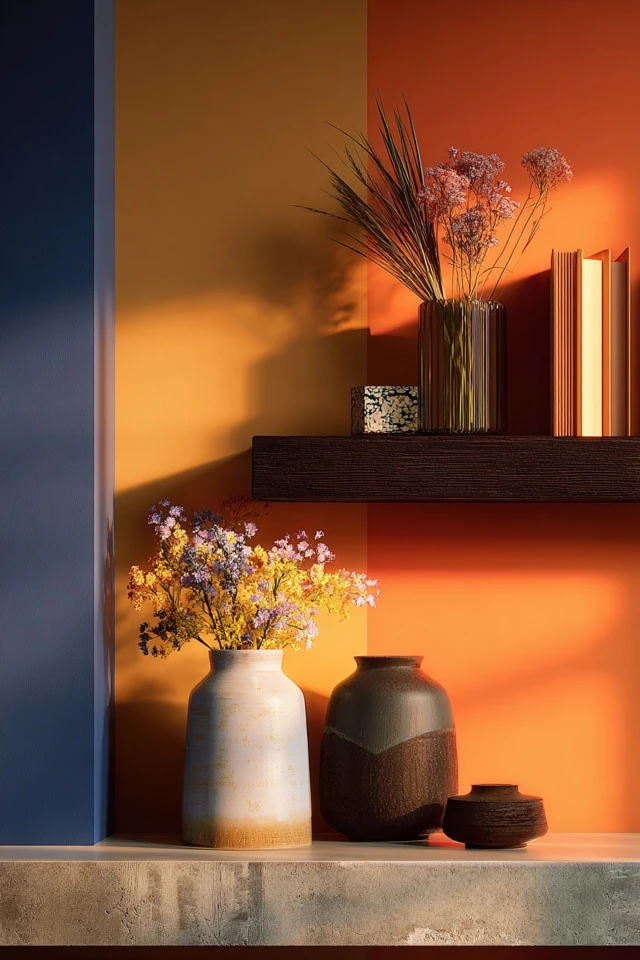
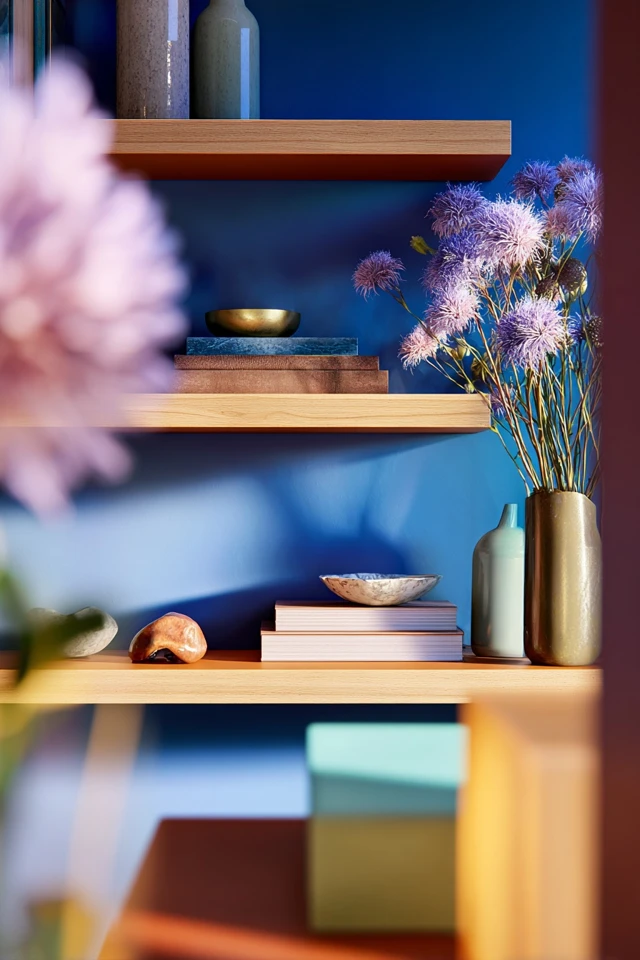
The triangle rule is a simple way to arrange objects: place items so your eye travels in a triangle, with a tall piece, a medium one and a low one at different points across the shelf. Groups of three or five tend to look more natural than pairs.
- Leave empty space. Not every shelf needs to be full.
- Lean a framed print against the back and add a trailing plant on an upper shelf for height and softness. If you have pets, check with your vet before choosing plants.
- Use baskets and boxes for small items so they look deliberate.
- Add LED strip lights or a small picture lamp to give the display some glow in the evening.
- Test paint or backing colors in the room's actual light, morning and night. Warm bulbs push colors toward yellow and red, and cool LEDs lean blue.
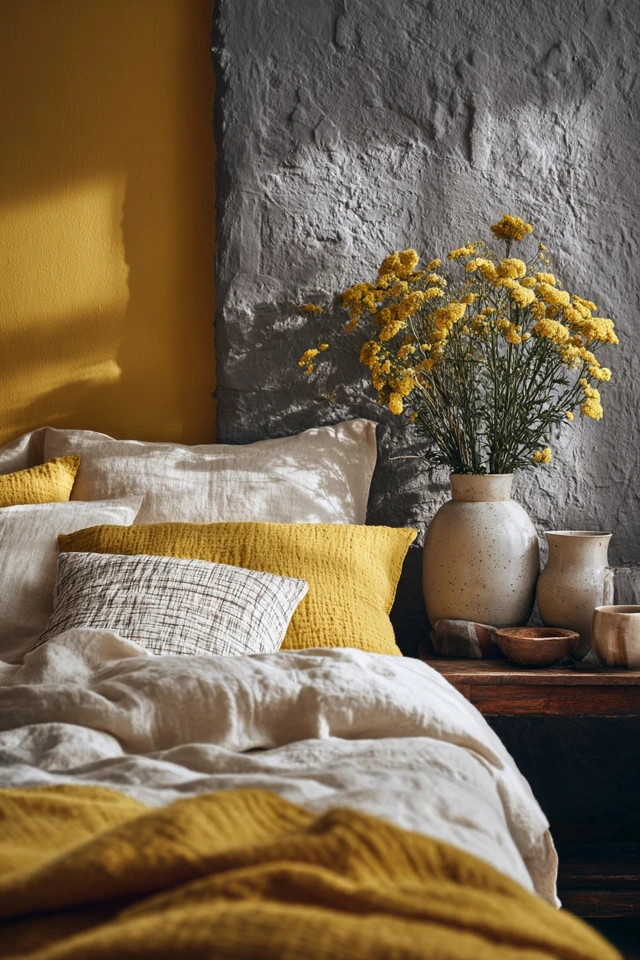
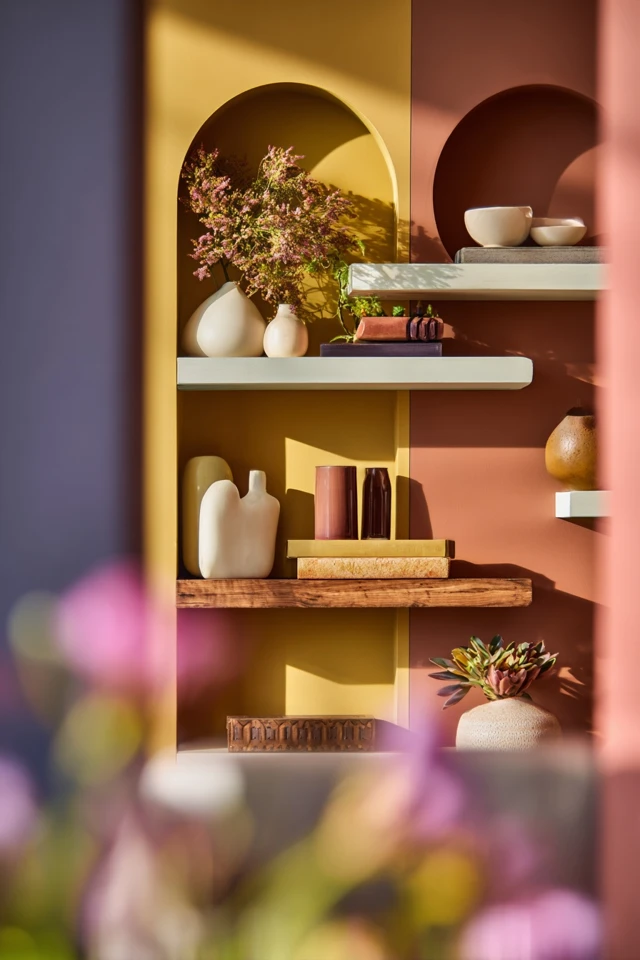
Swap a few accessories each season instead of buying new furniture. For color ideas, this guide to colors that go with yellow works well for shelf backs and accents.
A note on kitchen and pantry shelving
Modular units also work for pantry storage, but placement matters. Ohio State University Extension notes that cabinets above the range, near the dishwasher or next to the refrigerator exhaust tend to be warmer, and are too warm for keeping food safe and at top nutritional quality. Put dishes and cookware there, and food on a cooler wall. For doors and layout, see these pantry door ideas.
Frequently asked questions
What are some affordable modular shelving options?
Basic cube kits and wire systems are usually the least expensive starting points. You can also build simple plank-and-bracket modules yourself and add paint or new hardware to dress them up.
What is the triangle rule for decorating shelves?
Arrange objects of different heights so the eye moves in a triangle across the shelf, for example one tall piece, one medium and one low. It keeps a display balanced without being symmetrical.
What are some unique shelving ideas?
Try a modular unit that doubles as a room divider, a low unit as a headboard extension, or a mix of open shelves and drawer modules. Curved or mixed-material modules also add character.
Can modular shelves work as room dividers?
Yes. Place the unit perpendicular to the main walking path and use open backs so light passes through. Add a few closed modules if you want more privacy or sound control.
Filed under
ArticlesMeet the author
Written by an architect.
Julio Arco is a passionate architect with years of experience in architecture, interior design, urban design, and housing. He studied at prestigious universities across North America and Europe.

- Name
- Julio Arco
- Job
- Architect and online interior designer
- Studied
- Architecture, ITESM · Urban Design and Housing, McGill
- Partner
- Thor, Australian Shepherd
- Thor’s title
- Head of quality control