Indoor Atrium Design Ideas for Small, Cozy Homes

By Julio Arco
Architect and online interior designer
In this post
- What is an indoor atrium, and how is it different from a…
- How do you plan a small atrium so it works?
- How do you bring in natural light?
- Which plants and greenery suit an atrium?
- How do you decorate an atrium on a budget?
- What colors, materials and finishes give a cozy modern look?
- How do you keep it simple?
- Frequently asked questions
The best small indoor atrium is a bright, planted spot with one clear job: a reading nook, a green view from the hallway, or a light well that feeds the rooms around it. Pick that job first, then choose plants, seating and finishes to match.
You don't need a big footprint. A narrow shaft under a skylight, a glassed-in corner or a stair void can all work. Here are small indoor atrium design ideas that hold up in everyday homes, including ones with dogs.
What is an indoor atrium, and how is it different from a courtyard?
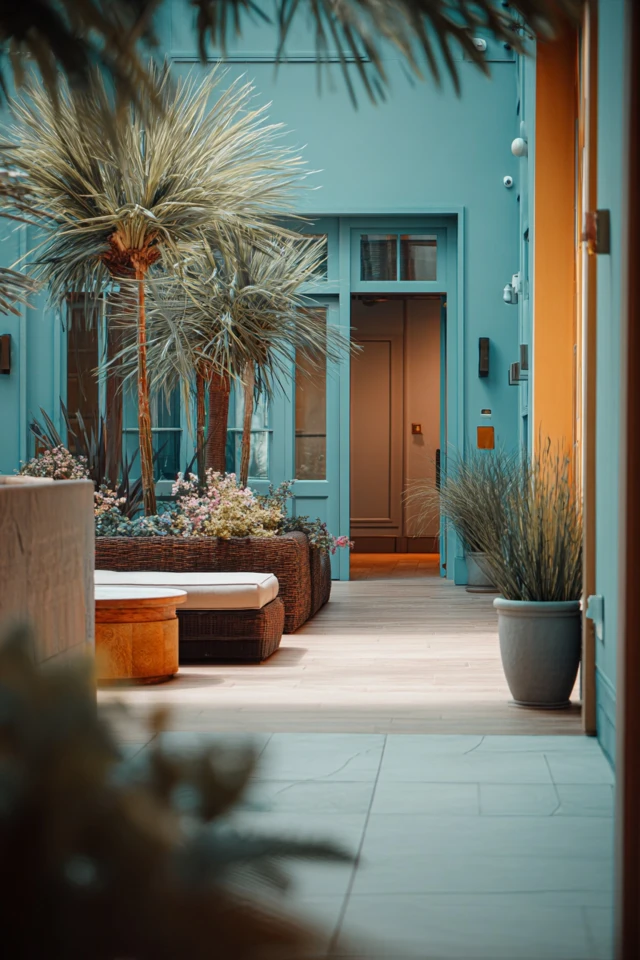
An atrium is an open space inside a building, usually with a glass roof or skylight above it. A courtyard is open to the sky and sits outdoors, surrounded by walls or wings of the house. That is the atrium vs courtyard difference in one line: one is roofed and part of the interior climate, the other is outside.
Types of atriums you'll run into
Types of atriums in homes usually come down to where they sit. A central atrium is surrounded by rooms on all sides. A side atrium runs along one wall or a corridor. A light well is a tall, narrow version that serves mostly to bring daylight down. Conservatory-style atriums attach to the edge of the house and are mostly glass.
Historic styles are a different story. If you like a classical look, the National Park Service describes Greek Revival as inspired by the classical Greek temple, which is where columns and pedimented forms come from. Those details translate well into a formal atrium, but they aren't required.
How do you plan a small atrium so it works?
Start with a quick plan on paper. Mark where light comes in, where people walk and where a chair or bench could sit. If the atrium is also a thoroughfare, keep about 30-36 inches clear for walking.
- Use low planters, a rug or a slim bench to separate seating from planting without building walls.
- Go vertical. Wall-mounted planters, hanging pots and a narrow shelf free up the floor.
- Choose small-scale furniture. A bulky chair will swallow a tight space, while a slender bench keeps sightlines open.
- Make it visible from several rooms. An atrium you can see from the kitchen or hall gets used and enjoyed more.
As an architect, I'd treat the atrium as the anchor of the plan, not leftover space. If it sits in the middle of the house, orient the nearby seating toward it.
How do you bring in natural light?
Skylights and glazed roofs are the usual source. Light is the main limit for what you can grow, so be realistic about it. Extension specialists at Iowa State note that light levels drop quickly as you get further away from the window, and areas more than a few feet from even bright windows are often too dim to grow houseplants well. In a deep atrium, that means the plants closest to the glass do the work and the floor level may need help.
To move daylight deeper, use pale, matte walls (they scatter light softly without glare) and a mirror or glazed tile opposite the light source. If daylight still falls short, add warm artificial light, around 2700-3000K, and a grow light aimed at the plants.
Which plants and greenery suit an atrium?
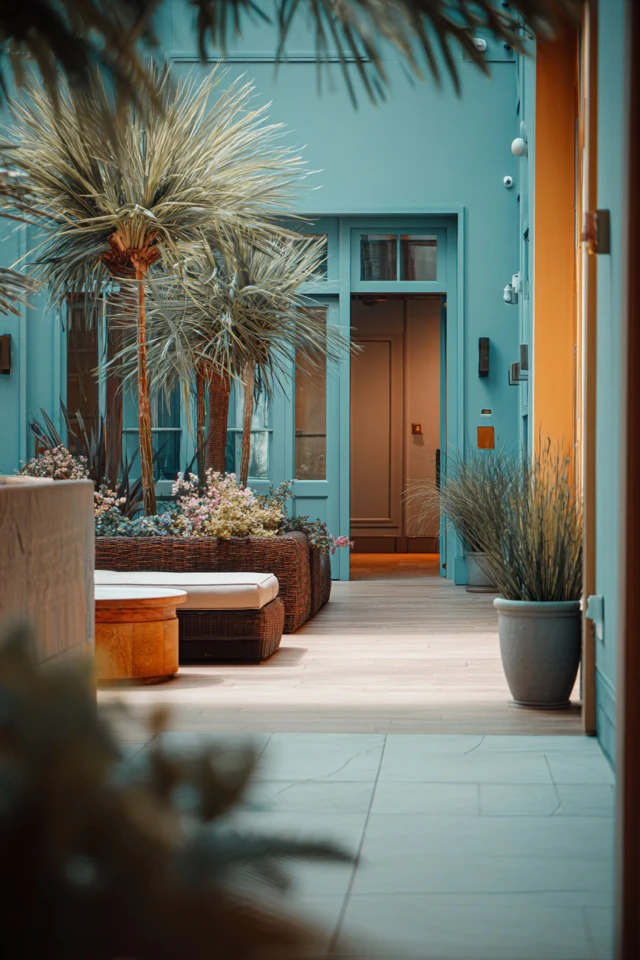
Match plants to the light you actually have. Iowa State's guide says most houseplants, even those that tolerate low light, look their best in bright, indirect light. The University of Wisconsin adds that too little light causes faded leaves and stunted growth, while too much can cause wilting and burning.
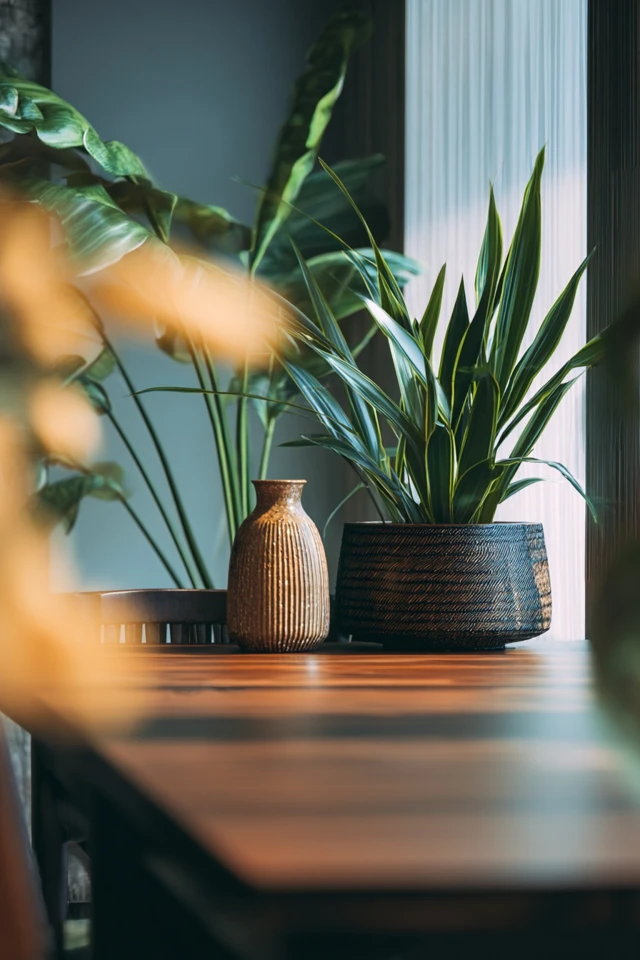
- Low light: snake plant, ZZ plant, pothos and philodendron are forgiving.
- Bright light: a small olive, citrus or a fiddle-leaf fig can serve as a single focal plant.
- Dog households: many common houseplants are toxic to pets, so check each plant against the ASPCA list or ask your vet before buying.
Watering is where most atriums fail. The same Wisconsin page says improper watering is a primary cause of plant death. West Virginia University Extension advises soaking the soil thoroughly until water runs out of the drainage holes. Put drip trays under every pot, and check that floors near planters are sealed against moisture.
How do you decorate an atrium on a budget?
For indoor atrium design ideas on a budget, spend on the few things you can't swap later (a good bench, sealed flooring, one dependable light) and keep the rest cheap and changeable.
- Buy one statement plant and fill around it with small, inexpensive ones.
- Use terracotta pots. They're affordable, warm and age well.
- Pick a bench with hidden storage for soil, tools and cushions.
- Stick to two neutrals and one accent so mismatched pieces still look planned.
- Use removable planters and textiles to refresh the look by season.
What colors, materials and finishes give a cozy modern look?
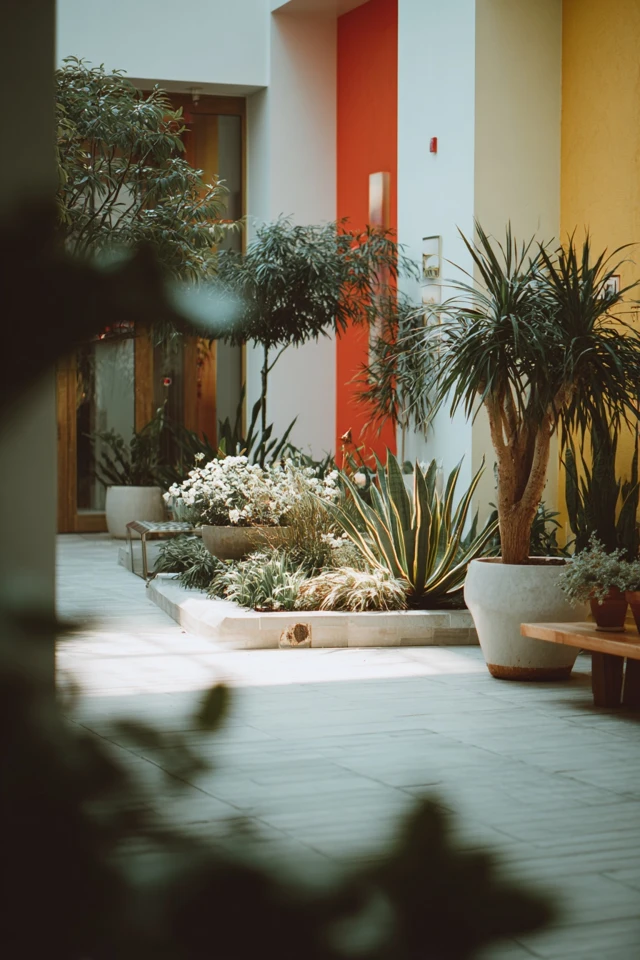
For modern indoor atrium design ideas, keep forms simple and let texture carry the warmth. Combine wood, stone and clay with one or two metal finishes, such as matte black or brushed brass, and stop there.
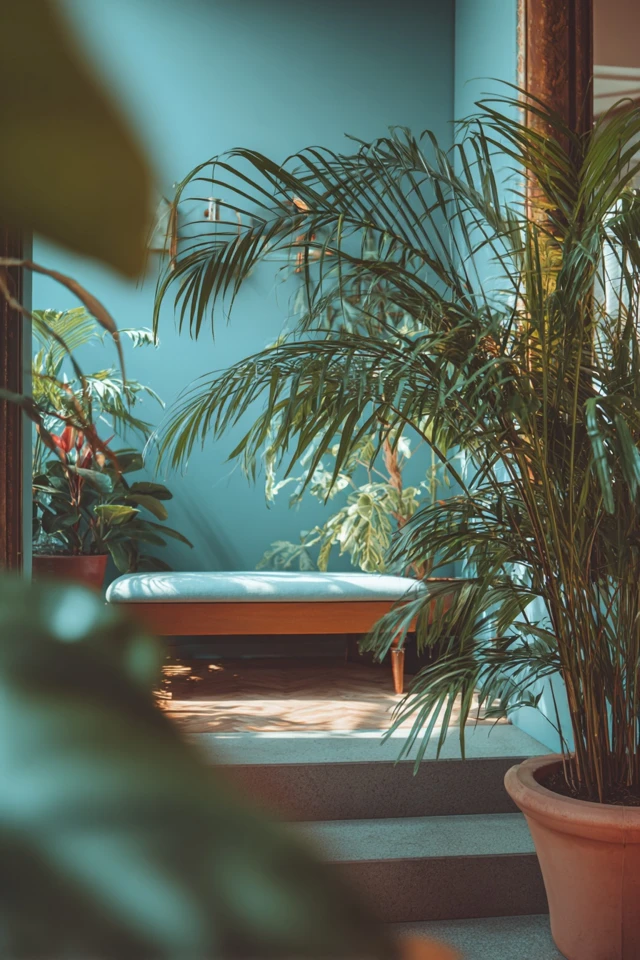
Warm, muted colors like terracotta, beige and olive invite you to linger. Cooler tones like sage and blue-gray feel calmer and more spacious, which helps when light is limited. North-facing atriums can look clinical, so lean warmer. Matte or eggshell paint cuts glare, and a washable indoor-outdoor rug is easier to live with than a delicate one, especially if a dog uses the space.
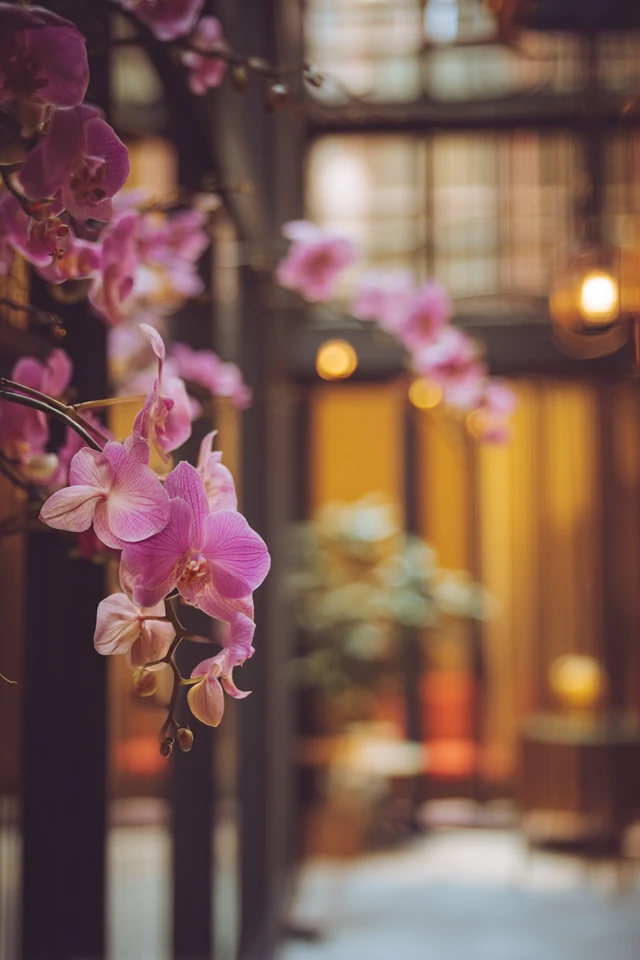
Add one sensory layer. A small tabletop fountain, a woven chair or a linen curtain near the glass softens echo and makes the room feel finished. Choose a fountain only if you're willing to clean it regularly.
How do you keep it simple?
Simple indoor atrium design ideas share a pattern: one focal plant, one seat, one light source you can dim. Repeat a single wood tone across the bench, shelf and window trim so the room reads as calm. Anything beyond that should earn its place.
If you're also working on other compact spaces, the same restraint applies in a small cabin interior, and the same light-first thinking helps in a minimalist entryway. For a related outdoor idea, see these small garden bridge ideas.
Frequently asked questions
What's the difference between an atrium and a courtyard?
An atrium is enclosed, typically under a glass roof, so it is part of the interior. A courtyard is open to the sky and sits outdoors, surrounded by the building.
How to decorate an atrium?
Start with light and one focal plant, then add a small bench, a washable rug and warm layered lighting. Keep to two neutrals and one accent color so the space stays calm.
What are the different types of atriums?
Common home types are central atriums surrounded by rooms, side atriums along a wall or corridor, narrow light wells and glass conservatory-style atriums at the edge of the house.
How can I make a very small atrium feel larger?
Use pale matte walls, a mirror opposite the light source, low furniture and vertical plantings that draw the eye upward. Keeping the floor mostly clear helps too.
Filed under
ArticlesMeet the author
Written by an architect.
Julio Arco is a passionate architect with years of experience in architecture, interior design, urban design, and housing. He studied at prestigious universities across North America and Europe.

- Name
- Julio Arco
- Job
- Architect and online interior designer
- Studied
- Architecture, ITESM · Urban Design and Housing, McGill
- Partner
- Thor, Australian Shepherd
- Thor’s title
- Head of quality control